|  | Know better. Do better. |  | Policy, honestlyThe real-life impacts of policy decisions |
|
| | | By Lauren Crosby Medlicott | Freelance journalist | | |
|  |
| The policies
UK Equality Act 2010
The Employment Tribunals and the Employment Appeal Tribunal Fees Order 2013
Supreme Court ruling, UNISON v Lord Chancellor
The impact
Pregnancy and maternity-related discrimination are both banned under the UK’s Equality Act 2010.
But, women’s rights groups say, tens of thousands of women across the country still face discriminatory treatment at work simply because they give birth.
According to the latest government research, more than three in four pregnant women and new mothers are discriminated against in the workplace in some way during pregnancy or maternity leave.
And some 54,000 women a year are forced out of their jobs because of that discrimination, the Maternity Rights campaign group says.
Pregnant women and new mothers may be singled out for redundancy, denied flexible working requests on return from maternity leave, penalised for sickness during pregnancy, or simply ignored during maternity leave, according to women’s rights groups. They are sometimes harassed or bullied or refused time off work for antenatal appointments. 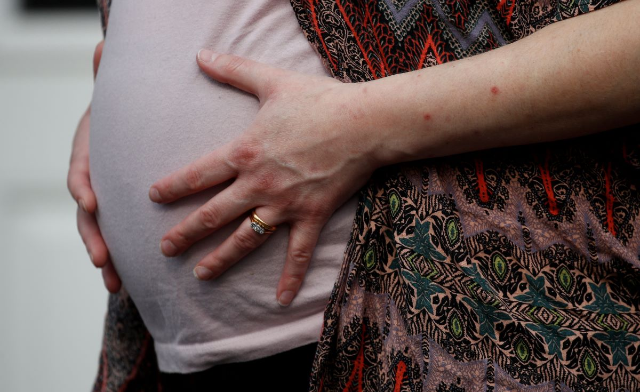 A woman who is 8 months pregnant poses for a photograph outside her home, Manchester, Britain April 9, 2020. REUTERS/Phil Noble |
The Equality Act 2010, which replaced the Equal Pay Act 1970 and the Sex Discrimination Act 1975, was supposed to strengthen the rights of workers - including mothers - and allow them to make a claim to an employment tribunal if they believed they had been discriminated against.
And it worked for a while.
Though bringing claims has always been daunting for pregnant women and new mothers when their physical and mental health load is heavy and their incomes are reduced, women did seek justice under the protection of the legislation.
Between September 2012 and July 2013, an average of 126 claims were made each month, according to research.
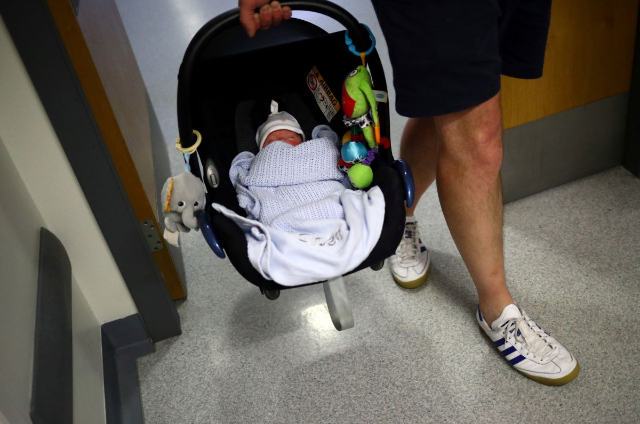 A nine week old baby is carried in a car seat by his father as they leave hospital after being discharged from the Lancashire Women and Newborn Centre of Burnley General Hospital in East Lancashire in Burnley, Britain, June 22, 2020. REUTERS/Hannah McKay |
Priced outBut all of a sudden, in the first six months after July 2013, the number of tribunal claims made by pregnant women or new mothers dropped drastically, by 40 percent, to an average of 76 claims per month.
The reason? The introduction of tribunal fees by the then Conservative government under Prime Minister David Cameron. At the time, it was defended as part of a push to eliminate a budget deficit.
“Employment tribunals were set up to be an easy and cheap way of securing justice,” Joeli Brearley of the charity Pregnant Then Screwed told me. “And then they added fees, making it only accessible to the wealthy.”
With no fees payable before July 2013, the cost of taking a case to a tribunal now started to come at a cost of up to £1,200.
Despite at least 77 percent of working mothers reporting potentially discriminatory or negative experiences in the workplace, as of 2016 only about a quarter raised the issue with their employer, according to the Equality and Human Rights Commission.
Just three percent accessed their employer’s internal grievance procedure, and less than one percent took a claim to an employment tribunal.
From 2013 to 2016, the number of pregnancy-related claims dropped by a massive 50 percent, the commission said, with mothers saying they were afraid of the financial cost of pursuing a claim, negative repercussions at work, and a lack of information about their rights.
At the time, Jo Swinson, a former employment relations minister who is now chair of Maternity Action, said research on the impact of tribunal fees “should set alarm bells ringing for government and employees alike.”
It finally did in 2017.
The Unison trade union appealed for a third time to the Supreme Court that tribunal fees should be ruled unlawful, arguing they made it “virtually impossible or excessively difficult” for some people to exercise their employment rights.
That appeal was successful and in July 2017 the Supreme Court ruled unanimously that the fees were unlawful. The government was also ordered to pay back the £32m it had raised from the fees to claimants.
It was a huge win for campaigners.
“This is a particularly significant victory to those who felt they had a pregnancy or maternity discrimination claim because money is often already tight due to limited or part time pay, having another mouth to feed and childcare costs,” Danielle Ayres, a senior employment lawyer, said at the time. “Money should never be a barrier to justice, and we need to protect vulnerable employees.”
In 2017/18, the number of pregnancy-related employment tribunal claims climbed to 1,357, an increase of 56 percent compared to 2016/17.
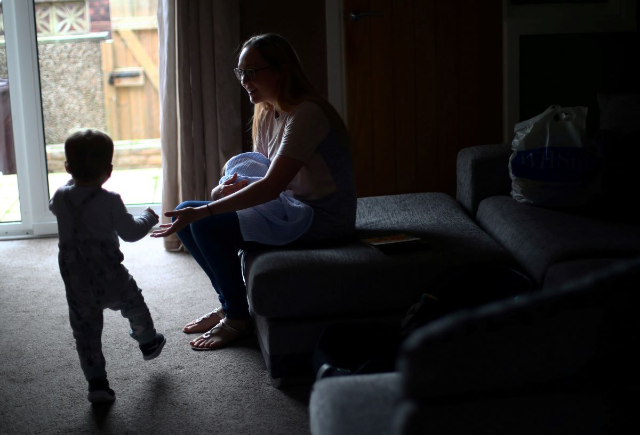 A mother introduces her baby, who was born prematurely and is now nine weeks old, to his older brother for the first time after being discharged from the Lancashire Women and Newborn Centre of Burnley General Hospital in East Lancashire in Burnley, Britain, June 22, 2020. REUTERS/Hannah McKay |
More to do
Though more women started to, and continue to, make claims at employment tribunals, there is another barrier that has not yet been addressed.
As the law stands, pregnant women and new mums have three months minus one day from the time a problem happens at work to raise a tribunal claim.
The trouble is, campaigners say, that period falls at a time when a mother is at her most vulnerable, with four out of five women experiencing a mental health problem during or after their pregnancy.
She will be time-poor, exhausted and most likely lacking in confidence. Additionally, the stress of making and following through with a claim causes stress - stress that could be detrimental to the health of the baby.
One mother, who asked to remain anonymous for legal reasons, is currently in the middle of a tribunal claim after reportedly suffering discrimination during her pregnancy.
“If there had been fees to submit the claim, I would not have done so due to the financial difficulties I was under on basic maternity pay,” she told me. “And having to resign being unemployed would not have been something I’d have financially been able to justify.”
While she is pleased to be able to make the claim, she finds the time limit puts “such a strain” on her mentally and physically as she also grappled with caring for her premature baby.
After a two-month stay in hospital, she then had to spend most of her days getting legal advice and documenting statements instead of enjoying being at home with her son.
“This also caused breakdowns in my relationships with family, friends and my partner and overall having this dark cloud over me with a big time limit stripped me of motherhood completely,” she said.
The Pregnant Then Screwed charity, along with tens of thousands of women and several MPs from all of the major political parties, are now calling for at least six months to be given to new and expectant mothers to pursue discrimination claims.
“There is still so more to be done if we want to ensure our justice system works for claimants,” Brearley of Pregnant Then Screwed said. “Only one percent of women who experience this type of discrimination even raise a tribunal claim. That’s a tiny proportion.”
Any views expressed in this piece are those of the author and not of Context or the Thomson Reuters Foundation. |
|
|
| | As Pakistan prepares to deport more than a million Afghans from Nov. 1, persecuted Shi'ite Hazaras fear for their lives back home | In the Philippines, a new law offers hope of curbing teen pregnancies and reducing the economic burden of this "national emergency" | Foreign workers in Israel, many from Thailand and the Philippines, fear for their safety but desperately need their jobs | |
| |
| | | |
|