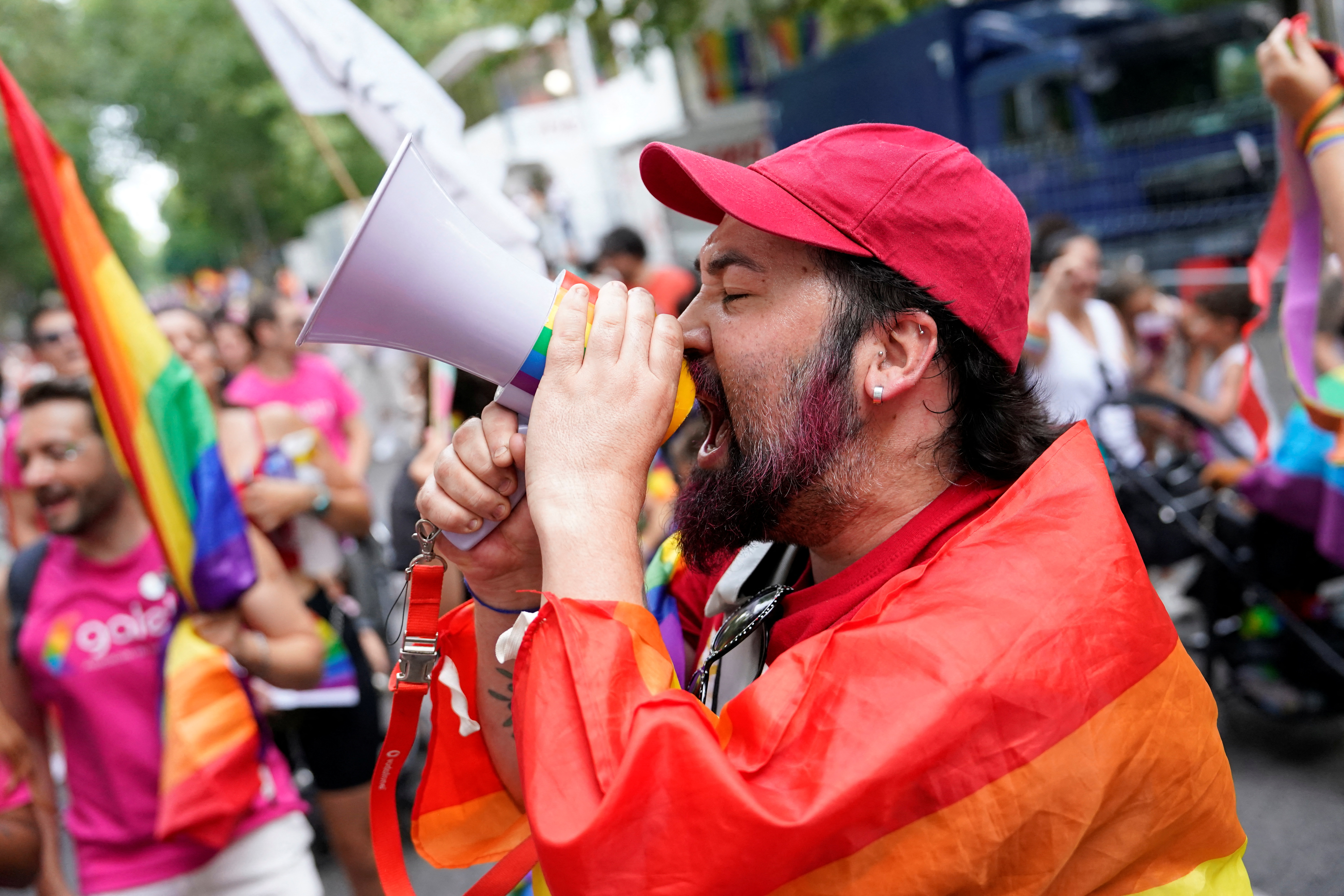

BRUSSELS – Europe’s new LGBTQ+ strategy – which tackles contested issues from conversion therapy to hate crime – offers too little in the way of protection to counter the rise in anti-LGBTQ+ rhetoric and policies in the bloc, rights groups say.
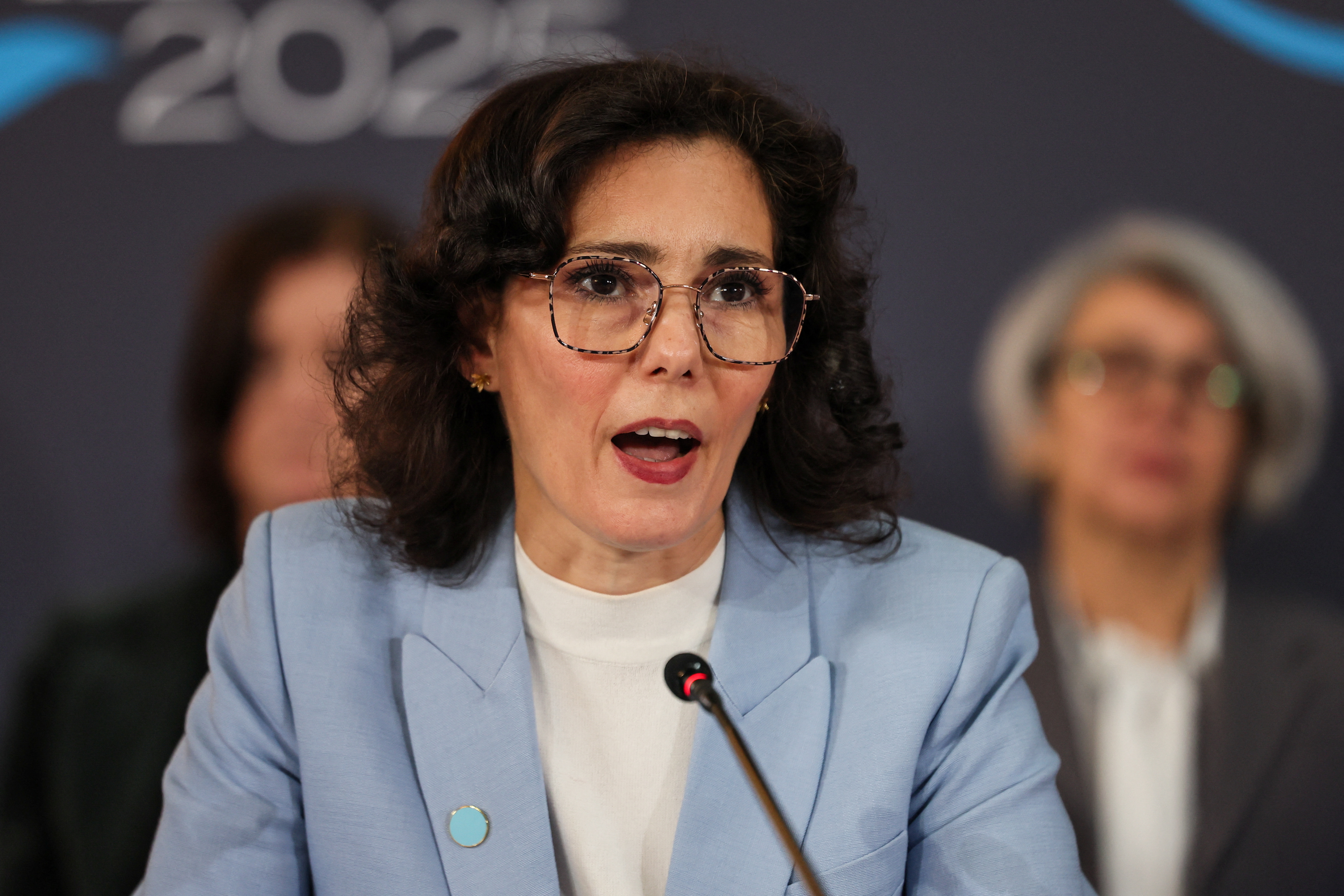
The strategy was unveiled on Oct. 8 by European Commissioner for Equality Hadja Lahbib, who said it would enable the European Union to become a “beacon that protects equality”.
But LGBTQ+ advocates gave it a lukewarm welcome, noting that rights are increasingly under challenge from new national laws and regulations, particularly in eastern Europe.
Slovakia, for example, has amended its constitution to recognise only two sexes, Hungary banned Pride gatherings and Bulgaria has scrapped any mention of LGBTQ+ topics in schools.
Here’s what you need to know about the plan:
What’s included in the strategy?
On conversion therapy, the Commission says it will “help member states ban conversion practices” by publishing a study analysing their prevalence and impact.
Eight EU countries – Belgium, Cyprus, France, Germany, Greece, Malta, Spain and Portugal – have already outlawed “conversion practices”.
A petition calling for an EU-wide ban reached a million signatures in May.
The new strategy proposes a “knowledge hub” on online hate crimes, and a new law to define online hate offences is also under consideration.
The plan seeks to build on previous efforts to strengthen EU-wide parenthood recognition, so that relationships recognised in one country would be respected across the bloc.
The Commission has also pledged to double funding to organisations working on equality – to 3.6 billion euros ($4.2 billion) in the 2028-2034 EU budget.
The long-term budget was proposed in July and must still be approved by all EU countries.
The policy sidesteps controversy over children changing their legal gender, an issue that has divided the bloc, simply stating that the Commission will “facilitate exchanges of best practices” as member states pursue divergent policies.
What do campaigners say?
ILGA-Europe, an umbrella organisation for LGBTQ+ activists across the continent, said the measures proposed by the Commission were likely to be “cosmetic and fail to impact the lives of LGBTI people”.
EU lawmakers from the LGBTIQ+ Intergroup, a cross-party parliamentary coalition that backs LGBTQ+ rights, welcomed the strategy but said it contained holes – be it lacking a plan to tackle the clampdown on Pride marches or offering scant protections for trans and intersex people.
ILGA-Europe also singled out the strategy’s silence on intersex rights, while trans organisation TGEU said the plan “ultimately fails trans people” by offering no legal security.
LGBTQ+ campaigners said while acceptance of non-heterosexual orientation had grown in recent years, discrimination on grounds of gender identity was on the rise, making protections all the more pressing.
Athena Forum, a think tank for sex-based rights, said the policy over focused on “gender identity and self-ID” at a cost to women and girls who might be exposed to sex-motivated violence and discrimination.
Can the EU enforce its strategy?
The new strategy is not legally binding.
EU countries retain control over laws regarding marriage and family matters, such as whether to allow same-sex marriage or legal gender recognition, meaning the EU has limited influence.
Enforcement of the strategy would rely on a mix of judicial, political and financial leverage.
EU countries are also bound by existing equality and non-discrimination rules.
Failure to comply could trigger infringement proceedings, which could lead to lawsuits and ultimately to fines.
The Commission can also threaten to freeze EU funding if countries are in breach of fundamental rights, a step taken against Hungary and Poland over anti-LGBTQ+ policies in 2021.
States could also be compelled to act by the EU’s top court, which has ruled that discrimination in the workplace based on sexual orientation is illegal, and that same-sex spouses share freedom of movement rights even if the country does not recognise their marriage.
However, sometimes these rulings are not fully enforced.
($1 = 0.8637 euros)
(Reporting by Joanna Gill; editing by Lyndsay Griffiths.)