
LGBTQ+ community 'fights to stay alive' as Turkey curbs rights

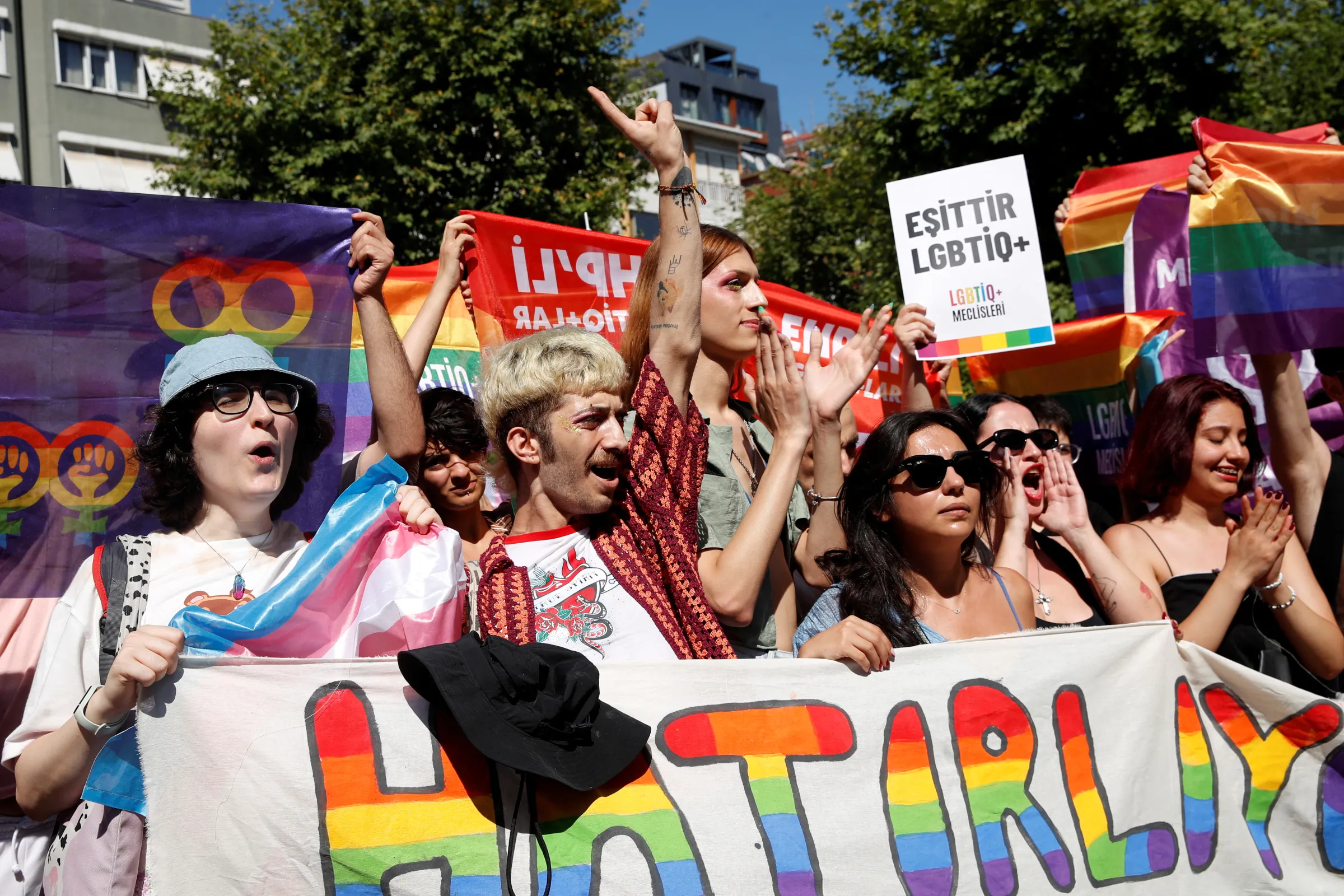
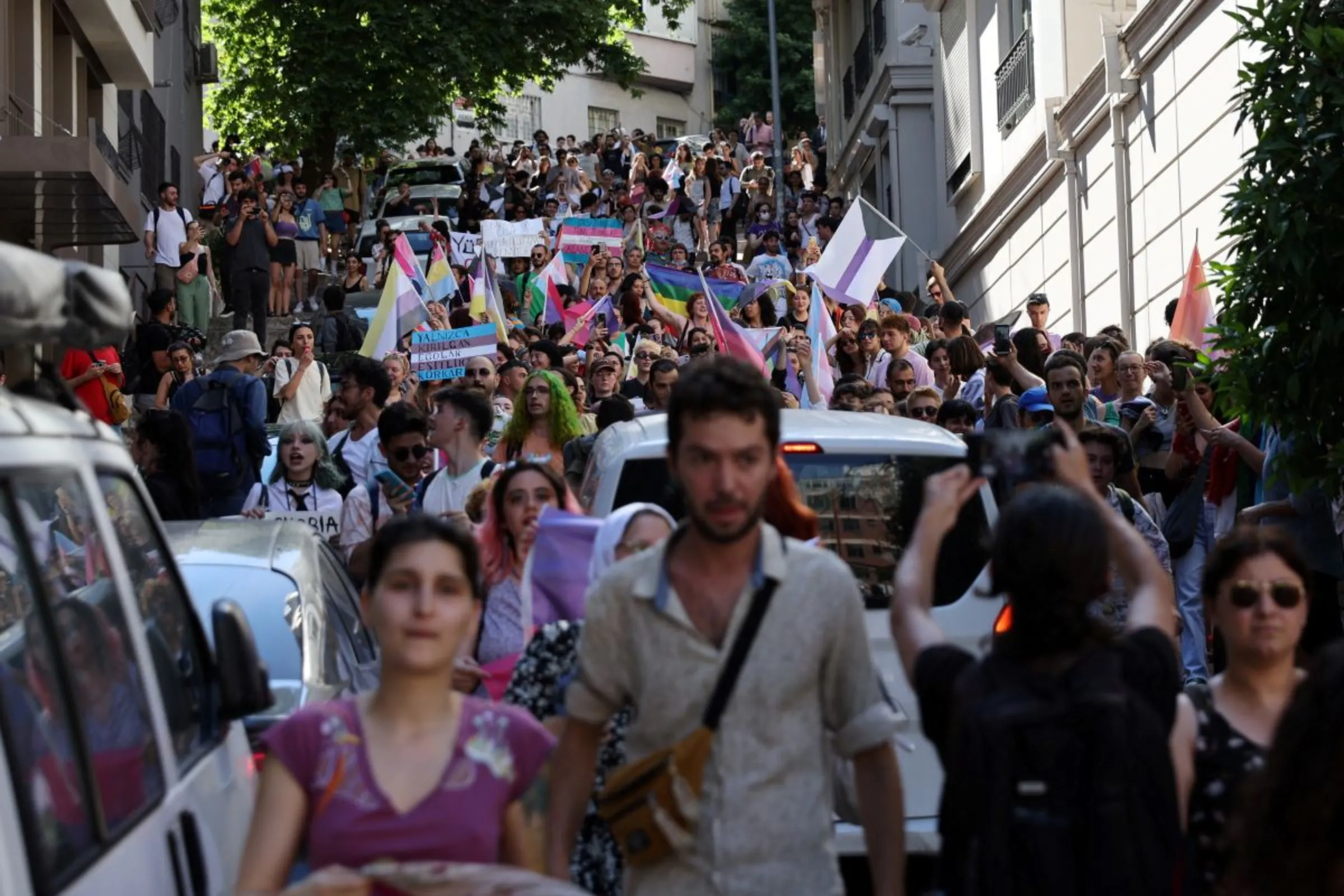
Turkey's LGBTQ+ community gather for a Pride parade, which was banned by local authorities, in Istanbul, Turkey June 30, 2024. REUTERS/Dilara Senkaya
What’s the context?
Growing political pressure on the country's sexual minorities includes prosecutions and hostile government rhetoric.
- Activists fear growing clampdown on LGBTQ+ community
- Arrests, bans coincide with Turkey's Year of Family
- Legal changes to criminalise LGBTQ+ identity shelved
ISTANBUL - Model Iris Mozalar has appeared in the pages of Elle and Cosmopolitan's Turkish editions, paraded down the catwalk at Istanbul Fashion Week and performed in a video with pop star Gaye Su Akyol.
But after marching for women's rights, the 25-year-old transgender activist may wind up a criminal.
Mozalar faces a possible seven years in prison on charges of insulting President Recep Tayyip Erdoğan by chanting slogans and violating a law on public demonstrations when she hoisted a rainbow flag at a March protest.
She is the only participant to be charged, she said.
"My case shows how the law is being turned into a political instrument and that trans people, especially activists, are being targeted ... for being in the public space," Mozalar said.
The first of her two trials began on Tuesday, taking place during an intensifying crackdown on Turkey's LGBTQ+ community. Prosecutions, hostile political rhetoric and a push for "morality" measures are endangering sexual minorities' basic human rights and safety, rights advocates said.
The latest salvo was draft legislation, leaked to the media in October, that would have imposed prison sentences on anyone found to "engage in, praise or incite behaviour contrary to biological sex at birth and general morality," as well as onerous conditions on gender-affirming healthcare.
Those provisions were dropped from the bill when it reached parliament last week following public protests and criticism from opposition parties. Human Rights Watch called the bill "one of the most alarming rollbacks of rights in decades".
But activists warned the shelved proposals may have been a trial balloon and that penalties could still come from a government that has marginalised LGBTQ+ people, accusing them of undermining traditional family values.
"Even without this law, it is a dangerous period when LGBTQ+ people are portrayed as the enemy and designated an illegal group" by state officials, said Jiyan Andiç, a sociologist and organiser with Istanbul's Pride and Trans Pride weeks.
"We've heard the footsteps that something like this was coming as LGBTQ+ people are under repeated attack."
Year of the family
Among the harbingers of harsher action was the banning of an exhibition on transgender history that Andiç curated last year and charges of obscenity levelled against openly gay singer Mabel Matiz in September.
In June, the government barred access to hormone treatment for people under the age of 21, even though gender-reassignment surgery is legal at 18, citing "threats to our cultural and moral values".
A global backlash against LGBTQ+ rights, including policies implemented by U.S. President Donald Trump since taking office, has coincided with Erdoğan's declaration that 2025 is the "year of the family", a government initiative to ameliorate Turkey's declining birth rate.
In speeches, Erdoğan has described LGBTQ+ activism as a "scourge", "fascism", "child abuse" and a foreign plot to undermine the nation. Last month, he vowed to take "every necessary precaution against deviant movements like LGBT".
The turn against LGBTQ+ rights has been building for years.
In 2021, Turkey withdrew from an international treaty on preventing violence against women, dubbed the Istanbul Convention for the city where it was signed, because it included "sexual orientation" among groups requiring protection and could promote divorce and homosexuality, officials said.
The lack of safeguards provides impunity for hate crimes in a country with the most transgender murders in Europe, activists said.
"It is ironic that I am on trial for the slogan 'Trans murders are political', while the perpetrators of them are not," Mozalar said. "This is why we will never give up the struggle - because we are fighting to stay alive."
'Top-down homophobia'
Yıldız Tar, editor of the Kaos GL news portal, sees the clampdown as part of a broader silencing of opposition voices by a government that has swerved towards authoritarian rule after 23 years in power.
"Presenting LGBTQ+ individuals as a threat aims to spread fear in society to cover up the government's own political legitimacy crisis," said Tar, who spent four months in detention this year and is charged with belonging to an illegal group over his journalism.
But the rhetoric may have little traction with the public. A Kaos GL survey in March showed more than two-thirds of respondents either support equality and freedom for sexual minorities or are "neutral" on the matter.
"It's top-down homophobia, a declaration of war on the profound transformation that the LGBTQ+ struggle has created over 30 years in Turkey," Tar said.
Although political expression and legal protections were always limited, Turkey was among the first countries to decriminalise homosexuality in an 1858 reform.
In recent decades, gender-nonconforming TV and music stars helped shape popular culture and Istanbul was home to the largest Pride march in the Muslim world before it was banned in 2015.
"It wasn't a problem when people made us laugh or wore costumes," said Andiç. "When LGBTQ+ people began openly engaging in politics and taking to the streets to demand their rights, then they were viewed as a problem."
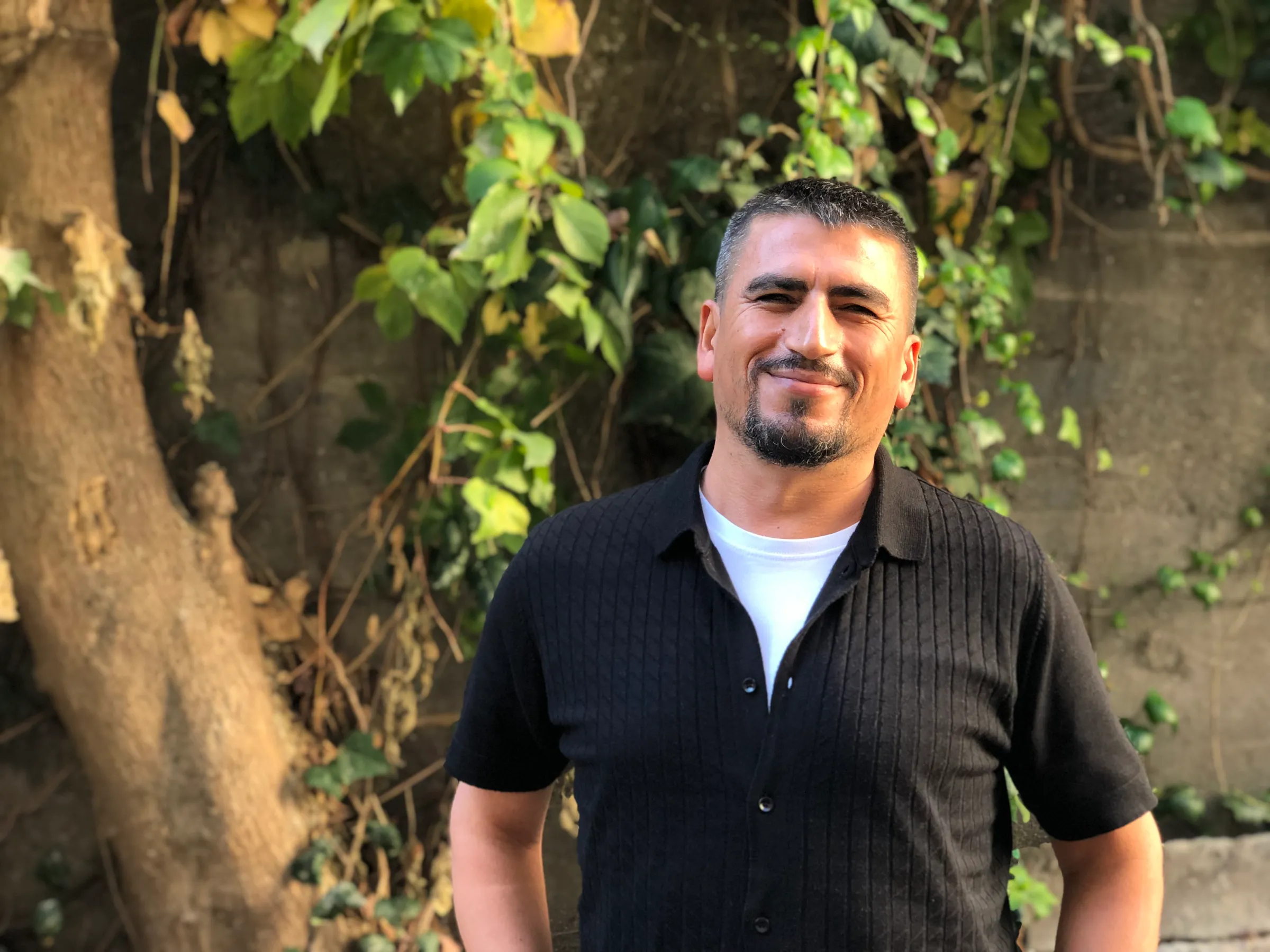
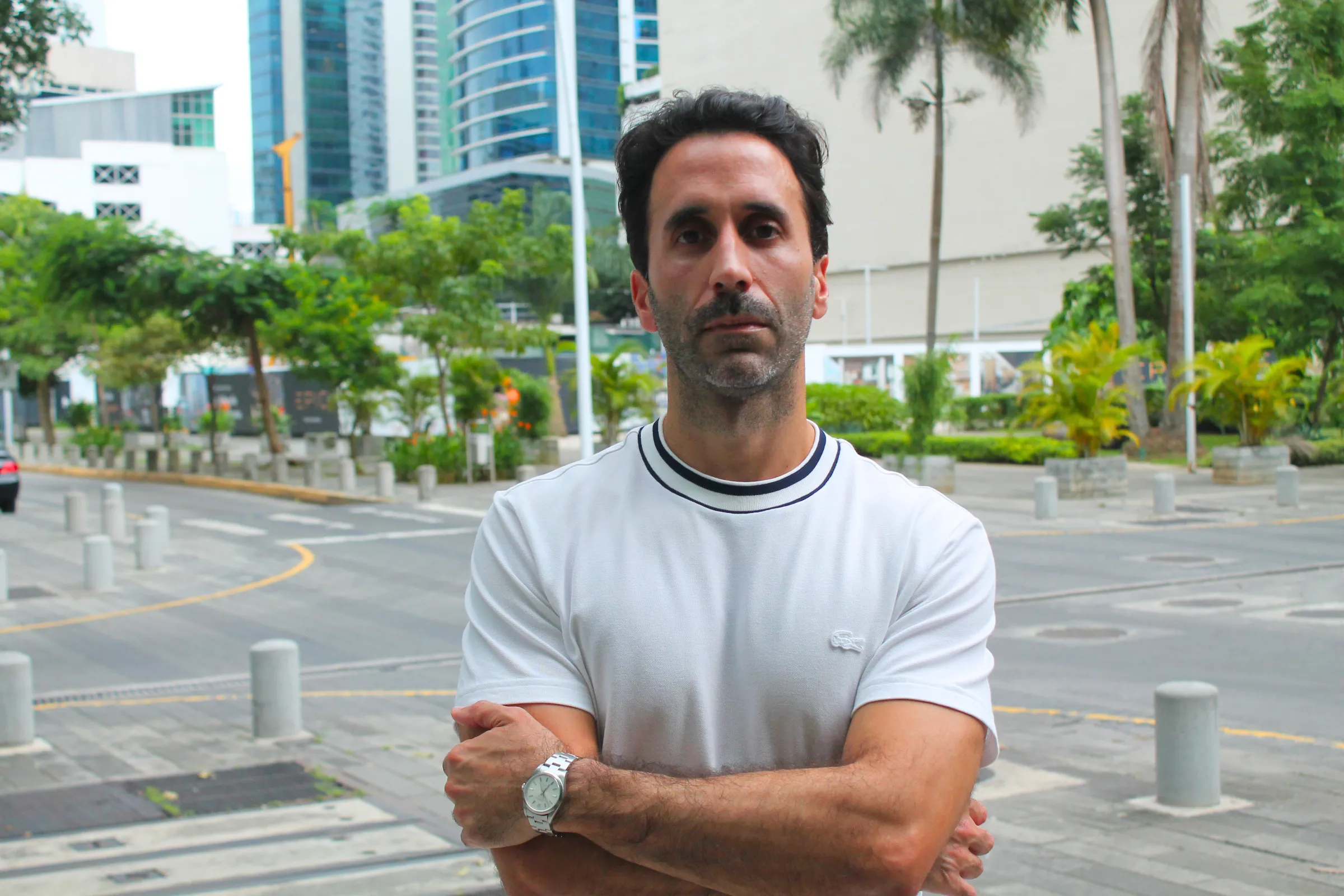
Haris Yardımcı, who volunteers with the LGBTQ+ rights group SPoD in Turkey, poses for a photo in Istanbul, Turkey Nov. 15, 2025. Yardımcı says solidarity among the community helps it to survive. İzot Ergün/Handout via Thomson Reuters Foundation
Haris Yardımcı, who volunteers with the LGBTQ+ rights group SPoD in Turkey, poses for a photo in Istanbul, Turkey Nov. 15, 2025. Yardımcı says solidarity among the community helps it to survive. İzot Ergün/Handout via Thomson Reuters Foundation
Haris Yardımcı, 44, came out to his parents when he was in his early 20s in a village in southern Turkey, where "no one knows the meaning of LGBTQ+, but everyone knows what the girl Ahmet and the boy Fatma represent."
In Istanbul, Yardımcı volunteers at SPoD, which provides legal and psychological counselling to LGBTQ+ people. SPoD is already compelled to work "as though a ban is in effect" and does not publicly announce the location of panels or other events to avoid raids by police, he said.
"We don't exist because of a law and we won't disappear because of one. We survive with our solidarity," Yardımcı said.
(Reporting by Ayla Jean Yackley; Editing by Jon Hemming.)
Context is powered by the Thomson Reuters Foundation Newsroom.
Our Standards: Thomson Reuters Trust Principles
Tags
- LGBTQ+