

LGBTQ+ Turks brace for proposed law criminalising identities

Explainer
Explainer
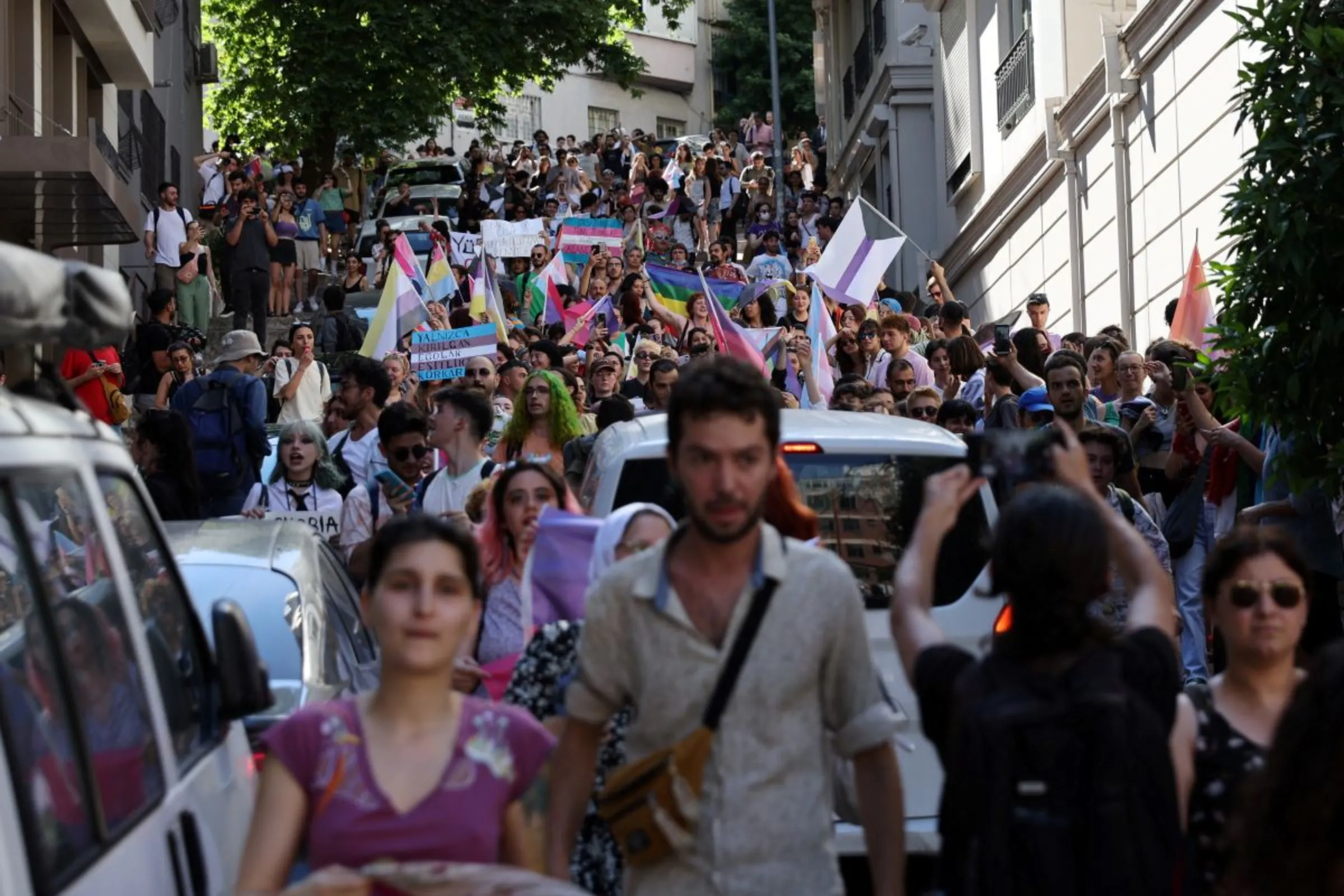
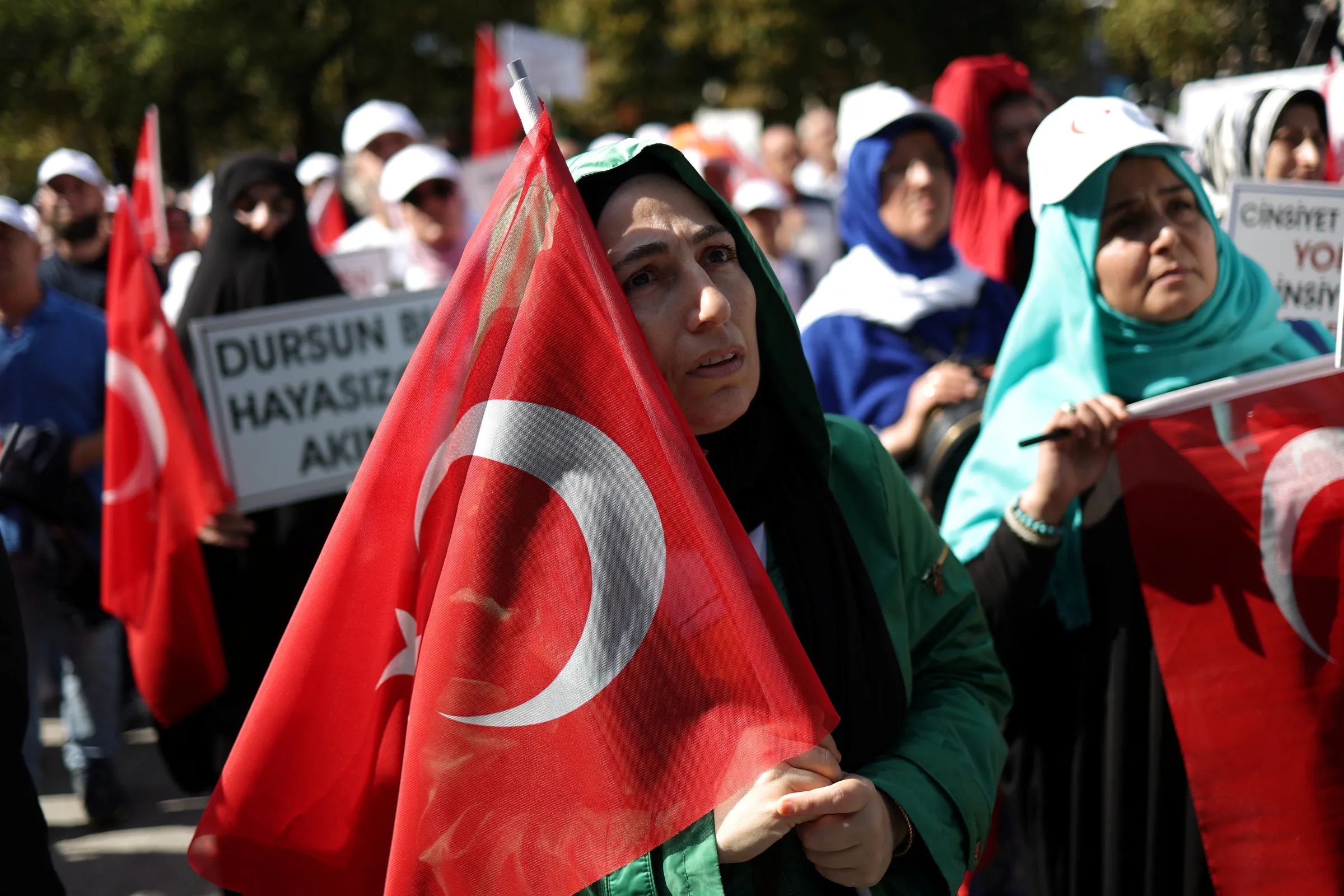
A woman holds a Turkish flag, as people take part in "Big Family Gathering", an anti-LGBT rally, organised by pro-Islamic Big Family Platform in Istanbul, Turkey, September 15, 2024. REUTERS/Murad Sezer
What’s the context?
LGBTQ+ identities could be criminalised under a proposed law, dealing another blow to the community during Turkey's 'Year of the Family'.
LONDON - Turkey's LGBTQ+ community is bracing for the passage of a bill that would criminalise gender-diverse or sexual minority identities, censor advocating for rights and restrict the process for changing legal gender.
Advocates and activists say the proposed law constitutes a "grave threat" to LGBTQ+ people, who are already facing increased scrutiny after the government declared 2025 the "Year of the Family".
During its launch in January, President Recep Tayyip Erdoğan described Turkey's declining birth rate as an existential threat and accused the LGBTQ+ movement of undermining traditional values.
Here's what you need to know.
What does the proposed bill include?
The 11th Judicial Package proposes changes to Turkey's penal code and civil code, among other laws. A draft, seen by Context, was leaked to journalists and rights groups in October.
One amendment criminalises engaging in attitudes and behaviours "contrary to biological sex and public morality" with a prison sentence of up to three years, which could effectively make it illegal to identify as LGBTQ+.
It also punishes "promoting, praising or encouraging" such behaviours with the same jail term, which could impact civil society groups and journalists reporting on LGBTQ+ issues.
The draft also states that holding a same-sex engagement or wedding ceremony would be punishable with four years in jail. Same-sex marriage is not legal in Turkey, but this would criminalise even symbolic ceremonies.
The reform package also seeks to extend the age from which someone can apply to change their gender from 18 to 25, and reintroduces the requirement for trans people to be sterilised, a condition annulled during a landmark ruling in 2017.
The new process for changing gender would require a hospital report based on four evaluations, with a minimum of three months between each one.
Changing gender through hormone therapy, cosmetic procedures, medication or surgery without a court's permission would be punishable by up to seven years in jail, according to the leaked draft.
Medical professionals who carry out such procedures can also be jailed for up to seven years; an increase on the three years proposed in an earlier draft of the package.
The new draft only allows such medical interventions to be carried out on people who are intersex or have differences of sex development.
What are the next steps?
If passed, the law would become the latest in a string of LGBTQ+ censorship laws across Europe, following similar legislation in Bulgaria, Hungary and Georgia.
Justice Minister Yılmaz Tunç has said the legislative package has been sent to lawmakers and is expected to be on the parliamentary agenda soon, local media reports.
Speaking during the opening of parliament on Oct. 1, Tunç said the package includes measures against crimes "aimed at disrupting social peace and tranquillity".
Erdoğan's Justice and Development Party (AK Party) and their far-right allies hold the majority in parliament.
How are LGBTQ+ groups responding?
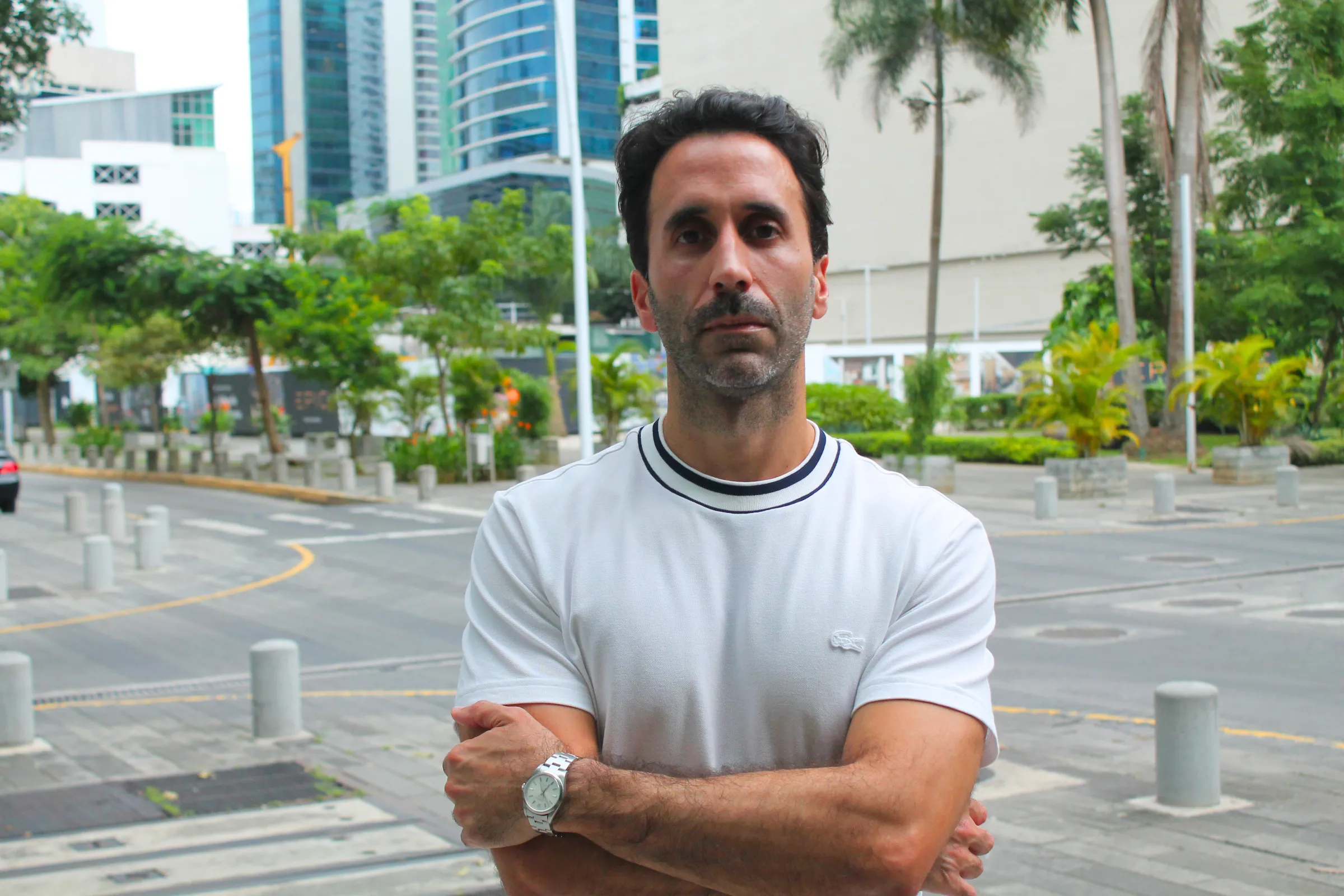
Janset Kalan, a trans activist who has been charged with "obscenity" by Turkish authorities twice in the last two years, said the unclear wording of the amendments would open the door to further crackdowns on LGBTQ+ identities.
"As a transgender woman, I feel very anxious," Kalan, who is part of the Turkish LGBTQ+ network Rainbow Association Against Discrimination, told Context.
"The problem with vague language is it is always interpreted depending on the judge, or the police officer, or the person they want to criminally charge."
Turkey already has poor protections for LGBTQ+ people. It places third from the bottom of 49 European countries for rights, according to a ranking by advocacy group ILGA-Europe.
"These proposals present a grave threat to the rights of LGBTI people and those who advocate for LGBTI rights, and they must never see the light of day," said Dinushika Dissanayake, Amnesty's deputy director for Europe.
"Under the spurious guise of protecting 'public morality' and 'the family institution,' these measures would, in reality, threaten the very fabric of Turkish society."
(Reporting by Lucy Middleton; editing by Ayla Jean Yackley.)
Context is powered by the Thomson Reuters Foundation Newsroom.
Our Standards: Thomson Reuters Trust Principles
Tags
- LGBTQ+