U.S. cities look to new AI tools to boost recycling

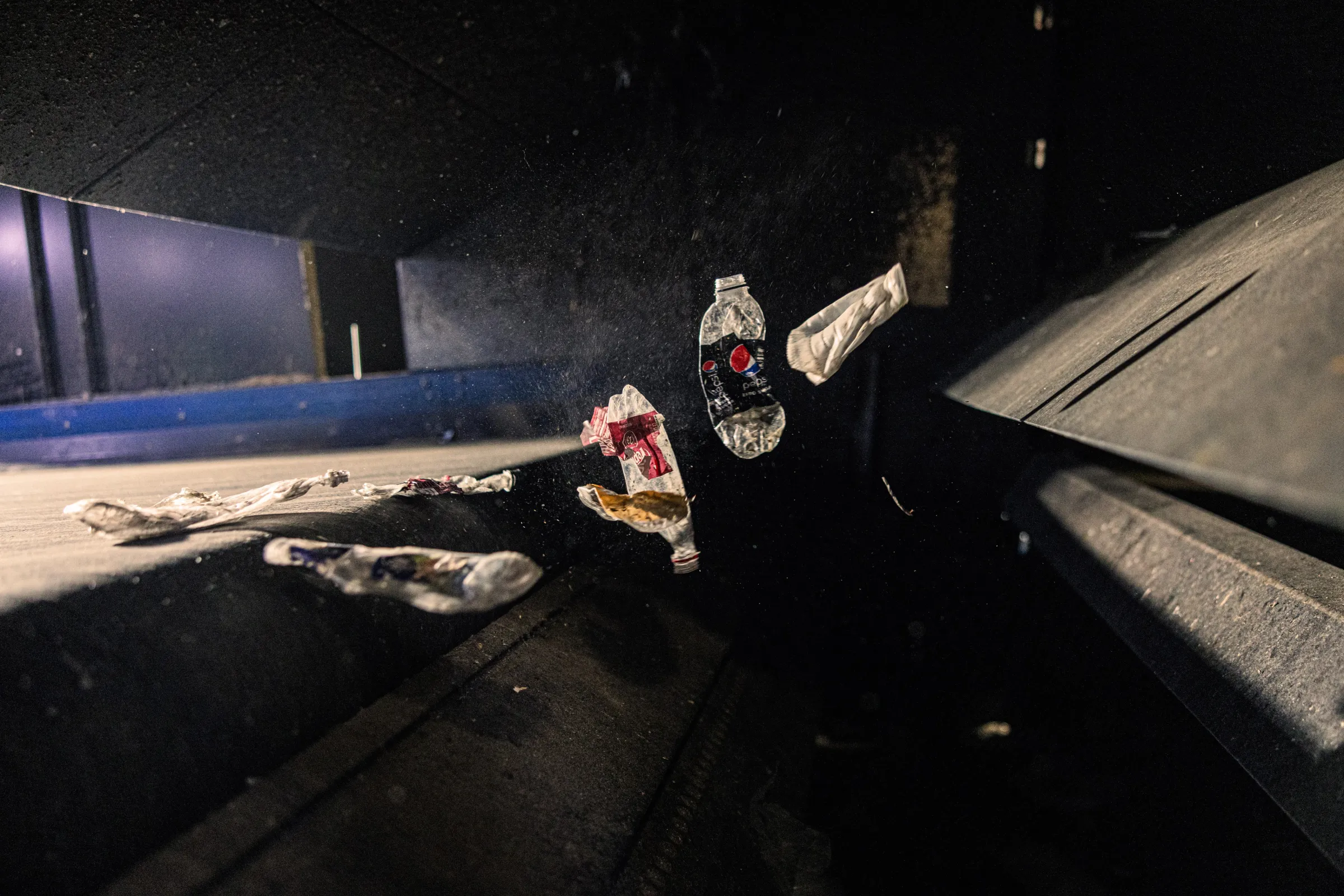
Recycling is sorted at an AMP facility in Cleveland, Ohio, in 2023. AMP/Handout via Thomson Reuters Foundation
What’s the context?
Dirty, labor-intensive and inefficient - but now US recycling rates may rise thanks to AI.
- U.S. recycling rates have stagnated
- Local governments face rising costs
- AI helps sorting, public education
WASHINGTON - A great idea in theory, recycling is a pain in practice - a dirty job that relies on people to sift plastics from glass, sort soggy paper from rotten vegetables and root out hazardous items before they get tipped into fast-filling dumps.
Now artificial intelligence (AI) is here promising help, bringing potentially the biggest shakeup of the trash industry in decades.
"I've been working on increasing recycling rates my whole career and nothing seems to move the needle. People are typically lazy," said Dennis Bagley, who runs garbage collection for eight cities and counties across the state of Virginia.
"This takes that responsibility off (the public). We can do it with AI and robotics, and increase the amount of recyclables," Bagley told Context.
Bagley's Southeastern Public Service Authority processes tens of thousands of tons of rubbish a year, burning the garbage of more than a million Virginia residents before transferring the resulting ash to landfill.
But the regional landfill is just decades away from capacity - and as Bagley said: "In my industry, that's just around the corner."
Now he has a solution – and one that is sparking plenty of interest in local governments across the country: an AI-driven sorting system that should halve the waste going to landfill.
Over the past two years, piloting the AI process has already almost tripled recycling rates from 6.8% – where Bagley says they have been stuck for years – to 20%.
The project should start operating early next year, following an agreement signed in November between Bagley's waste handling firm and an affiliate of AMP, which is building and will operate the operation.
The plant, in Portsmouth, Virginia, will be the largest such operation in the country and will be a trailblazer, Bagley said.
"This is a big deal," he said. "This will catch on across the country."
Modern recycling in the United States began in the 1960s amid the growing environmental movement, but more recent efficiencies have been hard to come by.
Under the new AI system, residents should be able to throw all their garbage, recycling and even organics in one big bin, to be separated later, said Tim Stuart, CEO of AMP.
He said the system should be able to pull out an additional 15% to 20% of plastics, for instance, and 40% more organics, all with a system that will keep learning over time.
This could not only lower costs for municipalities, but bring in new revenue as more materials are recovered, and could make recycling affordable for rural areas that may not yet offer the service.
"The industry has tried this over many years, but the downfall was the technology wasn't there – it was very prohibitive, very dirty, with lots of manual labor," Stuart said.
"The AI allows us to be extremely efficient and then pull out additional recycling and organics that is today making its way to landfill. That is a huge opportunity."
'Revolutionizing' waste
Local government has long grappled with the ever-shifting demands of recycling: juggling a constant evolution in packaging and markets, as well as the vagaries of public habits, said Kristyn Oldendorf, senior director of public policy and communications with the Solid Waste Association of North America.
While the association has no statistics on AI adoption, it says the tech is "revolutionizing" the solid waste industry.
And AI's potential goes well beyond waste sorting, she said.
"It's a revolution in different ways – marketing, workforce needs, everything".
Cities such as Centerville, Ohio, for instance, are experimenting with AI-assisted cameras mounted on collection trucks. The cameras scan refuse in real time, detect any "contamination" - items unsuitable for recycling - then send educational notices to the offending households.
"For the city, it costs us more to recycle if we have a higher percentage of contamination. These are things the sort center has to throw away – pay to dispose and truck it," said Pat Turnbull, Centerville's public works director.
Centerville has tried public education on recycling, but found efforts - while effective - were labor-intensive.
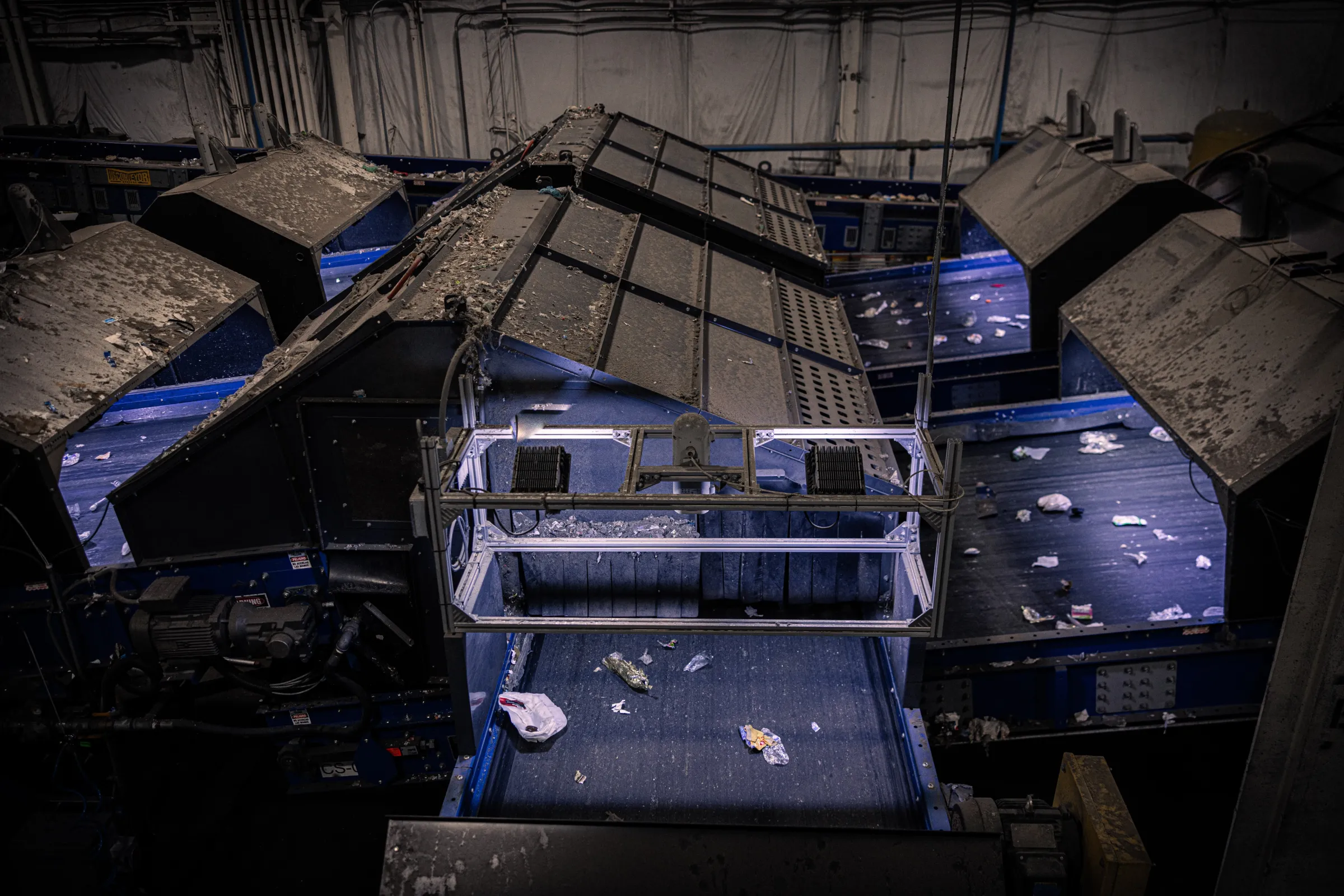
Recycling is sorted at an AMP facility in Cleveland, Ohio, in 2023. AMP/Handout via Thomson Reuters Foundation
Recycling is sorted at an AMP facility in Cleveland, Ohio, in 2023. AMP/Handout via Thomson Reuters Foundation
The truck-mounted cameras, which the city is currently piloting, promise easier, more widespread results, Turnbull said.
"We want a higher percentage of recyclables for the 'double green' reason: We want to do the right thing for the environment, and we want to save ourselves money."
E-waste
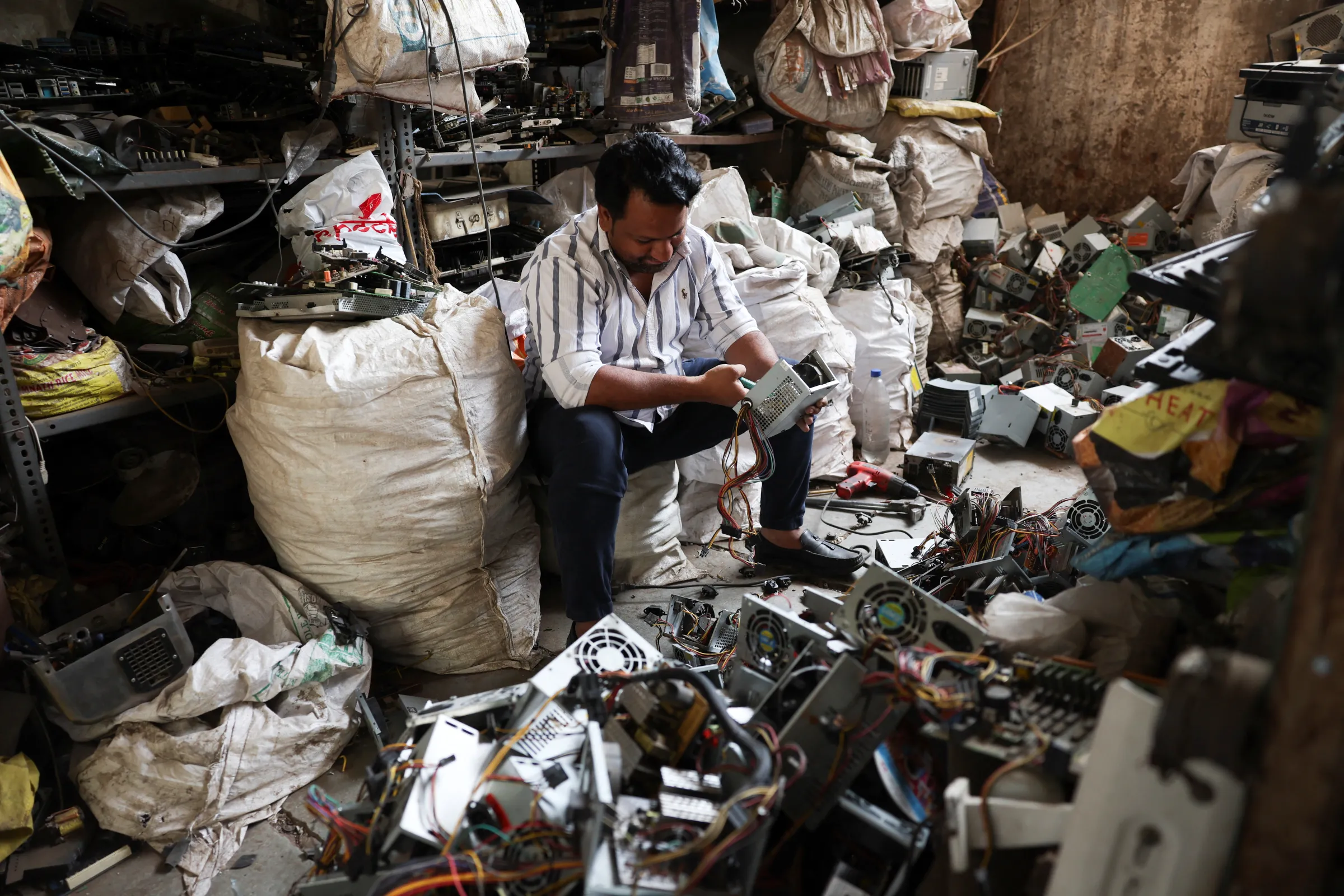
AI might also help solve more modern trash problems, such as electronic waste, which can pose a risk to humans if mishandled, said researcher David Park.
Every American makes an average of 47 pounds of e-waste a year, according to non-profit Environment America.
Among this new e-waste are lithium ion batteries - used to power e-scooters, among other products - which can explode if compressed, for instance in a processing facility.
AI could pinpoint a particular type of battery's shelf life, help waste workers identify potential hazards and even suggest safe and efficient disposal instructions, said Park, a visiting fellow at the SNF Agora Institute at Johns Hopkins University in Baltimore.
Elements of the recovered materials could also be of great value, he said, suggesting a future of "urban mining leases" to extract more value from trash.
"In the U.S., just 20 to 30% gets processed, so the rest ends up in landfills or incinerators – a missed opportunity," Park said.
"The raw materials we might need to build our future are in our trash."
(Reporting by Carey L. Biron; Editing by Lyndsay Griffiths and Anastasia Moloney.)
Context is powered by the Thomson Reuters Foundation Newsroom.
Our Standards: Thomson Reuters Trust Principles
Tags
- Net-zero
- Tech solutions
- Climate solutions