

What one year of Trump’s climate censorship reveals

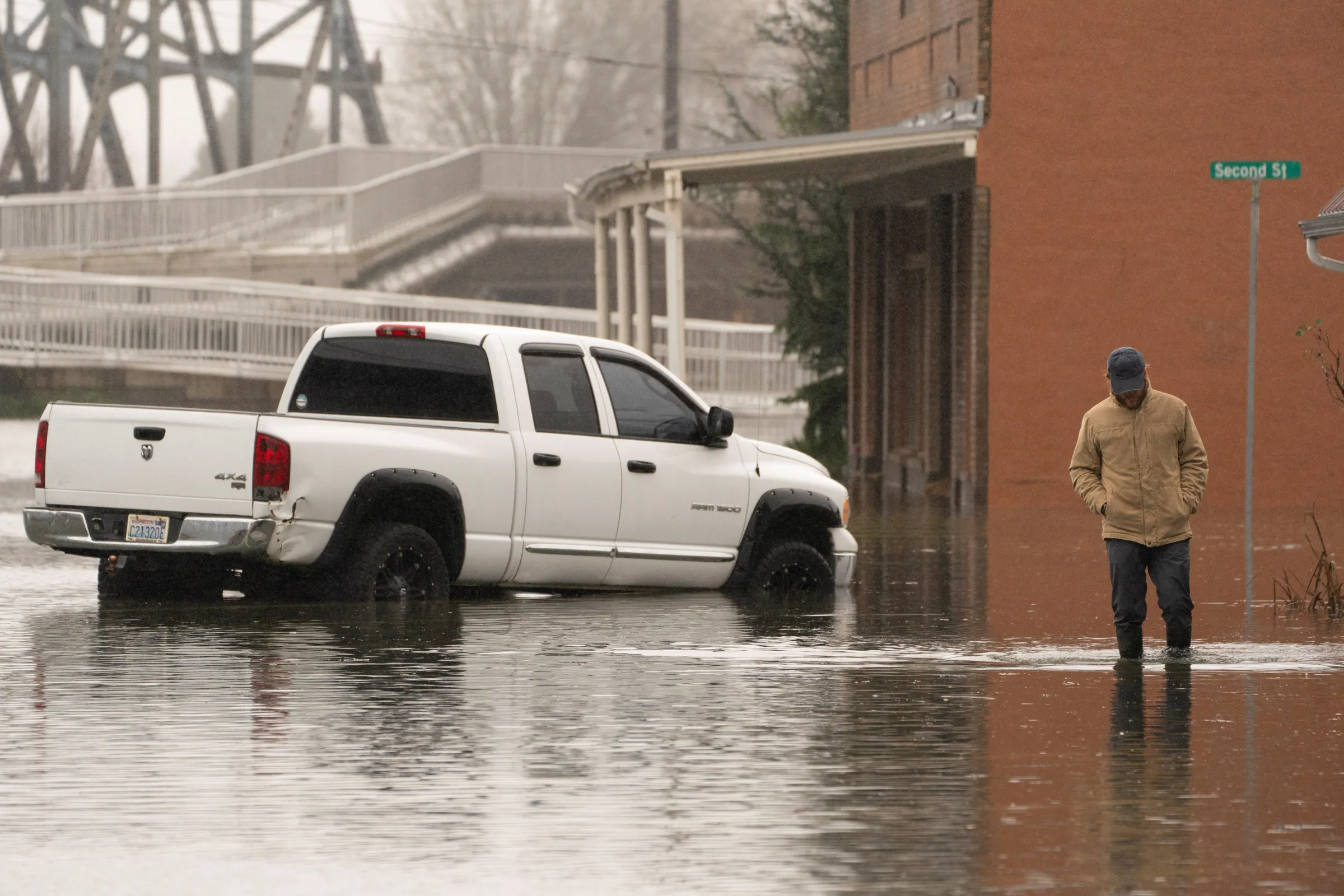
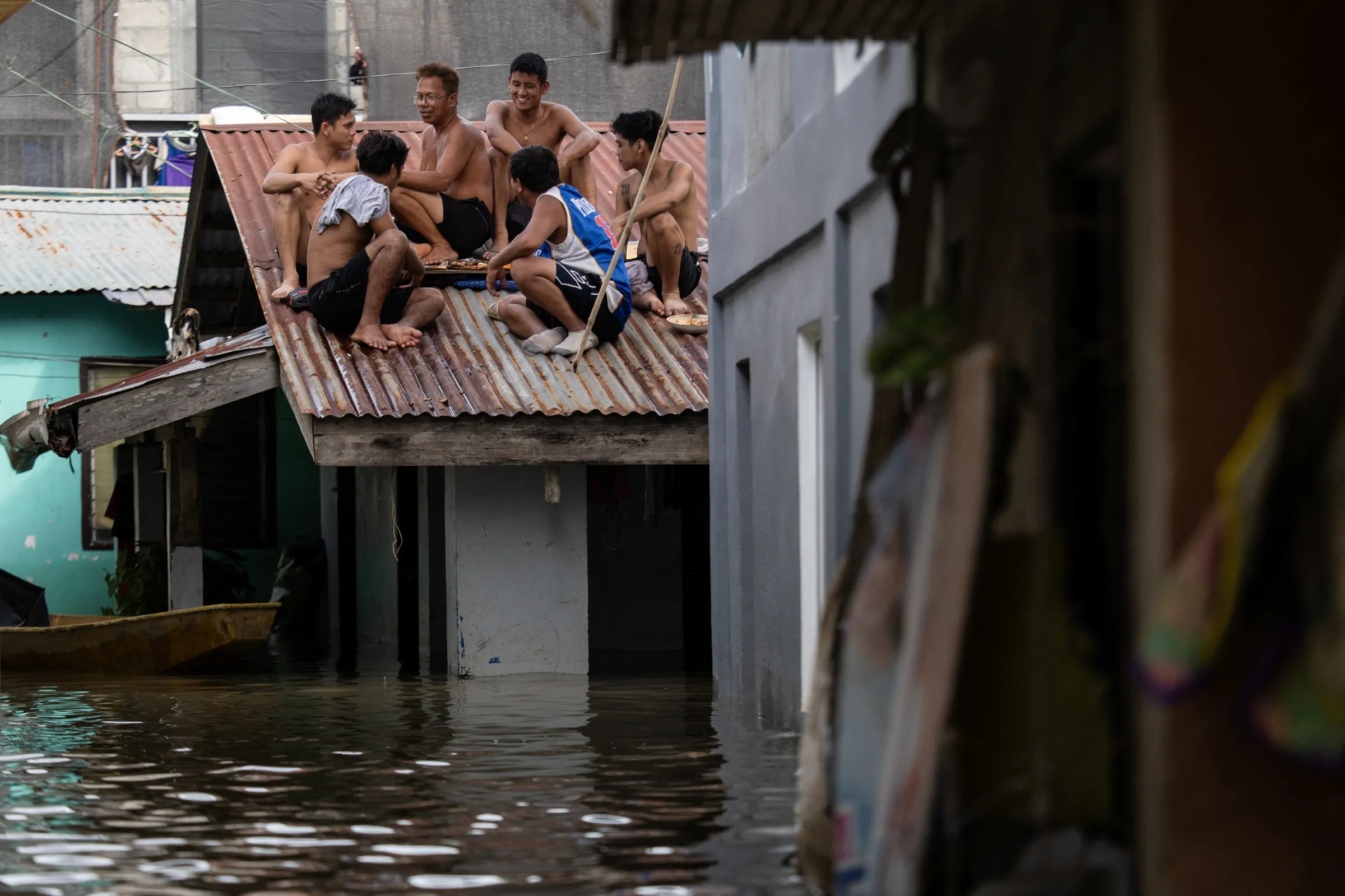
A person walks through floodwater, as an atmospheric river brings rain and flooding to the Pacific Northwest, in Sultan, Washington, U.S., December 10, 2025. REUTERS/David Ryder
What’s the context?
Here's what groups tracking and preserving climate data have found – and what could be next.
- EPA reportedly removes 'human caused' from climate pages
- Groups try to preserve data, track changes
- Future of climate reporting up in the air
RICHMOND, Virginia - President Donald Trump has gone beyond policy overhauls to fundamentally alter the way the government talks about climate change and the environment, limiting or outright deleting countervailing language and evidence during the first year of his second term in office.
The administration has methodically removed references to climate change and environmental justice from government resources and even blocked or deleted access to longstanding data and information that might contradict or undermine his agenda.
The implications are vast – and could bite even harder during the remainder of his term.
"There is a perception that science that doesn't align with the agenda will be muzzled and findings that are often misrepresented or found wrong will be pushed out in order to support the agenda," said Jonathan Gilmour, who works with the Public Environmental Data Partners, a coalition restoring and preserving data.
Trump himself has dismissed climate change as a "con job," and his administration has worked to reopen shuttered coal plants, boost oil and natural gas production and axe tax incentives for renewable energy resources like wind and solar.
The White House did not respond to requests for comment.
"It undermines the entire premise of democracy to obfuscate what is happening both inside and outside of government and to attempt to silence scientists and end data streams that tell us about the world and about public health and about the environment around us," Gilmour said.
"I fear that we will be less safe and less healthy and not understand the risks to our lives and livelihoods."
'Natural' climate change
Among the most recent moves, the Environmental Protection Agency (EPA) - the leading federal agency tasked with protecting human health and the environment – in December reportedly started quietly deleting references to "human caused" climate change from its online resources.
The agency has removed about 80 pages from its website, many of which related to the causes and impacts of climate change, said Izzy Pacenza with the Environmental Data & Governance Initiative, a group tracking changes to federal sites.
"On certain pages that remain accessible what was removed was very targeted information that talks about the anthropogenic causes of climate change," she said.
"So for example, on (the) EPA's page for causes of climate change, the page is still up, but information about how human-caused climate change can't be explained by natural events has been removed and all the information remaining is talking about natural reasons for variations in Earth's climate," she said.
References to "natural climate variability" or "natural variability" appeared often in an Energy Department-released report in July that was written by a handful of contrarian climate scientists who downplayed the dangers of global warming.
An EPA spokesperson said the agency "no longer takes marching orders from the climate cult."
"At the Trump EPA, we uphold gold-standard science, total transparency, and a commitment to fulfilling our statutory obligations," the spokesperson said.
"Previous iterations of the website that do not meet those standards are archived and available to the public."
The administration has also ceased adding new information to a database of natural disasters totalling $1 billion or more in damages.
And it has limited the public online availability of the National Climate Assessment, a congressionally mandated report that typically comes out every four years and documents human influence on the world's rising temperatures.
"The biggest thing I've learned is that we can't necessarily ascribe a rhyme or reason to the changes that we're seeing to federal websites," Pacenza said.
But the "targeted removal" of facts will "lead to a lack of trust," she said.
Fighting back
Pacenza's group and Gilmour are part of the Public Environmental Data Partners, which is working to preserve or move some climate-related data the administration is limiting.
"This crisis has forced the community to mobilize in a way that it would likely not have," Gilmour said.
"And that means more interchange of ideas. That means a lot of renewed energy and attention from funders. And it means we can wrestle with these really big questions and engage with them and engage with one another and think about re-imagining the system that has clearly not worked."
The research group Climate Central this month released its own version of the billion-dollar disaster database, and the private company Fulton Ring – also part of the Public Environmental Data Partners - did so last year.
While the raw number of full data sets that have disappeared might be relatively small, Gilmour worries that job cuts are also doing major damage. Many climate experts who have lost their jobs as the administration slashes the federal workforce are not being replaced, and neither is their knowledge base.
"What we're seeing is the human infrastructure behind the data sets is ... being cut, is being reassigned, is being intimidated," he said.
"That has downstream effects that we don't even understand yet," he added. "There's so much good work that will not get done because entire offices are now hollowed out."
'Hatchet'
Rachel Cleetus recalled getting an email message last year that said her contributions were no longer needed on the National Climate Assessment, the scope of which the administration had said last year it was in the process of reevaluating.
The initiative, formed in 1990, was due to release its sixth report in 2027. But work stopped after Trump eliminated funding and the experts writing the report were dismissed last year. The website hosting past reports was taken down.
"That kind of science, which is really the science that we need, is not policy prescriptive. It is not political. It is not partisan," said Cleetus of the Union of Concerned Scientists, a nonprofit advocacy group.
The assessment has been a critical policy tool to help government and the private sector prepare for a changing climate.
"It's ... very fact-based information that you can use. And to cut that off - it's a travesty."
"The whole world is watching us," said Cleetus. "This government is taking a hatchet to what was the crown jewel of the global scientific enterprise."
(Reporting by David Sherfinski; Editing by Ayla Jean Yackley.)
Context is powered by the Thomson Reuters Foundation Newsroom.
Our Standards: Thomson Reuters Trust Principles