South Africa's war on gender violence overlooks children-activists

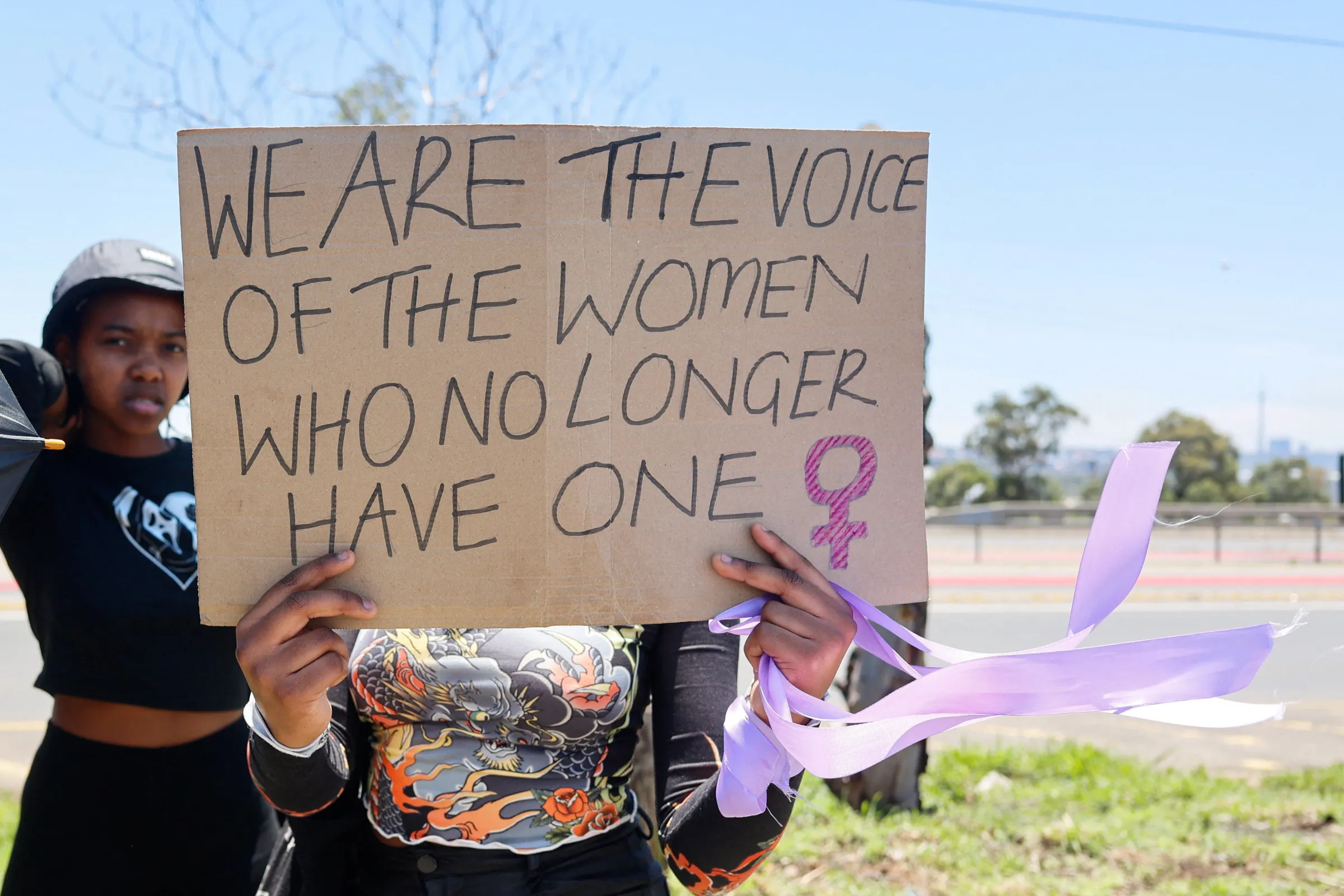
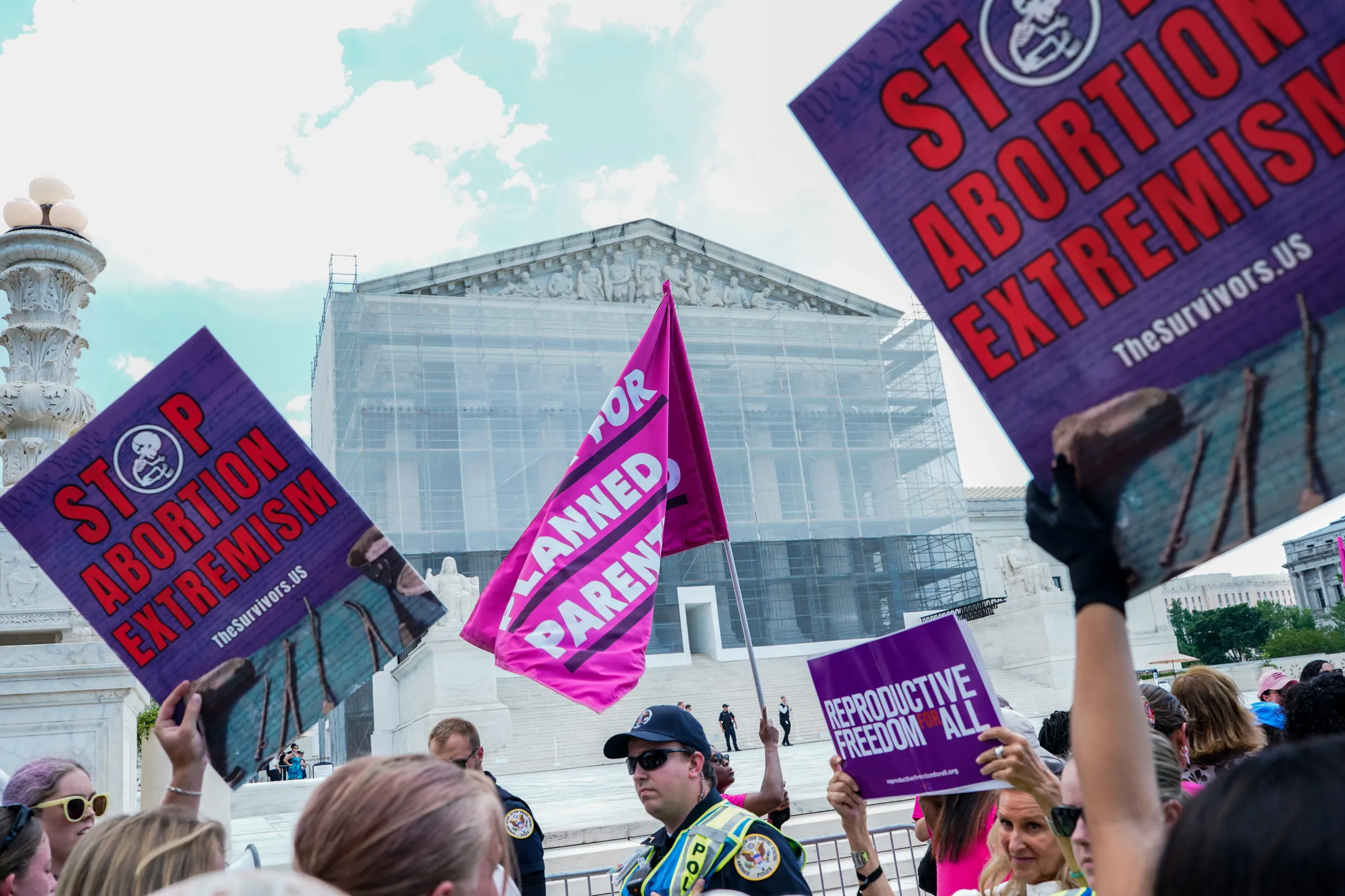
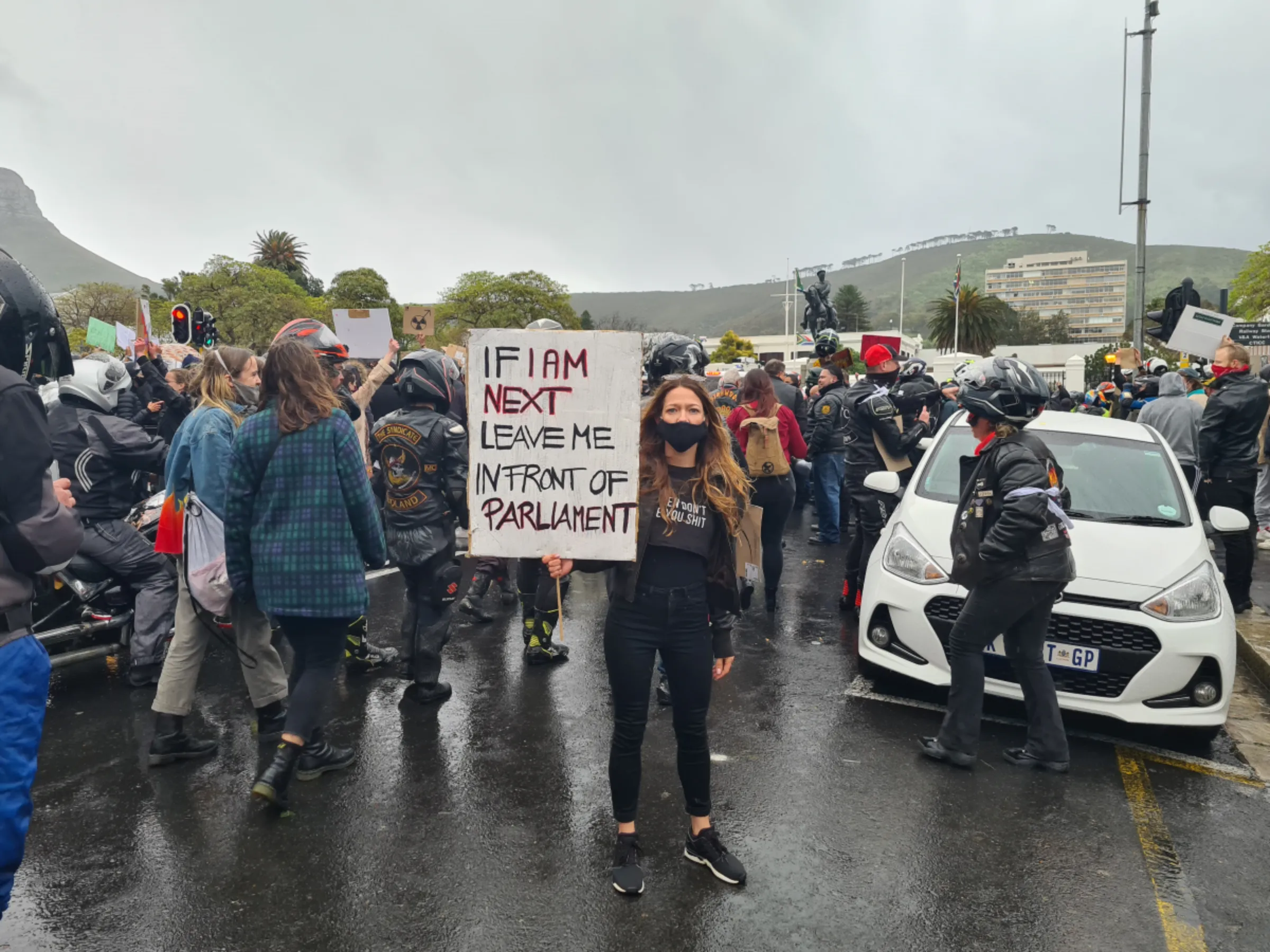
A person holds a placard, during a protest against gender-based violence, outside of the Nasrec Expo Centre during the opening day of the G20 leaders' Summit, in Johannesburg, South Africa, November 22, 2025. REUTERS/Alet Pretorius
What’s the context?
Don't forget the children, say rights groups after protests against gender-based violence sweep across the country.
- GBV classified "national disaster" in South Africa
- Nearly half of sexual assault victims are children
- Activists push for concrete action and funding
JOHANNESBURG - For 15 minutes in late November, tens of thousands of South Africans, clad in black, stopped what they were doing and lay down on the ground in parks, parking lots, fields and homes across the country.
This was part of a nationwide protest against gender-based violence and femicide to symbolise the 15 murders of women every day in South Africa.
The day prior, after months of pressure from civil society, President Cyril Ramaphosa classified violence against women as a 'national disaster', a statement hailed as a victory by some activists and branded superficial by others.
Ramaphosa said the classification would "enable faster emergency resource allocation for survivor services".
But child rights activists say the classification does not prioritise children enough who are nearly half of the number of sexual offence victims in South Africa.
"We commend the declaration, but we urgently need more funding and action allocated to children specifically, and this has to happen now," said Shahedah Omar, the director of the Teddy Bear Clinic, a charity assisting abused children with medical, legal and psychosocial support.
South Africa experiences some of the world's highest levels of gender-based violence (GBV), with the murder rate for women five times higher than the global average, according to the South African Medical Research Council (SAMRC), a research organisation.
Sexual assault cases involving children made up 47% of all such cases reported nationally in the 2022-3 financial year, and young girls aged 0-17 years made up two-thirds of all offences directed towards children in the same time period and 90% of rape cases, according to government data.
Rapid funding support for GBV charities on the frontline has been made even more urgent since the U.S. aid funding cuts in January that left charities reeling, rights group say.
"People often say it must be so easy to get money for destitute children and I'm like: it's a lot easier to get money for trees," said Abubakr Hattas, the head of the Johannesburg Child Welfare (JCW), a child protection charity that works with abandoned and abused minors.
For more than a century, JCW has served thousands of children through statutory child protection, family support, foster care, adoption and community programmes across the Johannesburg metro each year.
"For those of us at the coalface fighting GBV, the (announcement by Ramaphosa) means nothing, we have heard this rhetoric before," said Hattas from the JCW offices.
"Invisible" children
When U.S. President Donald Trump cut foreign aid funding in January, Hattas said they had to adapt their GBV response overnight to their new reality.
"What I really focused on was that the doors of trauma containment stay open," said Hattas, adding that they see about 300 to 400 GBV survivors every month in Johannesburg alone.
Hattas had to make the difficult decision of prioritising children over adult survivors when it came to "depth of care" - monitoring and guiding their case reporting, legal care and trauma counselling.
"Although we will trauma-contain and link anybody to services requiring help, we can only supervise cases of children under the age of 12," he said.
In the 2022/23 period, there were 19,418 reported assault cases against children, with rape accounting for 38% of these incidents, government statistics found.
Among government's priorities for improving child protection are strengthening abuse reporting mechanisms and expanding psychosocial and family support services, according to the Ministry for Women, Youth and Persons with Disabilities.
Following similar protests in 2018 against GBV, the National Strategic Plan (NSP) was created by activists in collaboration with the South African government that outlines six key pillars aimed at ending all violence towards women by 2030.
"The National Strategic Plan is so comprehensive, so well structured, so poorly implemented," said Hattas. "There are no dedicated funds to protect children in any framework."
Omar agrees.
"There are six pillars in the NSP, but the great omission is the seventh pillar which should prioritise children who are often invisible and receiving less of the lion's share of funding," she said.
Despite not receiving U.S. funding as the aid cuts occurred, Teddy Bear Clinic said there are now generally less funds to be spread between frontline organisations.
"We all had to carry a heavier load," she said.
Disaster response
But activists note the distinction between Ramaphosa labelling GBV a "national crisis" in 2019, and a "national disaster" this November.
"What we have now is something fundamentally different," said Sabrina Walter, founder of Women for Change, the advocacy group that spearheaded the shutdown and petition with more than 1 million signatories calling for a national disaster declaration.
The formal "national disaster" classification unlocks budgets, speeds up emergency measures and places responsibility on the country's national executive to coordinate a rapid response, said Walter, adding that tangible change had to follow.
"The declaration is not the destination; it is simply the door we have finally managed to force open ... On its own it changes nothing unless it is followed by real, measurable action" said Walter.
Women for Change have clearly outlined the "next steps"; the national disaster implementation plan needs to spell out the roles, budgets and timelines expected of all government departments, from policing to education and health.
GBV awareness, including topics on consent, bodily autonomy and gender equality need to be implemented into school curriculums, Walter added.
"Alongside this, we believe the government must secure ring-fenced funding specifically for survivor services and prevention work," said Walter.
The Ministry for Women, Youth and Persons with Disabilities said in an emailed statement the president's classification of a national disaster meant that "the priority is therefore not new policy, but to make existing systems work faster, better and together, with measurable impact at community level."
Despite the scepticism around the disaster classification and funding pressure, Hattas said civil society was determined to keep fighting for the safety of the country's children.
"There are resilient people here," Hattas said.
And while agreeing that children are not always prioritised in GBV campaigns, Walter sees them as part of the movement's future.
"During the shutdown, for example, we saw hundreds of schools across South Africa taking part. Children were not spectators; they were part of the movement."
(Reporting by Kim Harrisberg; Editing by Jon Hemming.)
Context is powered by the Thomson Reuters Foundation Newsroom.
Our Standards: Thomson Reuters Trust Principles