
With Maduro ousted, what does the future hold for Venezuela's diaspora?


Explainer
Explainer
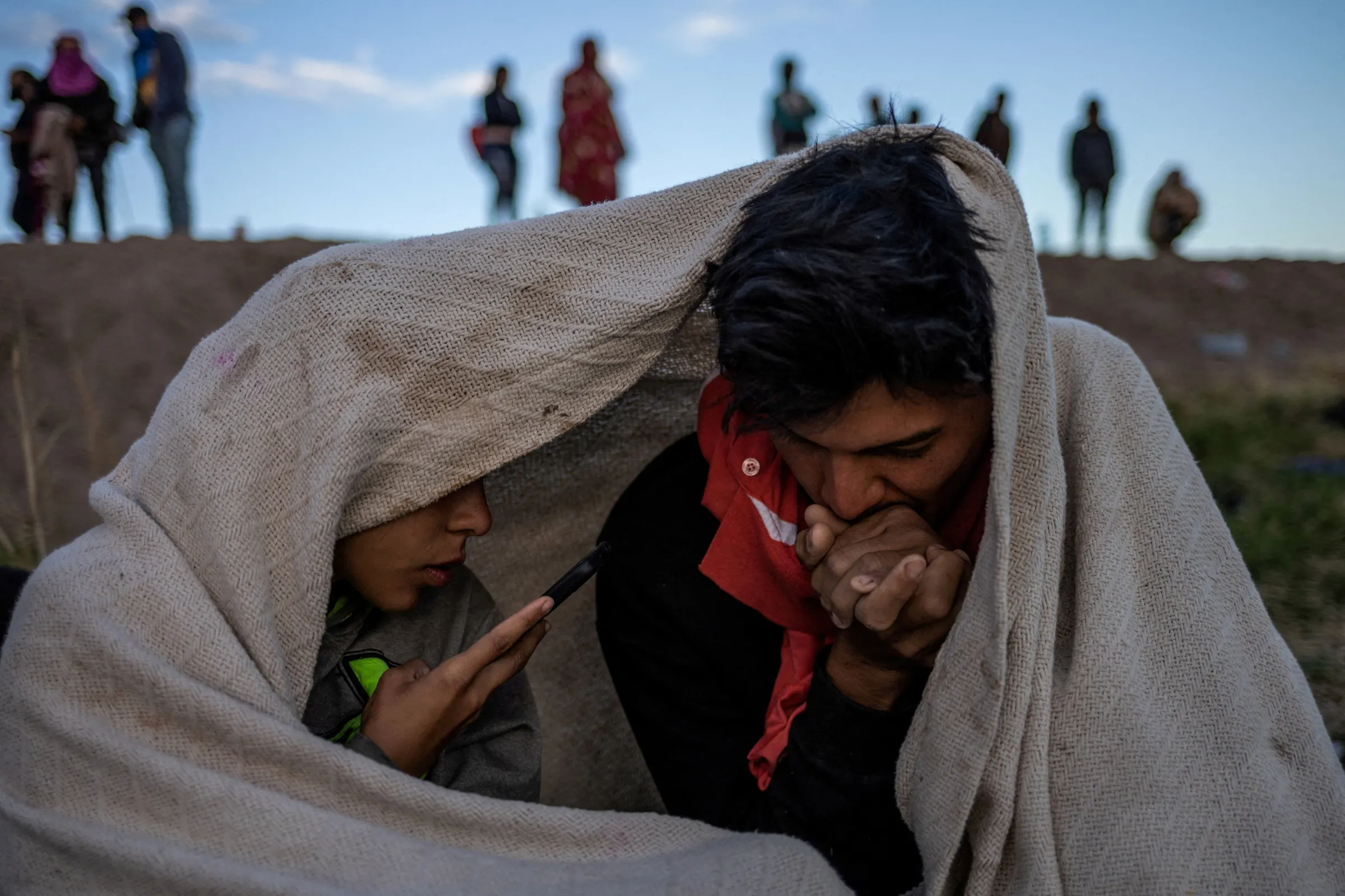
Venezuelan migrants take cover from the cold from the international boundary between Ciudad Juarez, Mexico and El Paso, Texas, U.S., April 25, 2024. REUTERS/Adrees
What’s the context?
Venezuelan migrants face decisions about returning to their homeland or staying where they have settled.
BOGOTA, Colombia - With the capture of President Nicolas Maduro by U.S. forces, millions of Venezuelan migrants who fled economic and political turmoil are wondering what the future will bring.
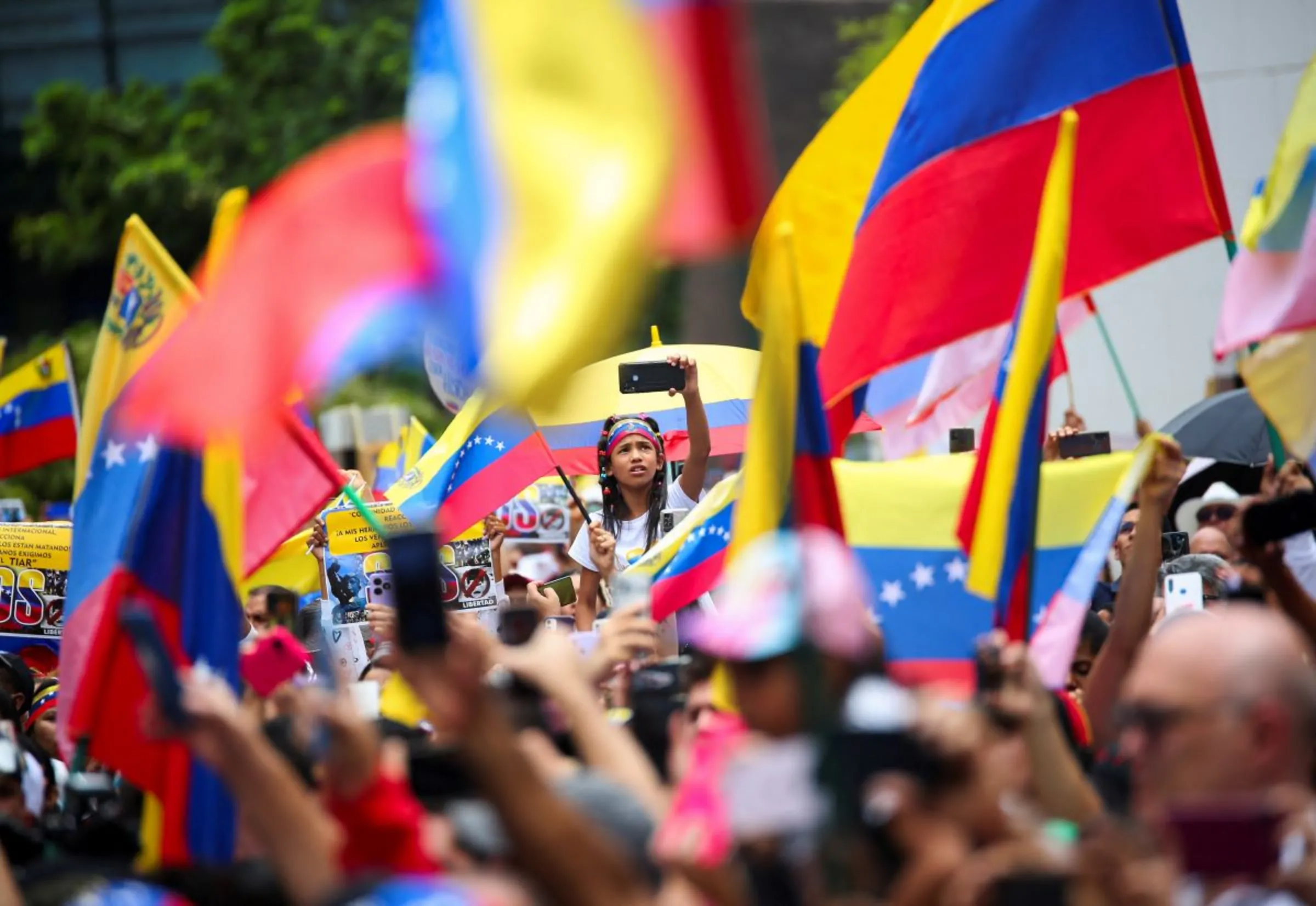
From the streets of Miami in the United States to Bolivar Square in Colombia's capital, Venezuelans celebrated, chanting "freedom" over the ouster of the leader who oversaw one of the world's largest migration exoduses in recent history.
But among those in Venezuela's vast diaspora, that celebratory mood is mixed with worries over what's to come after the capture of Maduro, who appeared in shackles to plead not guilty on Monday to narcotics charges in New York.
Many migrants face decisions about returning to their homeland or remaining in the countries where they have settled.
Here are key facts about Venezuela's diaspora and the reactions to Maduro's ousting:
What caused the Venezuelan refugee and migrant crisis?
Venezuela's highly oil-dependent economy began collapsing after a 2014 crash of oil prices left it unable to maintain its socialist economic system.
Stringent price controls introduced by Maduro's government created severe shortages of food and medicine and, coupled with hyperinflation, left Venezuelans unable to afford even the most basic needs in the once-prosperous nation.
The resulting economic and humanitarian crisis has driven nearly eight million people, about 20% of the population, to flee since 2014 in the largest mass migration in Latin American history, according to the U.N. refugee agency (UNHCR).
In 2018, inflation exceeded 1 million percent. The bolivar currency became so worthless that bills were used to make trinkets and souvenirs.
Massive anti-government street protests aimed at ousting Maduro took place in 2016 and 2019, bringing violence and unrest that prompted more Venezuelans to flee.
The U.S. has considered Maduro an illegitimate dictator since he declared victory in a 2018 election marred by irregularities, allegations which the government has denied.
Despite some economic improvements and lower inflation, most Venezuelans still struggle to make ends meet.
Where are Venezuelan migrants?
Most Venezuelan migrants have settled in Latin America and the Caribbean.
Neighbouring Colombia is home to the largest share of Venezuelan migrants, some 2.8 million. Many have been granted legal status and a 10-year right to remain.
Around the world, since 2015, more than 211,000 Venezuelans have been recognised as refugees, and more than a million have submitted asylum claims, according to the UNHCR.
What's the status of Venezuelan migrants?
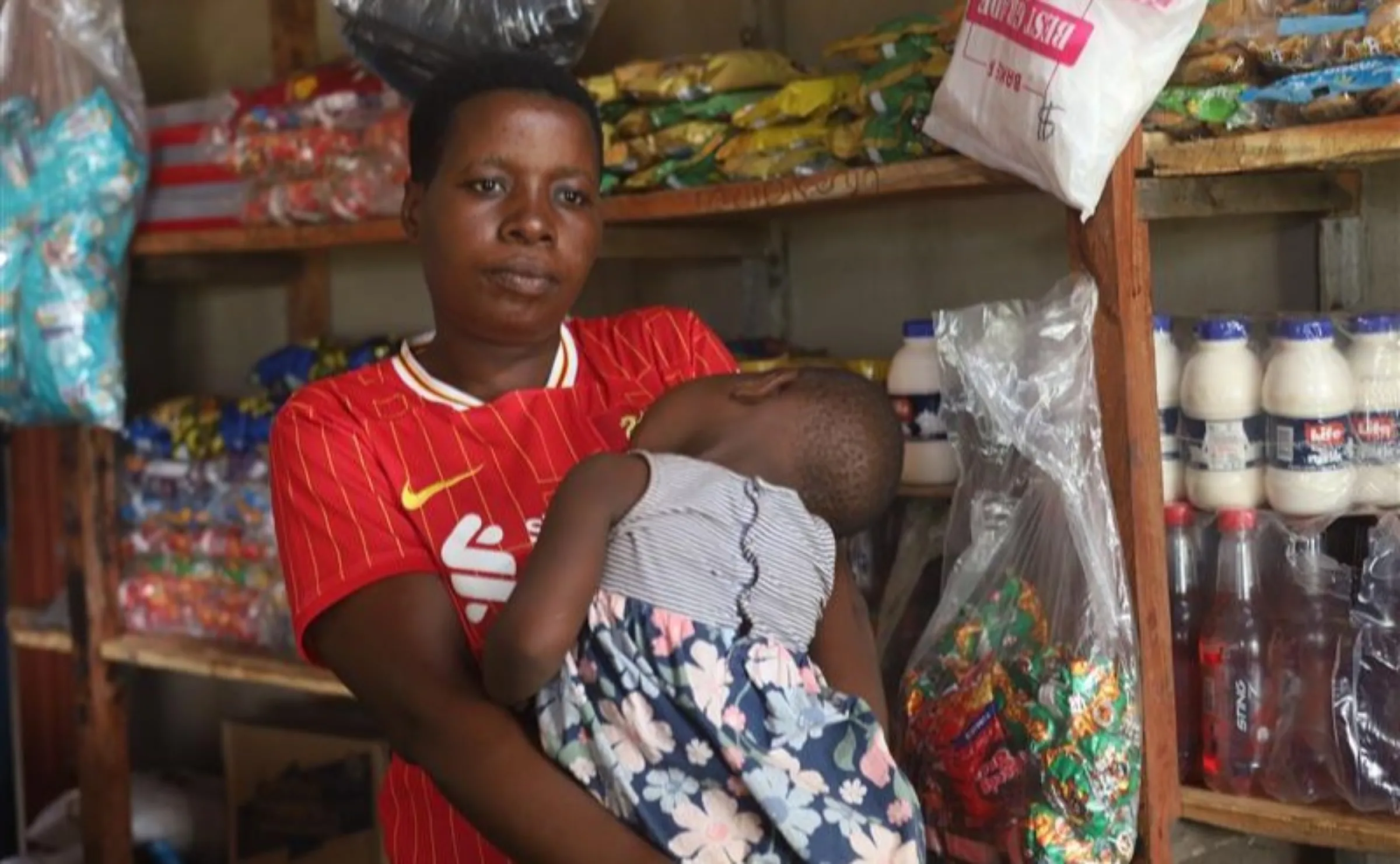
Many refugees and migrants from Venezuela live in poverty, with difficulties obtaining health care services and formal employment.
Hundreds of thousands do not have visas, permits or valid passports to stay legally in host countries, leaving them not only without basic rights but at high risk of labour exploitation and being trafficked into prostitution.
To put food on the table or avoid homelessness, many Venezuelans have resorted to survival sex for money and begging, according to the UNHCR.
How has the migration crisis changed over the years?
The first wave of Venezuelan migrants were the rich, skilled and university-educated, followed by the middle classes and then the destitute and most desperate during the height of hyperinflation in 2017-2018.
Those years saw tens of thousands of Venezuelans, some carrying babies in their arms, travel across South America on foot as they were too poor to afford transport or a passport.
A growing number of Venezuelans are crossing the Darién Gap - a lawless stretch of rainforest straddling Colombia and Panama - as new visa restrictions imposed by several Latin American countries make it harder for them to fly into Mexico and Central America.
What does the future hold for Venezuelan migrants?
With Maduro's capture, the situation inside Venezuela "remains dire," according to the U.N. Office for the Coordination of Humanitarian Affairs (OCHA).
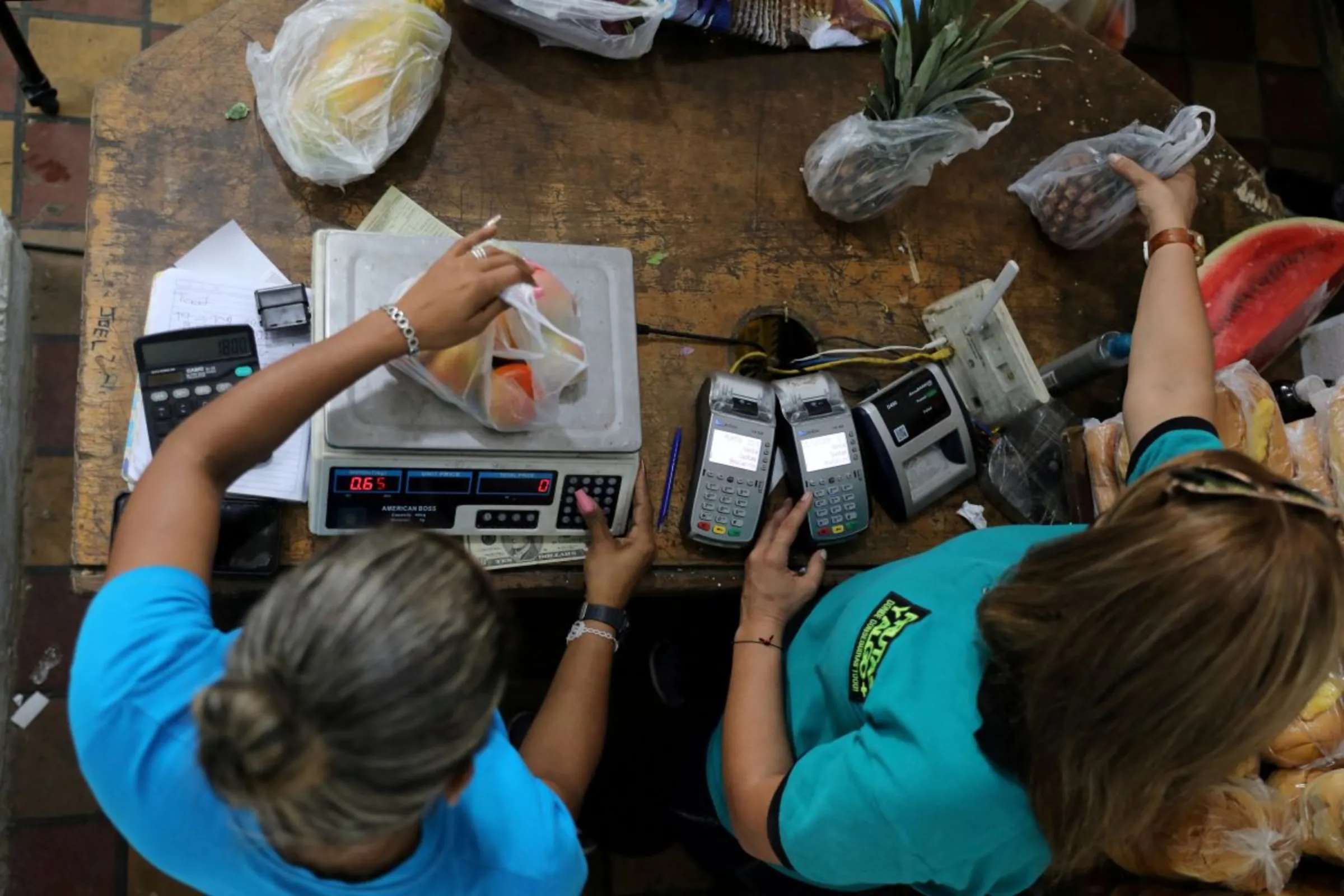
Venezuelans at home are stocking up on water, food and fuel with cash-only purchases, often with U.S. dollars the only accepted form of payment.
In Bogota, Diego Rojas, a 32-year-old food courier who left Venezuela in 2020, voiced the sentiments of many fellow migrants.
"I'm happy.... It's the beginning of the end for Maduro," Rojas told Context. "I would love to return but I won't go yet, it's too uncertain. No one knows what will happen."
In neighouring Brazil, home to about 700,000 Venezuelan migrants, William Clavijo, a Venezuelan doctor and political scientist, called Maduro the "head of an authoritarian regime responsible for crimes against humanity."
"I feel a lot of joy and hope," he said, adding that he was cautiously optimistic about seeing some justice for Venezuelan leaders who behaved as though they were "untouchable."
"Now we see that they aren't," said Clavijo, who migrated to Brazil in 2014. "I hope there will be a gradual reform process to prepare the country to transition to democracy."
In Mexico, home to about 106,000 Venezuelans, Lizbeth Guerrero, 60, arrived eight years ago with her family.
"I'm excited, but I can't deny I have mixed feelings.... To say Venezuela is free is a big mistake. As long as the remaining corrupt powers don't leave Venezuela, we're not free yet.
"I'm one of those who think about returning to Venezuela, but we can't do it right away as the right conditions aren't there yet," she added.
What's the Trump administration's stance on Venezuelan migrants?
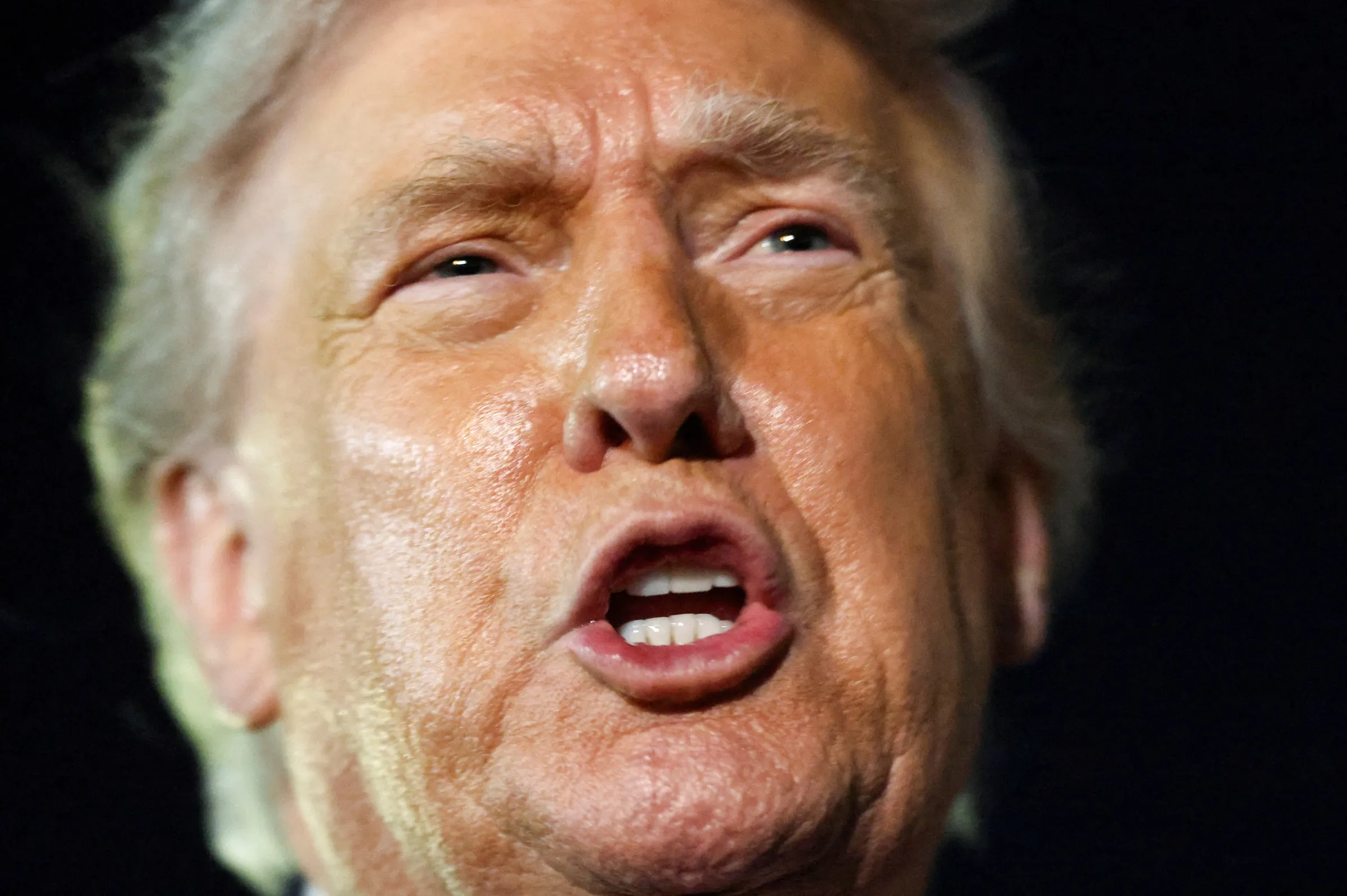
In early 2025, the Trump administration ended Temporary Protected Status for Venezuelans (TPS), meaning more than 250,000 Venezuelans living in the U.S. face potential deportation. This came in addition to a previous order that stripped TPS for about 350,000 Venezuelans.
Following Maduro's capture, some U.S. officials have urged the administration to reinstate TPS for Venezuelans who say the country remains unsafe for people to return.
"No one should be forced back into chaos and uncertainty," Miami Mayor Eileen Higgins said in a statement.
"They have built lives here, contributed to our community, and deserve the security to remain while their homeland regains stability."
U.S. Homeland Security Secretary Kristi Noem has defended the decision to end TPS for Venezuelans, saying those who had TPS can apply for refugee status.
(Reporting by Anastasia Moloney, Diana Baptista and Andre Cabette Fabio. Editing by Ellen Wulfhorst.)
Context is powered by the Thomson Reuters Foundation Newsroom.
Our Standards: Thomson Reuters Trust Principles
Tags
- Migration