LGBTI+ rights are no longer just about identity. They are about power, influence, and the future of Europe’s security.


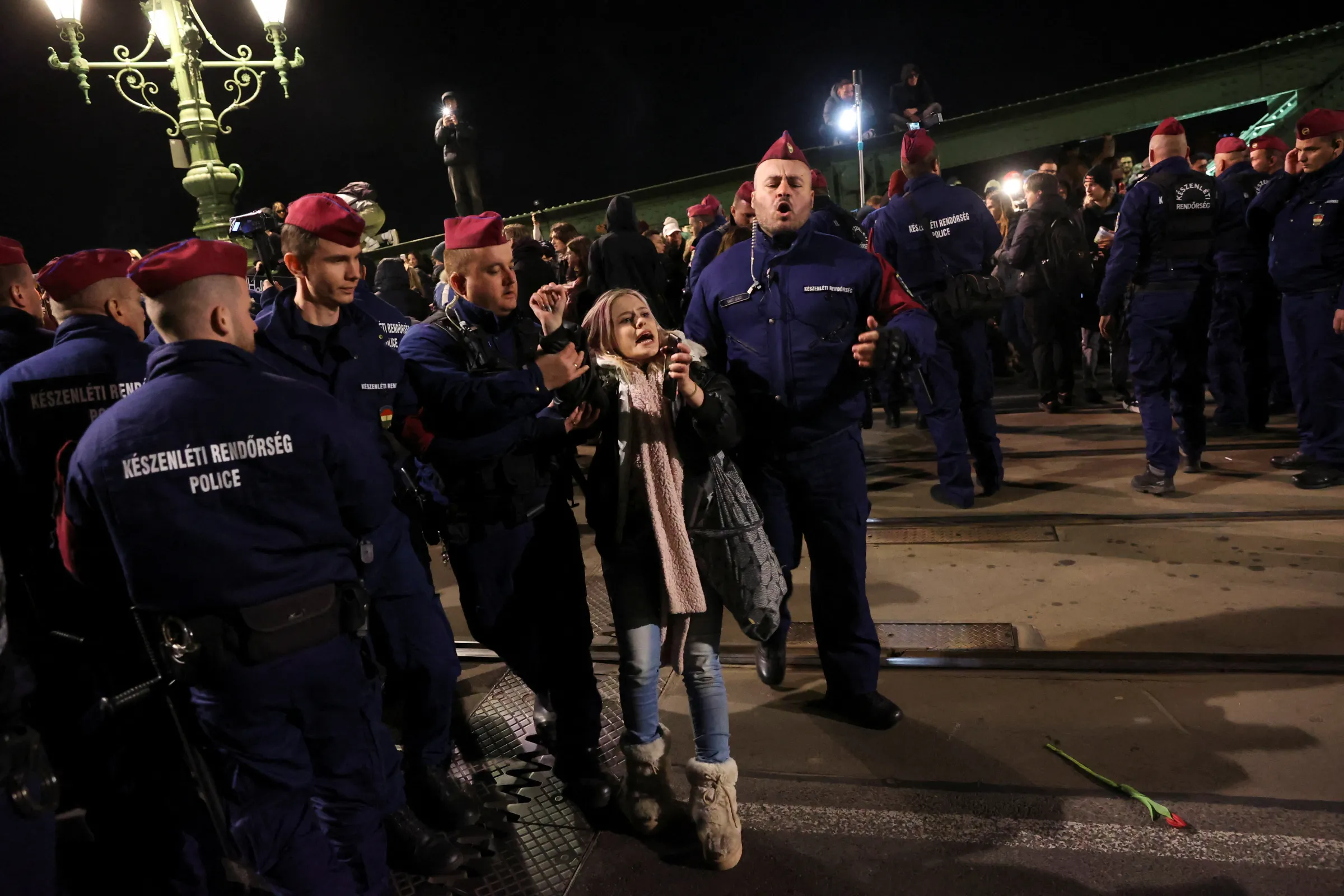
Police officers hold a protester during a demonstration after Hungarian parliament passed a law that will ban LGBTQ+ communities from holding their annual Pride march in Budapest, Hungary, April 8, 2025. REUTERS/Bernadett Szabo
With real expertise to offer, LGBTI+ organisations should be treated as strategic partners in security and defence.
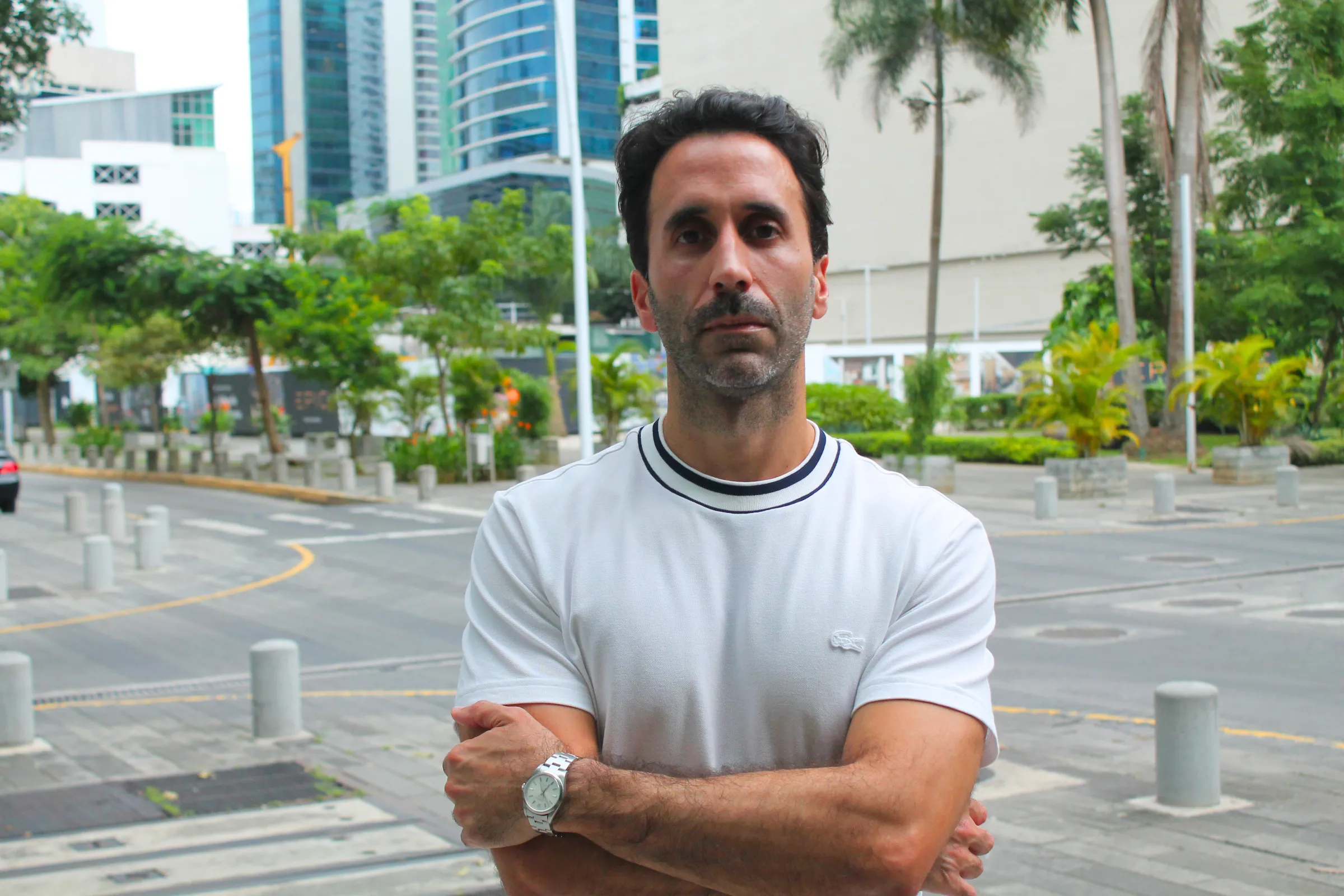
Alex Farrow is the CEO of the Kaleidoscope Trust, a charity campaigning for LGBTI+ rights around the world.
Last year, I marched in Budapest during a banned Pride event. People joined not just to defend LGBTI+ rights, but because they understood something deeper: our community is the canary in the coalmine for freedoms in Hungary.
And now, with European attention focused elsewhere, the state apparatus is mobilising against those who stood to defend them.
LGBTI+ rights are no longer just about identity. They are about power, influence, and the future of Europe’s security.
For the past decade, across Eastern Europe, Russia has realised this, deliberately weaponising anti-LGBTI+ sentiment to divide societies, sway elections, and weaken European institutions in order to pursue their expansionary aims.
For liberal democracies in Europe, defending LGBTI+ rights is no longer just a moral obligation - it is a matter of continental security.
Through my work in authoritarian regimes - from Russia to Kazakhstan, Belarus, and Azerbaijan - I have seen how governments manipulate fear and scapegoat minorities to control the wider population.
LGBTI+ communities are often the first target: visible, vulnerable, and politically convenient.
LGBTI+ rights are no longer just about identity. They are about power, influence, and the future of Europe’s security.
In countries like Hungary, Georgia, and Moldova, we have seen Russian-aligned actors exploit anti-LGBTI+ sentiment to influence elections, polarise societies, and tilt governments toward Moscow’s interests, undermining both democracy and Europe’s collective security.
These tactics are not abstract; they are highly effective. When hate is peddled by politicians, it’s worth asking who gains — and whose security is at risk.
In the weekend before Moldovan elections last September, the country was flooded with anti-LGBTI+ rhetoric and disinformation - much of it tied to pro-Russian influence operations.
And why? To stop pro-European Union President Maia Sandu from securing a parliamentary majority and bring the country closer to Russian President Vladimir Putin’s sphere of influence.
This time, the Russian state failed.
While the immediate effects are felt by people - through rising harassment, abuse, and attacks - the consequences extend far beyond the LGBTI+ community.
Anti-democratic interference in elections and public opinion threatens NATO cohesion and the EU’s ability to act collectively. Governments aligned with Moscow can slow or block EU decisions and undermine NATO coordination — from sanctions enforcement to defensive action — directly impacting the security of European states. Hungary plays this card at every turn over support for Ukraine and Russian sanctions.
In Minsk in 2017, I danced in a gay-friendly karaoke bar under a statue of Lenin, a fleeting moment of liberalisation in Belarus before brutal crackdowns and subsequent sham elections reminded me how quickly freedoms can vanish and how easily authoritarian states can assert influence.
Civil society, including LGBTI+ organisations, is uniquely positioned to counter these threats. On the ground, organisations like those supported by Kaleidoscope Trust provide essential support — healthcare, legal aid, protection from violence — but they can (and often do) act as a frontline against disinformation. They fact-check, mobilise communities, and maintain social cohesion, helping to ensure that foreign powers cannot manipulate public opinion to achieve political ends.
The global LGBTI+ movement is not a side issue or a tool to be deployed when convenient. It is a sophisticated, well-networked part of civil society, with decades of experience countering authoritarianism, disinformation, and repression.
With real expertise to offer, LGBTI+ organisations should be treated as strategic partners in security and defence. That means seeing us not just as a loud, visible, Pride-marching community, but as an organised, experienced, and credible force for democracy and European stability.
Yet the resources to sustain this work are under pressure. European governments – including Britain, Germany, and the Netherlands — are reducing foreign aid just as Russian-aligned anti-rights movements are increasing their influence.
This creates a dangerous asymmetry: the forces seeking to destabilise Europe have growing access to funds, while civil society groups defending liberal democracies are forced to operate with dwindling resources.
The result is not only setbacks for human rights but tangible risks to political and security stability across the continent.
First, maintain and, where possible, increase support for civil society organisations safeguarding equality and countering disinformation.
Second, integrate human rights protection into national security planning, recognising that attacks on minority communities and marginalised groups are often proxies for geopolitical manoeuvring aimed at undermining democratic values.
Third, foster cross-border collaboration to share insight, amplify fact-based reporting, and strengthen democratic institutions.
Fourth, communicate publicly that defending human rights abroad is not a luxury, it is central to Europe’s security— and therefore not optional.
Finally, in countries with greater levels of equality, stand firm in this position and do not cede an inch of ground to bad-faith actors attempting to replicate the same tactics that have succeeded abroad.
LGBTI+ rights are often framed as a social issue. But today they are a frontline in the defence of European security - continental, national, and individual. Without serious support, Russian tactics face little resistance — leaving Europe even further exposed.
The money to support these efforts — through foreign aid, defence, or security budgets — must be found.
If it fails to act, Europe risks not just losing freedoms but becoming a fractured, weaker continent which is something none of us can afford.
Any views expressed in this opinion piece are those of the author and not of Context or the Thomson Reuters Foundation.