Millions of Syrians – half of them children - have returned from neighbouring countries, and they struggle to access basic services.


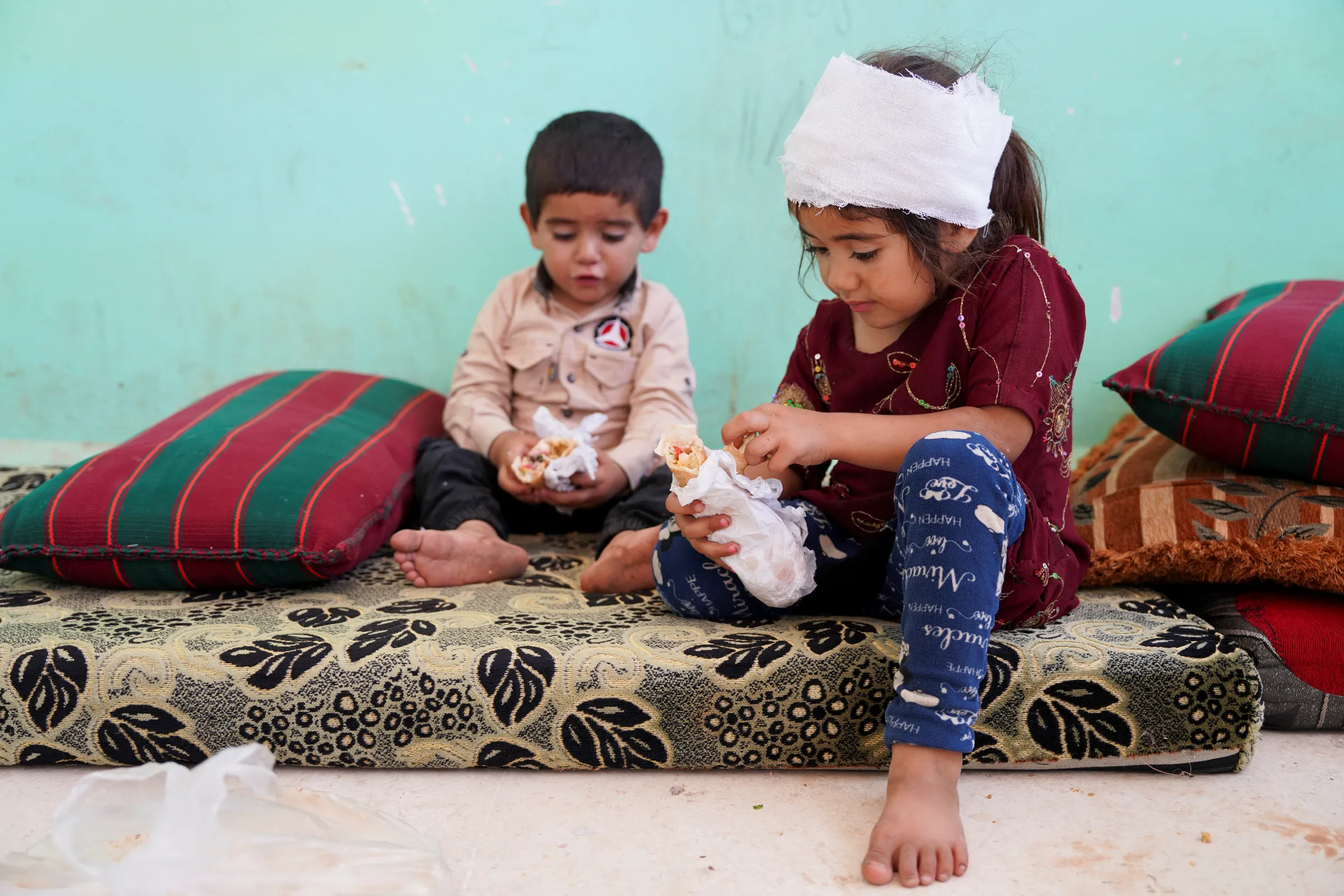
Children sit together inside a school that is used as a shelter centre, in Dael, Deraa governorate, Syria July 24, 2025. REUTERS/Karam al-Masri
Syria has entered its quietest period in more than a decade but children still face a crisis and the world must not look away.
Rafif Dahbour is communications specialist at War Child, which works to shape the systems that protect and support the wellbeing of children affected by conflict through mental health and psychosocial support, education and child protection.
When I landed in Aleppo in November, the calm felt almost unreal. After years of heavy fighting, prolonged sieges and mass displacement, the airport was quiet, but the silence was fragile: a country exhausted but still holding on.
Driving through Aleppo’s streets, I saw life trying to reclaim its rhythm: people selling food, children running around, vendors shouting prices, blankets taped over blown-out windows.
On the walls, there was graffiti about the 2023 earthquake that hit northern and western Syria, as if to say: We survived. Yet beneath this surface lies a different kind of emergency.
While large-scale frontline fighting has reduced in comparison with previous years, life for children remains as precarious as ever. The war continues to be felt, just under a quieter sky.
In Idlib, northwest Syria, I walked through deserted school buildings, once filled with lessons, chalk dust, and laughter. Today they stand gutted – walls cracked, stairwells collapsed, classrooms buried in rubble.
The crisis in Syria left over 7,000 schools damaged or destroyed.
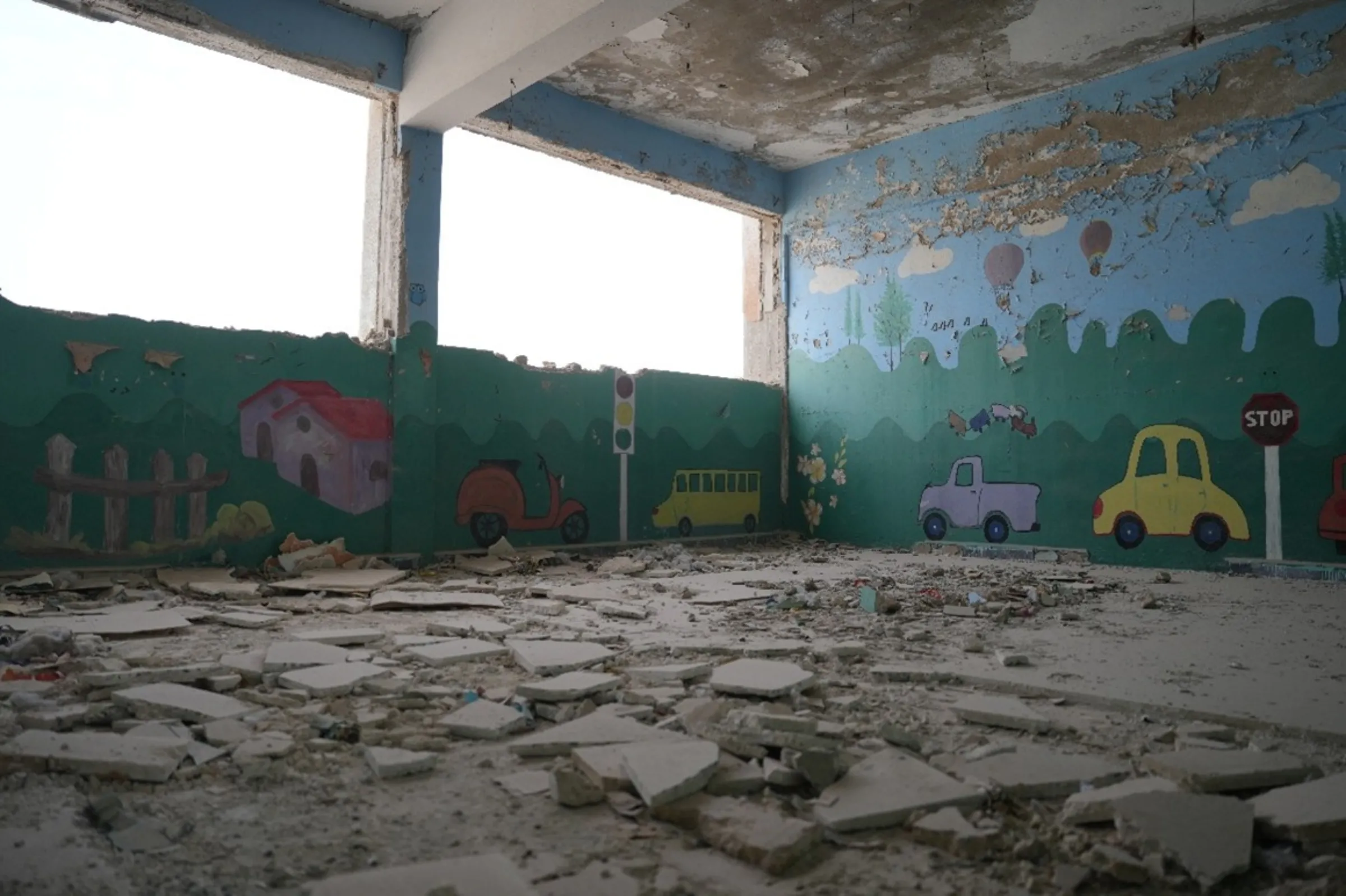
Deserted school building in Idlib, northwest Syria, November 16, 2025. War Child/Handout via Thomson Reuters Foundation
Deserted school building in Idlib, northwest Syria, November 16, 2025. War Child/Handout via Thomson Reuters Foundation
Nearby, families returned to homes without windows, doors, water, or security. Their plight is not unique. Despite the drop in large-scale fighting, 7.5 million children across Syria - many of them in the northwest - still need humanitarian support and 2.45 million remain out of school.
As conditions shifted in Syria, many families began returning - more than 1.5 million this year. But families are returning to destroyed infrastructure and services, and classrooms previously used as military posts.
I met a grandmother, Ruqayya*, who could not physically return to her home because it was too damaged, full of rubble. All her grandchildren struggle with asthma, their lungs battling the dust that never truly settles in a city still breathing debris.
Millions of Syrians – half of them children - have returned from neighbouring countries, and they struggle to access basic services.
Children returning from abroad face their own shock.
One girl in rural Aleppo, Manar*, born in Turkey, is learning to read and write in Arabic for the first time. Standing among her new peers and teachers, she whispered: “I don’t want to be here. I want to go back.”
Fitting in seemed to be very difficult for her.
Millions of Syrians – half of them children - have returned from neighbouring countries, and they struggle to access basic services.
With many of those children being born abroad, the challenge to reintegrate them into a new educational system unfamiliar to them can take a heavy toll on their wellbeing and mental health.
The security risks also remain real.
Since early 2025, hundreds of explosive ordnance incidents have been reported across Syria.
As global attention shifts elsewhere, Syria’s silent crisis must not slip from view.
Children killed or maimed by leftover bombs, mines, and unexploded ordnance are not just statistics - they are part of daily life for families trying to rebuild.
Just last week, local media reported an explosion at an ammunition depot in western Idlib, killing five workers and injuring nine others. The blast occurred one kilometre away from a school building that was full of children.
Syria has entered its quietest period in over a decade, but the crisis facing children has not quieted. If the world continues to look away now - at the moment families are finally daring to rebuild - we risk losing more than buildings. We risk losing a generation.
Children urgently need safe schools, psychosocial support, and protection from unexploded ordnance. They need teachers to help restore what the war stole. Until schools are repaired, Syrian children will not be able to fully return to learning.
As global attention shifts elsewhere, Syria’s silent crisis must not slip from view. This is the moment to choose differently, to invest in children’s future with the same urgency with which the world once counted their losses.
*names changed to protect identities.
Any views expressed in this opinion piece are those of the author and not of Context or the Thomson Reuters Foundation.