

What's next for US climate policy under Trump?

Explainer
Explainer
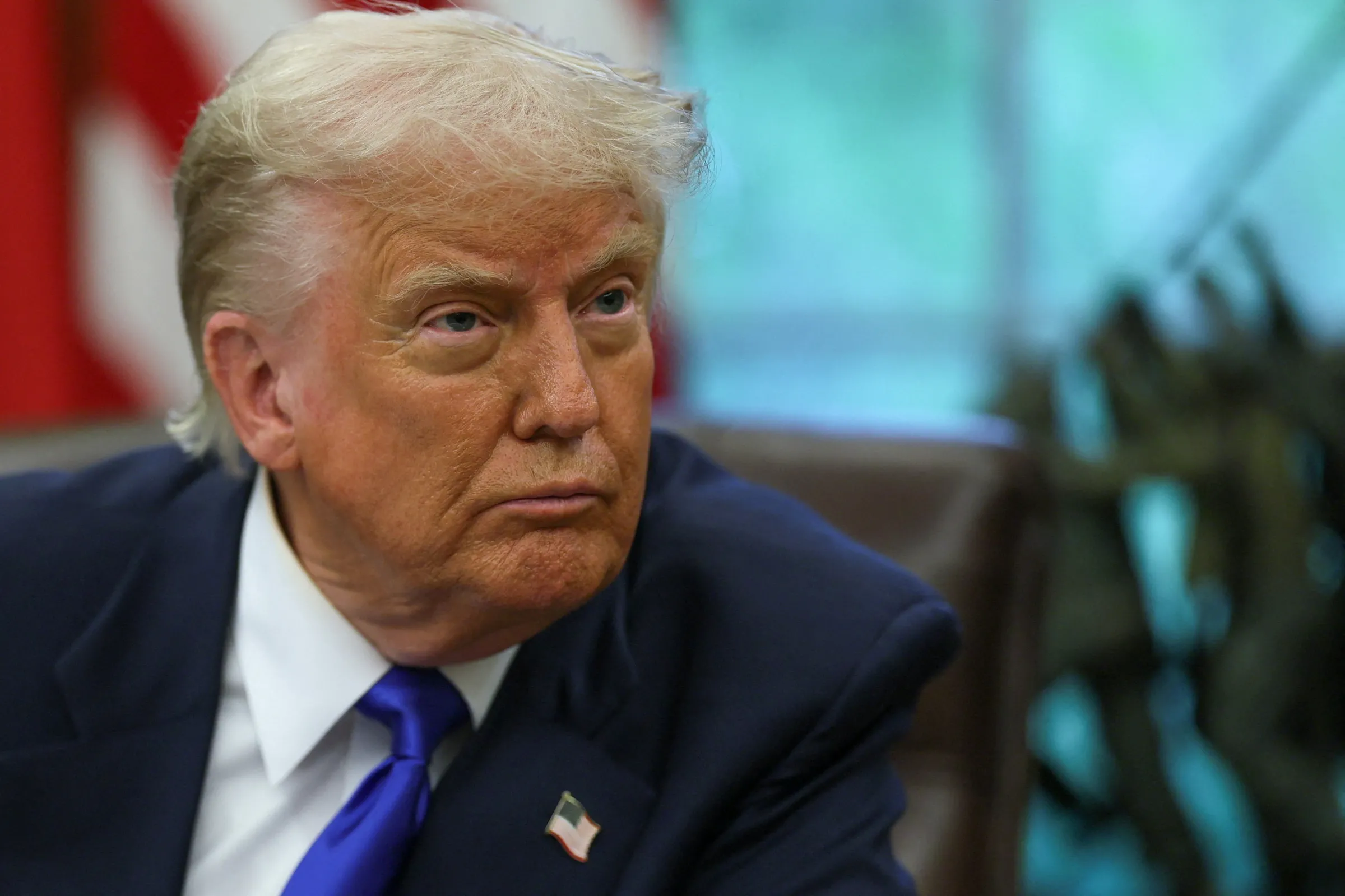
U.S. President Donald Trump looks on as he signs executive orders and proclamations in the Oval Office at the White House, in Washington, D.C., U.S., May 5, 2025. REUTERS/Leah Millis
What’s the context?
As President Donald Trump heads into the second year of his second term, climate scientists worry about his anti-climate posture.
- More support for fossil fuels
- Renewable energy sidelined - or worse
- Climate litigation shaping up as key battleground in 2026
RICHMOND, Virginia - As he begins Year Two of Term Two, President Donald Trump has already left a heavy mark on U.S. climate policy, pursuing an aggressive deregulatory and pro-fossil fuel agenda.
What comes next is the big question - especially now that the president has publicly dismissed climate change as "the greatest con job" the world has ever witnessed.
Climate experts foresee friction ahead, with oil giants and deregulation advocates backing Trump, while environmentalists worry that the anti-science posturing will only get worse.
Already this month, the administration has announced plans to leave several high-profile climate groups, including the United Nations Framework Convention on Climate Change, the Intergovernmental Panel on Climate Change and the Green Climate Fund, the world's largest fund fighting climate change.
Here's what to know heading into the first anniversary of Trump's inauguration on Jan. 20 and what may come next:
Return of coal?
As the world tries to ditch polluting coal, Trump wants to keep plants alive – and even re-open shuttered ones – as his administration promotes the use of other fossil fuels like oil.
"In many cases, the policy space has been completely co-opted by fossil fuel interests," said Rachel Cleetus, senior policy director for the Climate and Energy Program at the Union of Concerned Scientists, a nonprofit advocacy group.
Most recently, Energy Secretary Chris Wright issued emergency orders in Indiana and Colorado to keep coal plants open in a bid to prevent blackouts, according to the department.
"Americans deserve reliable power regardless of whether the wind is blowing or the sun is shining," Wright said in December.
The administration has also justified its stance by pointing to the huge new energy demands of data centres to power AI.
"President Trump has restored common sense to America's energy and sustainability policies, saved Americans billions of their hard-earned tax dollars, and is working tirelessly to ensure that every American has access to clean air, water, and land," White House spokesperson Taylor Rogers said in a statement.
Clean energy
The Trump administration has also erected major roadblocks to thwart the development of renewable energy resources.
The Interior Department said in December it was pausing all large-scale, off-shore wind projects in the United States due to "national security risks".
Trump's "One Big, Beautiful Bill" also unwound major incentives for renewable energy sources such as solar and wind that had won strong Democratic backing just years earlier.
"They were really systematic in how they underwent dismantling climate as well as all renewable energy," said Jean Su, Energy Justice Program Director at the Center for Biological Diversity, a nonprofit advocacy group.
More than 165,000 clean energy jobs have been lost or stalled between November 2024 and December 8, 2025, according to Climate Power, an advocacy group.
The administration's agenda is already leading to energy price increases – and the test as Trump moves into this second year will be how the public responds, Cleetus said.
"Is there going to be some kind of accountability for all of this harm?" she said.
Conservatives have cheered the moves on clean energy subsidies, saying the government shouldn't be picking winners and losers when it comes to major pillars of the economy.
"It's so hard to get rid of subsidies. So to their credit, the fact that Republicans in this case were able to get rid of subsidies was impressive," said Daren Bakst, director of the Center for Energy and Environment at the Competitive Enterprise Institute, a conservative-leaning think tank.
Still, David Widawsky of the World Resources Institute, a research group, expressed hope that longer-term trends toward increased investments in clean energy would continue – with or without the administration's help.
"Energy demand is going up and you've got to feed the grid. And the cheapest, fastest way to do it is going to be with renewable energy," he said.
Undermining science?
Trump has also undermined much of the established science on climate change, with his administration putting an official U.S. government stamp on contrarian and widely discounted views.
The Department of Energy last July released a report that acknowledged carbon dioxide acts as a greenhouse gas, "exerting a warming influence on climate and weather," but said evidence shows scenarios of future emissions have been overstated.
"They're going beyond just deleting – they're actually replacing facts and irrefutable science with a version of, frankly, propaganda. They're replacing it with lies and misinformation," Cleetus said.
The White House's Rogers called such criticism "baseless".
"President Trump will not allow our country's economic and national security to be jeopardized in the pursuit of vague, radical climate goals," Rogers said.
The administration has also been downplaying or deleting language related to climate change in official documents – to the consternation of experts who rely on the government for data to power their research.
"There is a very chilling effect happening right now where, literally, data sets are being taken down, career scientists are seeing the science that they worked on being distorted," Cleetus said.
Litigation
Climate policy and the legal system will be closely watched in 2026, with Democratic attorneys general and environmental activist groups looking to the courts to push back.
"One of the biggest issues will be the litigation connected to greenhouse gas regulations," Bakst said.
The EPA last July announced it was moving to repeal its own 2009 finding that greenhouse gases harm public health – a move that will undoubtedly generate legal action in response.
"A lot of the destructive actions that were taken in the first year will actually start to really bite in the second year," Cleetus said.
(Reporting by David Sherfinski; Editing by Lyndsay Griffiths and Anastasia Moloney.)
Context is powered by the Thomson Reuters Foundation Newsroom.
Our Standards: Thomson Reuters Trust Principles
Tags
- Climate policy