Context is powered by the Thomson Reuters Foundation Newsroom.
Our Standards: Thomson Reuters Trust Principles


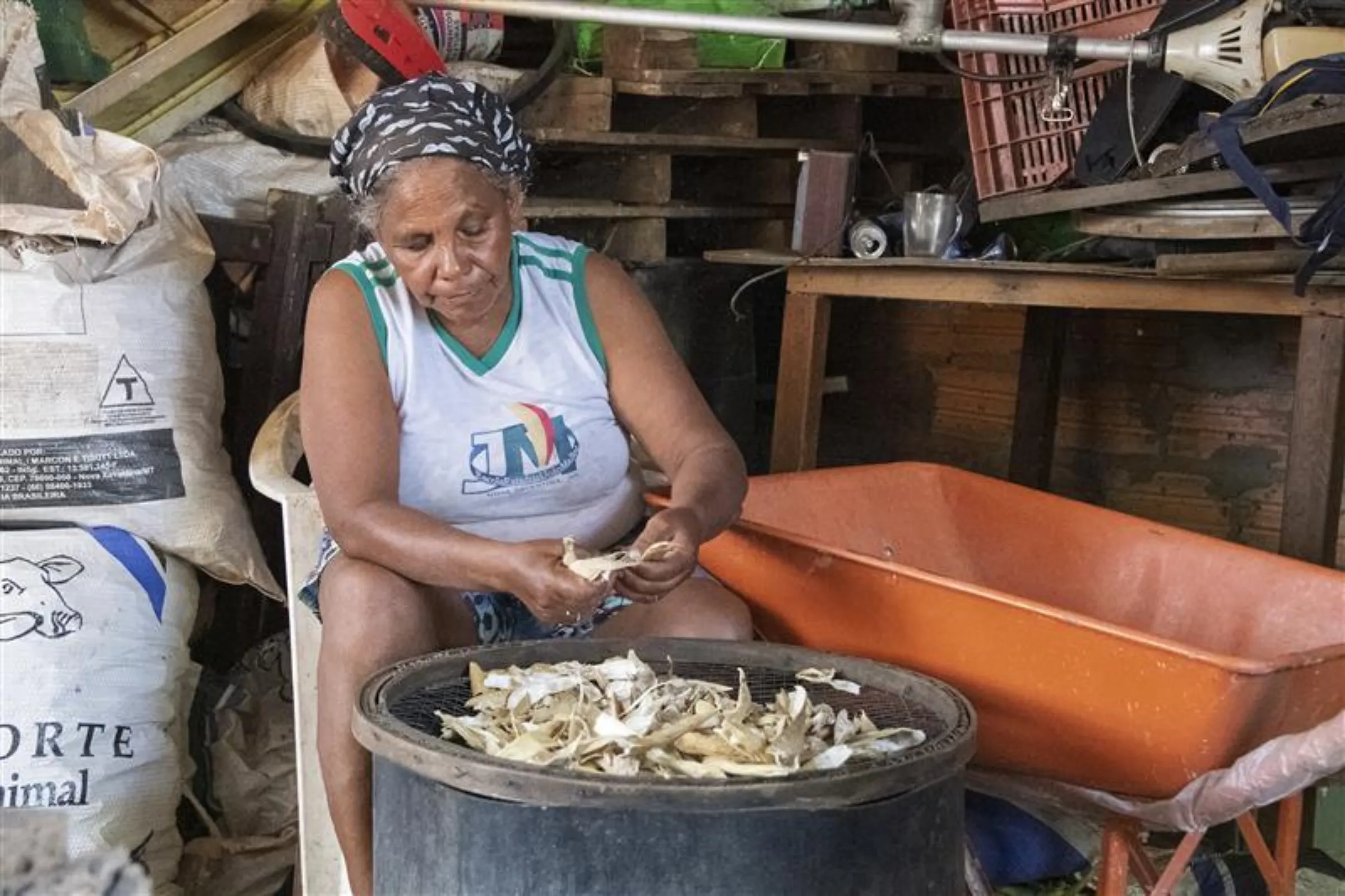
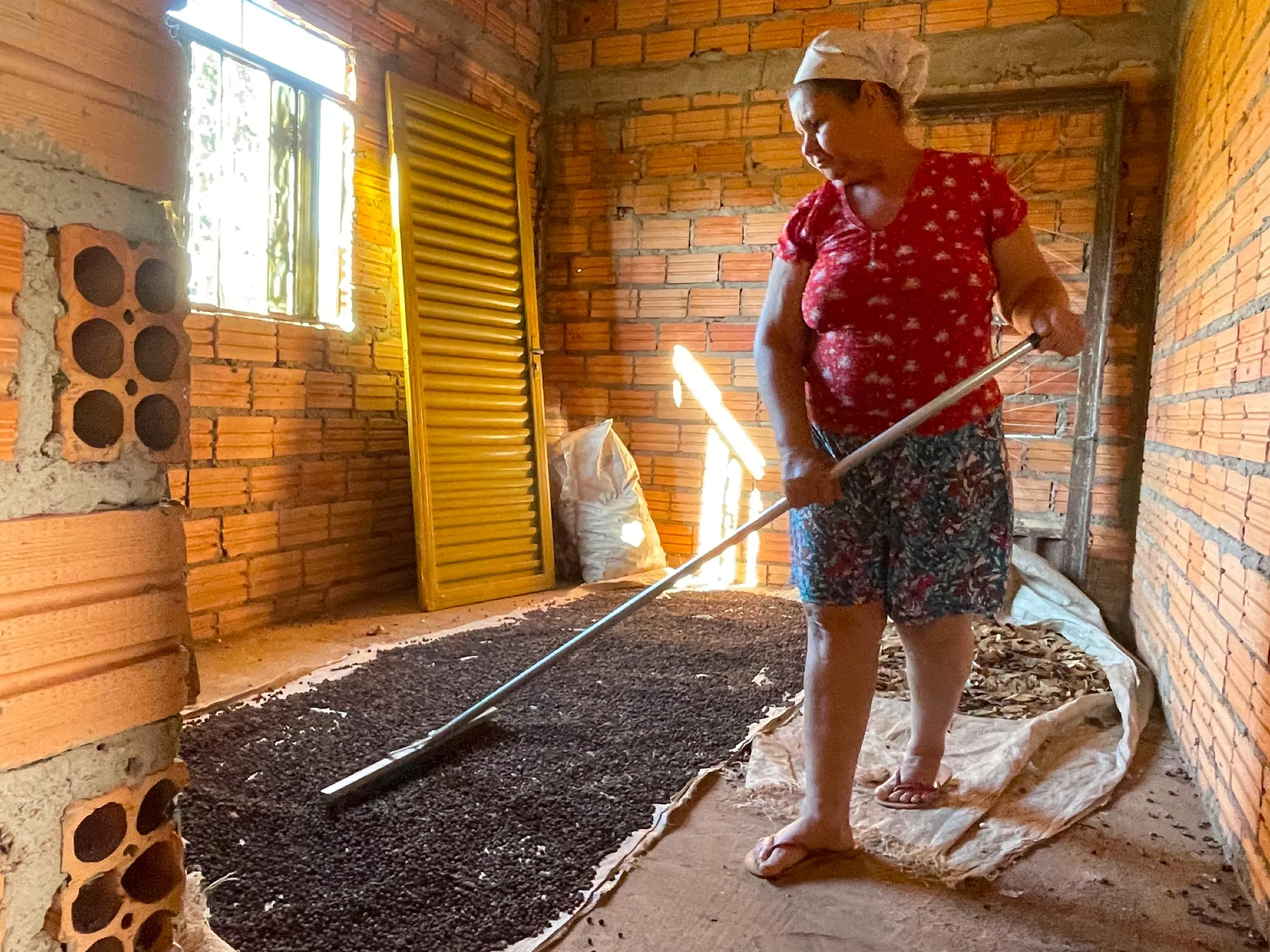
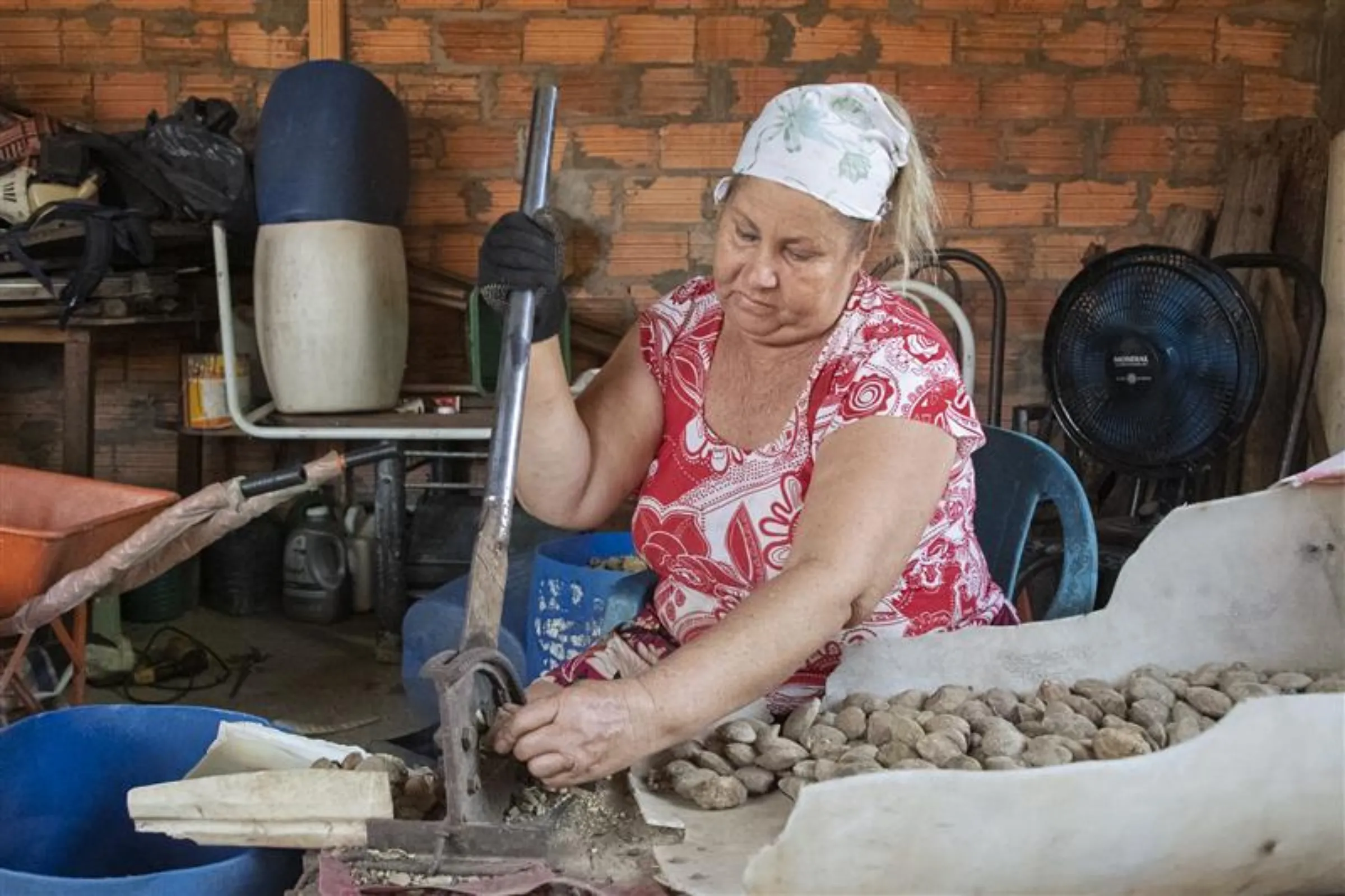
Seed collector Maria Madalena Santana da Silva unpeels seeds to be used in nature restoration projects, in Nova Xavantina, Brazil, August 28, 2025. THOMSON REUTERS FOUNDATION/Rogério Florentino
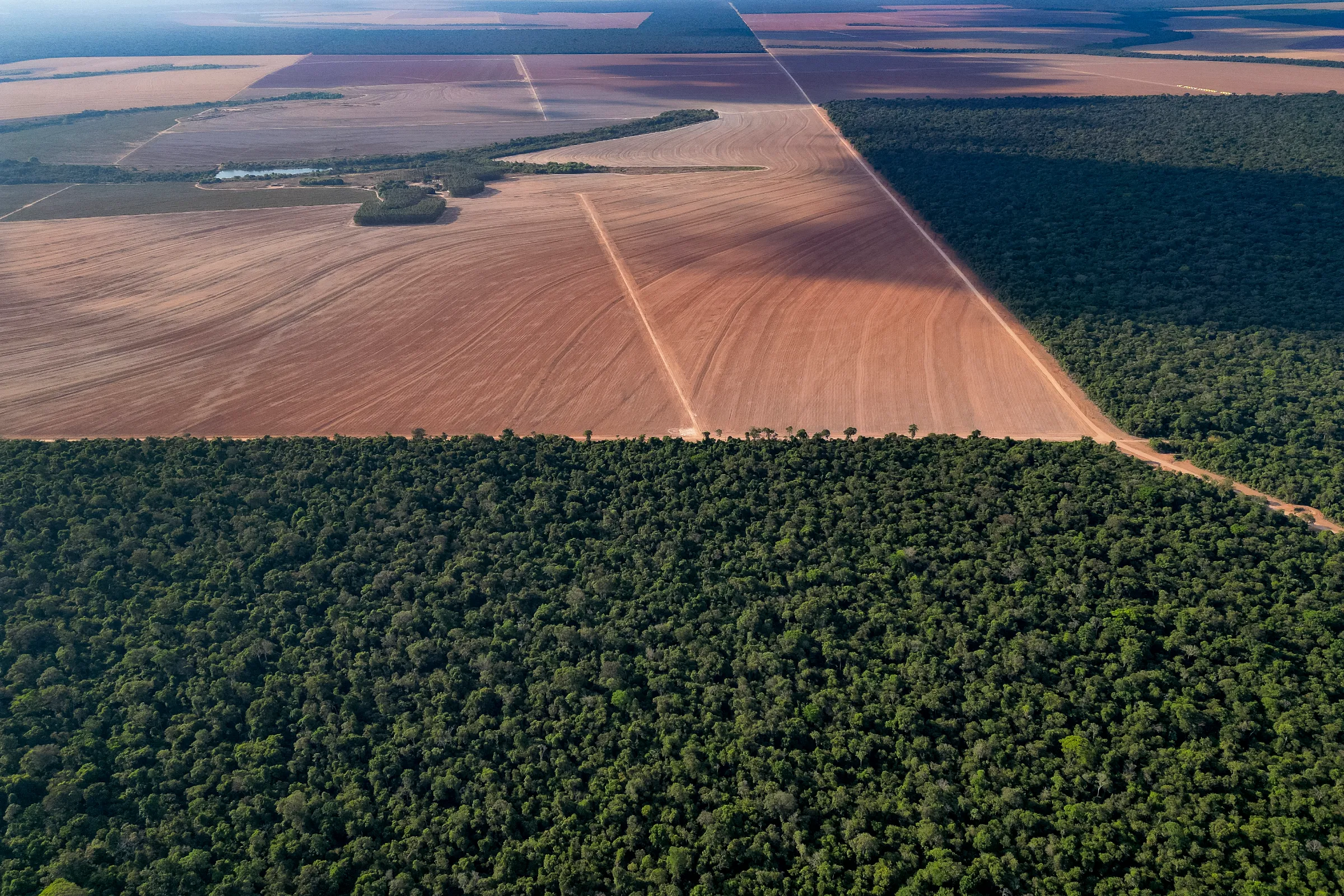
Restoration of forestland and other areas is taking root, but lags far behind the rapid rate of deforestation in the Amazon.
NOVA XAVANTINA, Brazil - In a room at the back of her house, Vera Alves da Silva Oliveira keeps the air-conditioning on day and night to protect bags of seeds gathered by hand from Brazil's Amazon rainforest and Cerrado savannah.
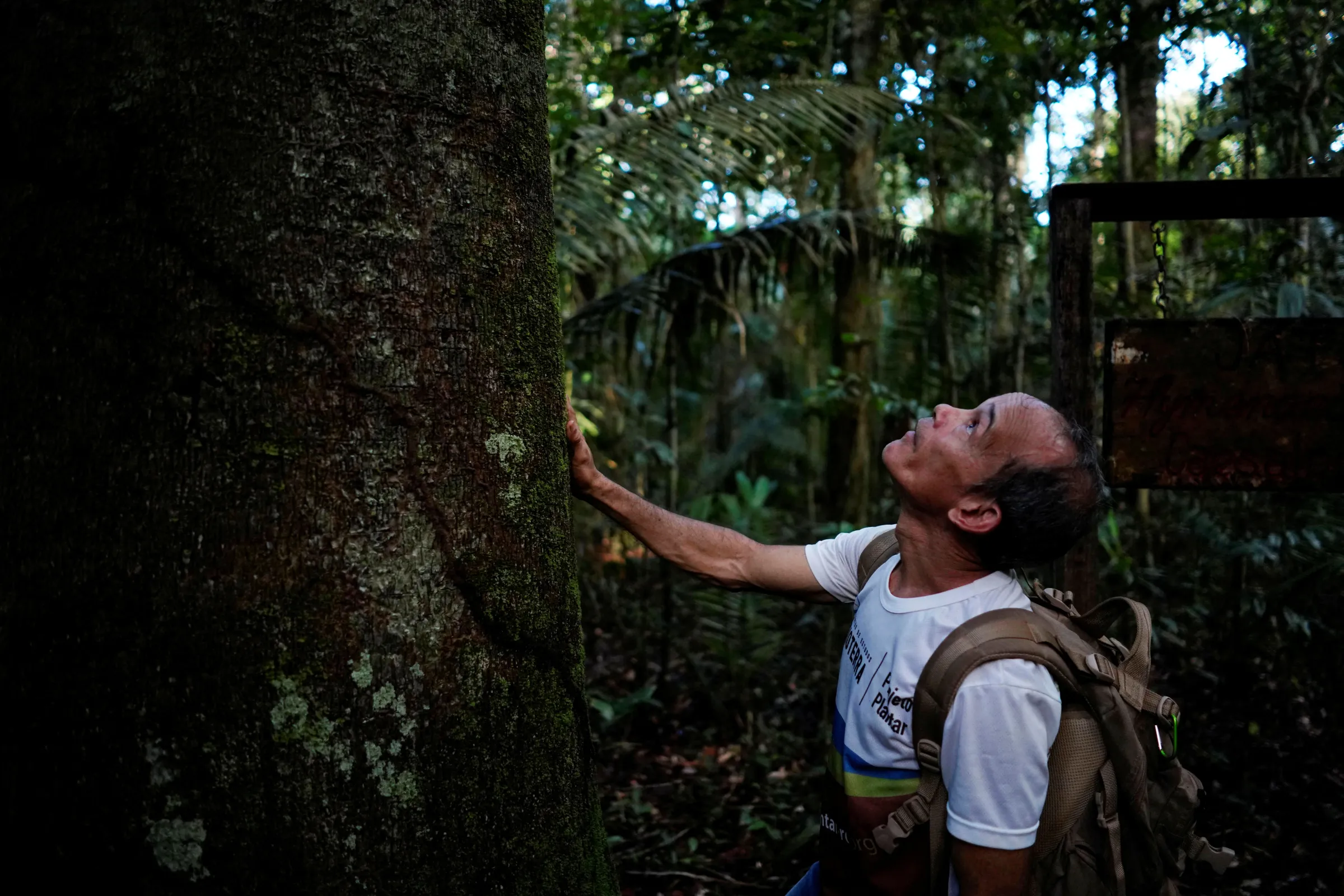
Oliveira is one of more than 700 seed gatherers in the Xingu Seeds Network working to help recover forests and savannas across Mato Grosso, a major agricultural state.
Forest restoration is slowly taking root in Brazil, backed by civil society networks, businesses and increased funding, after the government pledged to restore 12 million hectares (30 million acres) of natural areas by 2030 as part of its climate goals under the Paris Agreement of 2015.
Yet 2024 was the worst year on record for global tropical forest loss, with Brazil accounting for 42% of the destruction after losing 2.82 million hectares, mostly due to fires, data from research group World Resources Institute showed.
Wildfires seldom occur spontaneously in the Amazon, with most blazes set by farmers and land-grabbers.
"One day I went to look for my seeds, and when I got there - my God, there was not a single branch left. Everything had been ripped out," said Oliveira while working in her courtyard in the city of Nova Xavantina in central Brazil.
"We get so sad, because what are you going to do to restore all of that?" she said as she placed seeds in a machine and pulled a lever to press and break the shells.
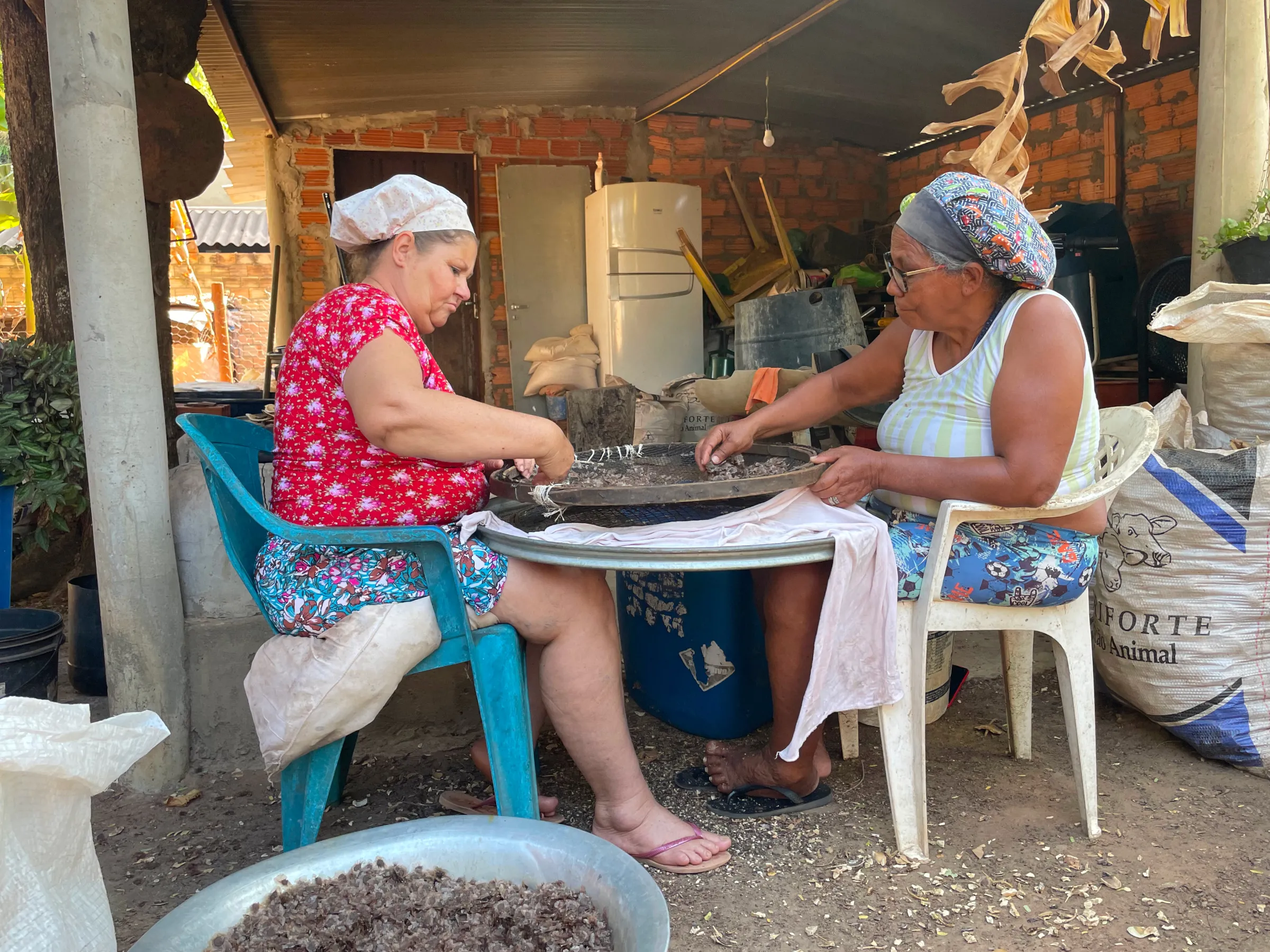
Seed collectors Vera Alves da Silva Oliveira and Maria Madalena Santana da Silva select seeds in Nova Xavantina, Brazil, August 21, 2025. THOMSON REUTERS FOUNDATION/André Cabette Fábio
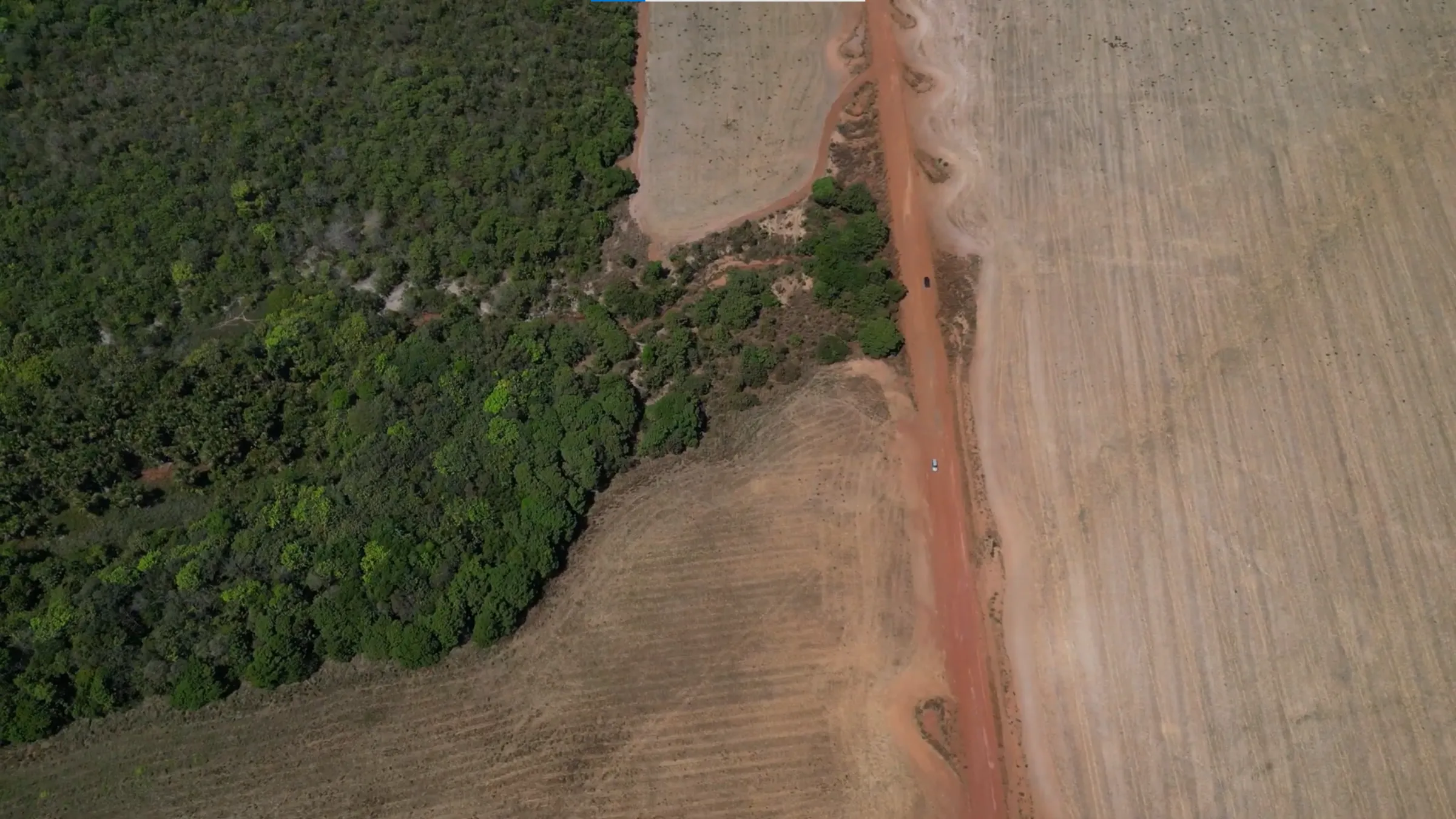
Members of the Xingu Seeds Network, who are mostly women from farms, cities, villages and vast Indigenous territories, are fighting biodiversity and tree loss in Amazon states where cattle pastures and soybean and grain fields are expanding.
The network of collectors, who often travel miles to find species and are paid by the weight of what they gather, was founded in 2007 in response to a call by Indigenous communities in the Xingu River basin on farmers to save the area's drying streams.
It promotes an alternative to planting seedlings that is called "muvuca," which involves sowing a mix of native seeds that gives plants best adapted to the local environment a chance to thrive.
Research has shown that muvuca is significantly cheaper than planting seedlings and does not require irrigation.
Part of an alliance of 27 seed-collecting groups, the Xingu Seeds Network has helped to regrow 10,800 hectares of forests and savannahs.
But these initiatives are a long way from countering the rapid rate of deforestation in the Amazon and Brazil's other ecosystems.
"In just one month, my neighbour alone cut down what we had restored in 10 years," said Bruna Dayanna Ferreira, director of the Xingu Seeds Network.
Restoring natural areas helps capture carbon, and releases water vapor that helps form clouds that reflect sunlight, produce rain and cool the air.
That buffers the effects of global warming and protects rainforests from drying and reaching tipping points after which they may become savannah-like ecosystems, scientists have said.
Since 2021, the area of forests, savannahs and other ecosystems restored by planting seeds or seedlings in Brazil has increased by 160%.
That currently amounts to just 204,000 hectares, of which 19% was in the Amazon, figures from the non-profit Brazilian Restoration Observatory showed in December.
Areas undergoing natural regeneration, when nature regrows without human intervention, are far vaster, totalling 19 million hectares, according to the observatory.
But tropical forests need an average of 20 years to regain 80% of the carbon stored before they were cleared. A 2021 study showed that recovering Amazon forest areas are destroyed after an average of eight years of regrowth.
The government's National Native Vegetation Recovery Plan in November identified 3.5 million hectares of forests, savannahs and other ecosystems regrowing in land subject to environmental protections, where they have a bigger chance of surviving.
"Most restoration is happening through secondary (naturally regrowing) forests ... and we need monitoring and policies to protect those areas," said Thiago Belote Silva, forest director at the Environment Ministry.
With human-assisted restoration still gaining pace, the amount of seeds that members of the Xingu Seeds Network are able to collect outstrips demand for planting, said Ferreira.
"Our capacity to collect seeds is much bigger than the demand we get, and this is the rule among all seed-collecting networks in Brazil," she said.
Even though natural regrowth is the quickest path to large-scale recovery, promoting restoration as a market can help shift incentives away from deforestation, Belote said.
"We have to think of large-scale restoration as a source of income ... to show that it's competitive against deforestation," he said.
The government's Restoring the Amazon project has awarded 274 million reais ($50 million) since last year to restore 7,980 hectares in Indigenous territories and plots of public land allocated to smallholder farmers.
Part of that investment will go to plant forests to produce food, including acai berries and cocoa, which are native to the Amazon.
That funding pales in comparison to the $207 billion in publicly subsidized credit to agricultural production that drives forest loss in Brazil over the last decade, according to the Forests & Finance watchdog.
Along the road to Nova Xavantina city stand towering silos and an air-conditioned warehouse whose owner said have room for up to 450,000 bags of soybeans for planting - a potent symbol of the dominance of monoculture in this region.
Yet the nascent restoration market is already transforming the lives of its practitioners.
Oliveira, who worked as a housekeeper before joining the Xingu Seeds Network in 2012, said her income from seed collection has helped her family build three small houses and buy a motorcycle and car.
Working in nature has also helped her cope with the depression she suffers.
"I'm most at ease when it's time to collect," she said.
(Reporting by Andre Cabette Fabio; Editing by Anastasia Moloney and Ayla Jean Yackley.)
Context is powered by the Thomson Reuters Foundation Newsroom.
Our Standards: Thomson Reuters Trust Principles