


Supported By:
Indian drugmaker promises cheap alternatives - but there’s a catch



Investigation
Investigation
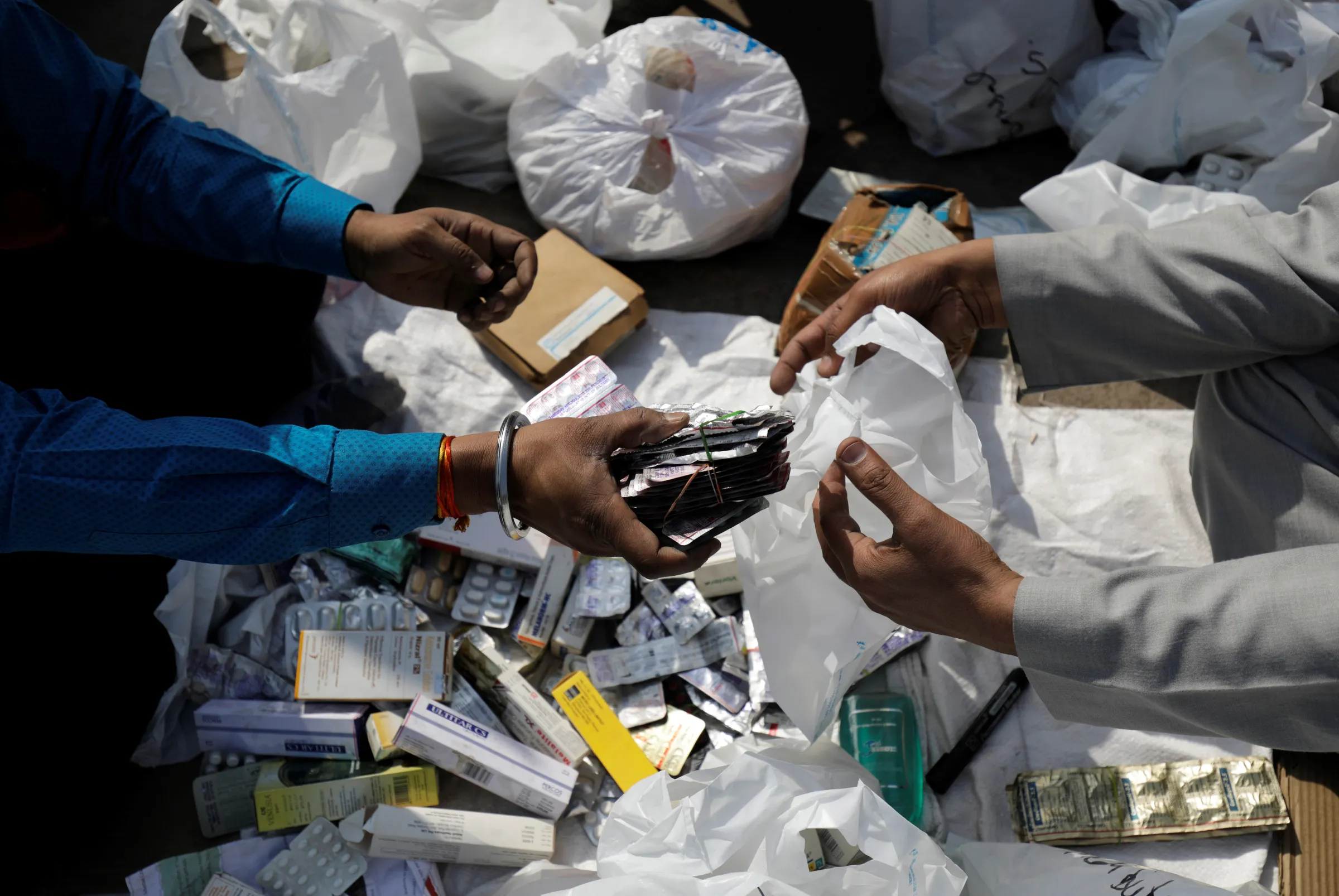
People segregate expired medicines outside a chemist store in New Delhi, India February 2, 2018. REUTERS/Saumya Khandelwal
What’s the context?
Medicines made by Zee Laboratories have failed quality tests time and again, but its drugs are still on shelves around the world.
- Drugs made by Zee Laboratories plagued by quality issues
- Regulators have launched prosecutions with zero convictions
- Drugs are shipped to dozens of countries and given to patients in India
LONDON/BENGALURU, India - Rohit Mukul’s Instagram profile contains everything one might expect from a man named on a Forbes 30 Under 30 list this year.
Alongside photos of sports cars and snowmobiles are videos in which the Indian businessman explains his family’s business model of making high-quality medicines affordable.
Mukul runs a fast-growing chain of chemists that sells medicines largely made by Zee Laboratories, a company started by his father that manufacturers generic drugs - cheaper copies of medicines that are produced once an original patent expires.
Although they are sold at a knock-down price, generics must contain the same key ingredients as the original. But Zee Laboratories’ drugs have failed at least 86 quality tests by Indian regulators, and the company has faced multiple court cases, reporting by The Bureau of Investigative Journalism (TBIJ) and Context found.
Academic research in Nigeria and public notices in the Philippines showed that Zee Laboratories’ medicines have also failed regulatory tests in those countries. A TBIJ investigation earlier this year found bad chemotherapy medicines made by Zee were available in sub-Saharan Africa.
Aline Plançon, the former head of Interpol’s health and security sub-directorate who now works as an independent health policy advisor, said the failed tests point to a pattern of neglect.
"There is a very big problem with this company, and it deserves to be shut down and at least carefully investigated and looked into urgently, because it’s obviously issuing and manufacturing bad quality medicines," Plançon said after reviewing details of Zee Laboratories’ failed tests.
While most India-made drugs are safe, concerns about quality have dogged the industry, and weak regulatory oversight in the world’s biggest producer of generic drugs can have life-or-death consequences across the world.
Other Indian manufacturers have produced Indian cough syrup that was linked to the deaths of more than 100 children in countries including Uzbekistan and Gambia. Contaminated eye drops killed and blinded patients in the United States in 2023.
Booming business
Zee Laboratories was founded in 1993 by Rajeev Mukul, who rode the wave of India’s booming pharmaceutical industry, where a fifth of the world’s generic drugs are produced.
Rajeev, Zee Laboratories’ chairman and managing director, did not respond to a request for an interview. Zee Laboratories put forth Rohit as a spokesperson, who held a directorial position at Zee Laboratories in the past, according to Indian media reports.
In an interview, Rohit spoke extensively about Zee Laboratories’ operations but later told TBIJ and Context he had not been speaking for the company and asked to withdraw his interview.
Today Zee Laboratories employs 2,000 workers, operates six factories and exports to 50 countries. Its medicines treat ailments including epilepsy, diabetes and mental health conditions.
Failed tests
Since 2018, the Central Drugs Standard Control Organisation (CDSCO) and state regulators have issued alerts triggered by Zee Laboratories’ quality-test failures about 10 times a year to warn the public about potential dangers.
In December 2022, a joint inspection by the CDSCO and the Himachal Pradesh state regulator of a Zee Laboratories plant in the town of Paonta Sahib found enough issues with its quality practices for the Himachal regulator to ask why its license to make two classes of drugs “should not be suspended or canceled,” according to a letter provided by the Himachal authority.
Production in one section of the plant that made hormonal drugs was stopped altogether, the letter showed.
That year, the plant did not renew a key quality certificate, awarded by Indian regulators that certifies a plant follows a set of Good Manufacturing Practices developed by the World Health Organization, Mukul said in an interview. Many countries will only buy medicines manufactured according to these practices.
Nepal banned imports from another Zee Laboratories plant because they did not meet quality requirements, the Nepalese regulator told TBIJ and Context.
In a statement, Zee Laboratories denied Nepal had banned imports of its drugs but had “raised certain observations” after an inspection. The company said it has since addressed the points but chose not to submit to a new inspection for commercial reasons.
All of Zee Laboratories’ factories have passed multiple risk-based inspections “with flying colours,” Mukul said.
However, TBIJ and Context have seen evidence of serious issues raised by inspectors.
In March 2023, regulators tested a steroid injection from a hospital pharmacy in Maharashtra state. The medicine – used to treat rheumatic disorder, asthma and severe allergic reactions – was found to be contaminated by microbes. This type of impurity, known as a sterility failure, can be deadly.
A few months later, authorities from neighbouring Karnataka state tested a sample of over-the-counter eye drops made by Zee Laboratories. Again, it failed a sterility test.
In May last year, regulators in the state of West Bengal tested a batch of a Zee-made antibiotic called ceftriaxone, which failed four separate tests, including one for sterility
‘Public in danger’
The 86 tests Zee Laboratories products failed were done on drugs that were already on the shelves.
The Indian Pharmacopoeia Commission, which gathers information on adverse events, declined to say whether people had been affected by the drugs, citing a “fiduciary relationship.”
Ganadhish Kamat, former global head of quality at one of India’s largest pharmaceutical companies, said this information should be publicly available. “The public’s life is in danger,” he said.
Mukul said he did not know the details of each failed test, but that they were likely due to factors outside of the company’s control, such as drugs kept in hot and humid conditions after leaving the plant.
"I don’t run the pharmacies of the country, I don’t run transportation in the country," he said. “There will be things that are beyond my control. These are chemical substances.”
While storing a drug in hot conditions can degrade active ingredients, it would not explain things such as bacterial contamination, said Kamat. Of the 86 failures, at least 41 fell into categories that Kamat said were either unlikely or impossible to have been caused by storage, and were more likely due to manufacturing practices.
Prosecutions
“A high number of regulatory ‘alerts’ is a serious matter, and we treat it as such,” Zee Laboratories said in a statement. However, “they do not establish deliberate wrongdoing by the manufacturer.”
Zee Laboratories has faced at least 42 criminal prosecutions, mostly over allegations of substandard drugs, according to one central and three regional regulators who responded to questions.
None of these cases have resulted in convictions, and most of the cases are still ongoing.
Regulatory officials said building a case against pharmaceutical companies is challenging.
“The accused just don’t turn up in court, [they] say they haven’t received summons,” said Manish Chaudhary, a former drug inspector who filed a case against Zee Laboratories for the contaminated steroid injection that has yet to reach trial.
In the meantime, Indian regulators continue to put out alerts about Zee Labs’ medicines, issuing more than one a month this year.
This story was reported in collaboration with The Bureau of Investigative Journalism.
(Reporting by Andjela Milivojevic, Paul Eccles, Priyanka Pulla; edited by Ayla Jean Yackley, Amruta Byatnal, Fiona Walker and Sasha Baker.)
Context is powered by the Thomson Reuters Foundation Newsroom.
Our Standards: Thomson Reuters Trust Principles
Tags
- Consumer protection
- Corporate responsibility





Featured

Go Deeper





Latest on Context





- 1
- 2
- 3
- 4
- 5
- 6