

Street vendors seek protections amid Trump immigration crackdown
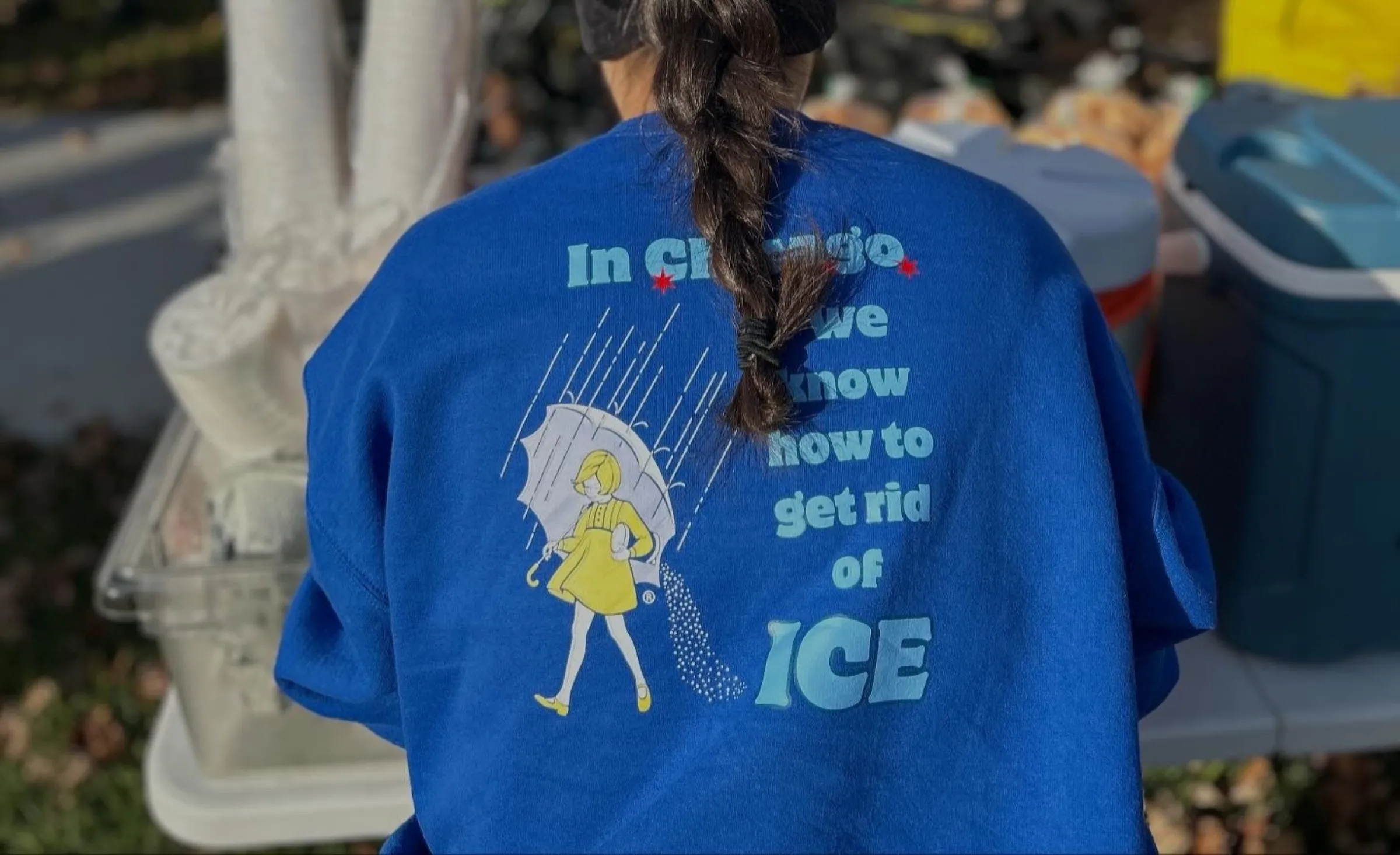
A woman's t-shirt reads "In Chicago, we kow how to get rid of ICE" as bikers take part in an event to support street vendors in Chicago, United States on Nov. 2, 2025. @cyclingxsolidarity/Handout via Thomson Reuters Foundation
What’s the context?
Washington, New York, California move to protect street vendors vulnerable under Trump immigration crackdown.
- Immigration crackdowns put vendors at risk
- Washington D.C. vendors seek stronger licensing law
- California outlaws sharing of licensing data
WASHINGTON - The busy intersection in Northwest Washington used to be Gloria Gomez's safe place, providing the street vendor with customers, visibility and a location to sell her sliced fruits, juices and prepared snacks.
But with the stepped-up immigration enforcement under the administration of President Donald Trump, which includes federal agents patrolling the streets of cities like Washington, Gomez said she and other vendors feel in danger.
"Most of the vendors aren't even vending for fear of what's happening," she told Context, adding that she has witnessed immigration arrests from her street corner in recent weeks.
With the safety of street vendors at risk, advocates and local officials in Washington as well as New York, California and elsewhere are seeking measures to help protect them.
Those include improving the licensing process, which would give more vendors legal documentation to conduct their business, and not sharing information collected during the licensing process with federal immigration officials and agencies.
Although Gomez has her immigration documents, she said the bureaucracy and legal complexities of vending in the nation's capital create a vulnerable environment.
Gomez, 58, has worked in the neighbourhood for more than a decade as her own boss, making money to raise her children and support relatives in El Salvador.
But that has changed.
Part of the problem is a lack of customers. The street now is often deserted, especially of Latinos who make up much of her customer base, she said.
They are reluctant to be out and about, she said.
Vendors also feel at risk, given the pitfalls of the licensing process.
Washington decriminalised street vending in 2023, but many vendors opt out of the licensing process which they say is complicated and expensive, especially for selling food.
"Licenses are so important for us," Gomez said.
"Sometimes people take advantage of the fact that we don't have licenses and weren’t legitimate and call the police on us."
Just a handful of vendors are fully licensed, said Geoff Gilbert, legal and technical assistance director with Beloved Community Incubator, a nonprofit that help vendors navigate the system.
"Really, no vendor has the security to be in this space right now," he said, referring to the area where Gomez works.
"Most if not all vendors are just not selling right now, so people are without income and just don’t know what to do. It's a crisis point," he said.
Asked for comment on the number of legal vendors in the District of Columbia, the Department of Licensing and Consumer Protection did not respond.
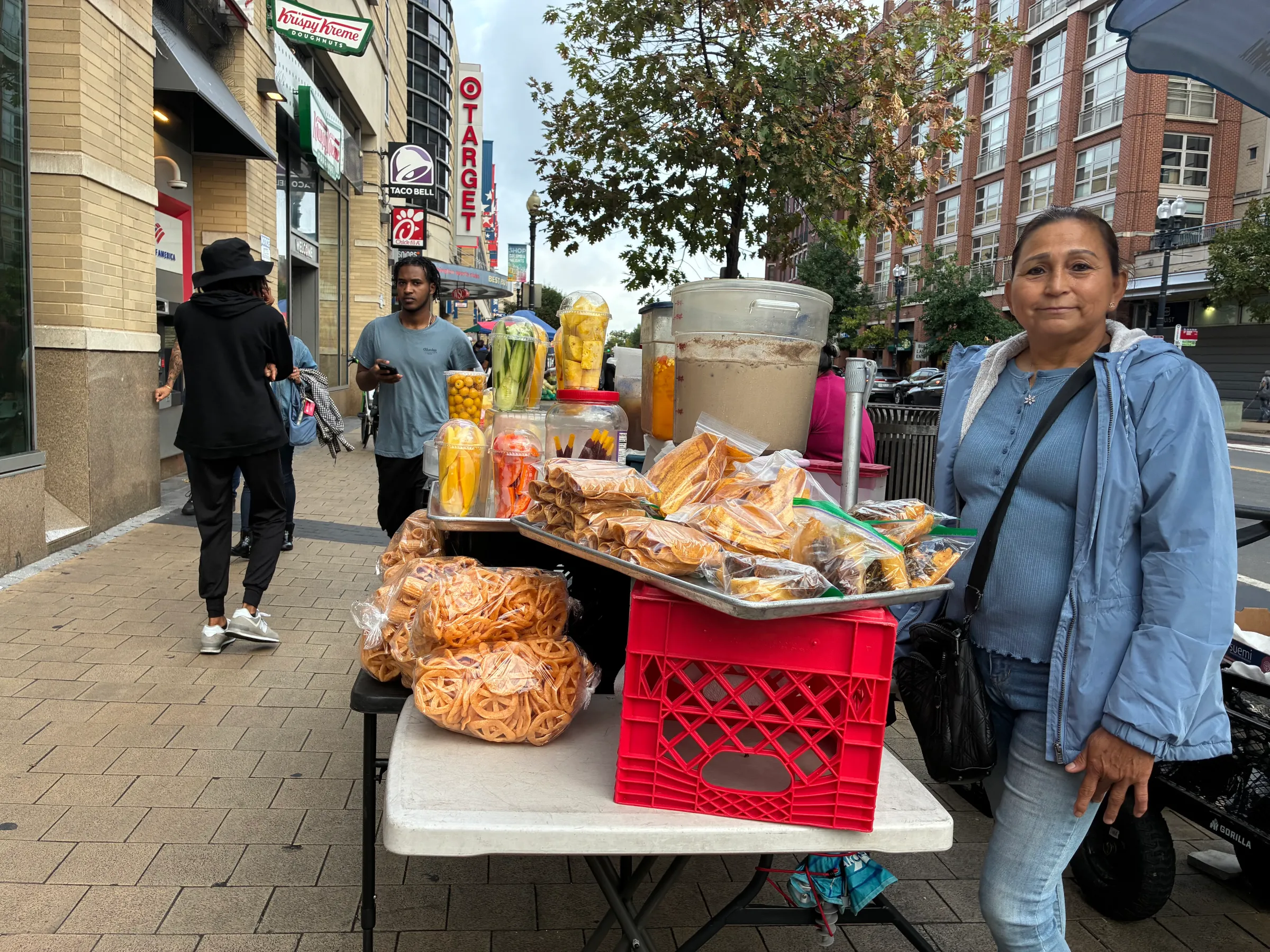
Street vendor Gloria Gomez with her goods in Washington, United States on Oct. 8, 2025. Thomson Reuters Foundation/Carey L. Biron
Street vendor Gloria Gomez with her goods in Washington, United States on Oct. 8, 2025. Thomson Reuters Foundation/Carey L. Biron
Lifting a licensing cap
There are few national statistics on U.S. street vending, although a recent estimate from IBISWorld, a consultancy, pegged it at a $4 billion-a-year industry and growing.
A study in New York last year found about 23,000 street vendors work in the city, almost all of them immigrants.
Most of the vendors sell food, of which about three-quarters are unlicensed despite a waiting list more than 10,000 long, according to the report from the nonprofit Immigration Research Initiative.
New York has had a longstanding cap of fewer than 900 general vendor permits, causing the backlog.
With recent immigration raids by the U.S. Immigration and Citizenship Enforcement (ICE) agency that have swept up New York street vendors, advocates have called for officials to lift the cap.
The City Council, which eased criminal penalties on street vending in June, is discussing a package of bills that would raise or eliminate the limit.
"Street vendors are an integral part of our city's neighbourhoods and economy," New York City Council press secretary Julia Agos said.
The council “remains committed to ensuring sound policies and best practices that support street vendors and our local economy, while protecting New Yorkers from criminalisation that makes them vulnerable to interactions with ICE to the greatest extent possible," she said.
In California, state lawmakers passed a law aimed at safeguarding vendor-related data that takes effect in January.
It prohibits local governments from sharing personal information collected in the vending licensing process with federal immigration officials, and it bars the collection of information regarding immigration status.
"Our street vendors deserve the freedom to earn a living without fear," State Sen. María Elena Durazo, the law's author, said in an email.
"In the face of the Trump administration's violent raids, we will not allow their personal information to be misused, and local governments will not become complicit in targeting vulnerable communities."
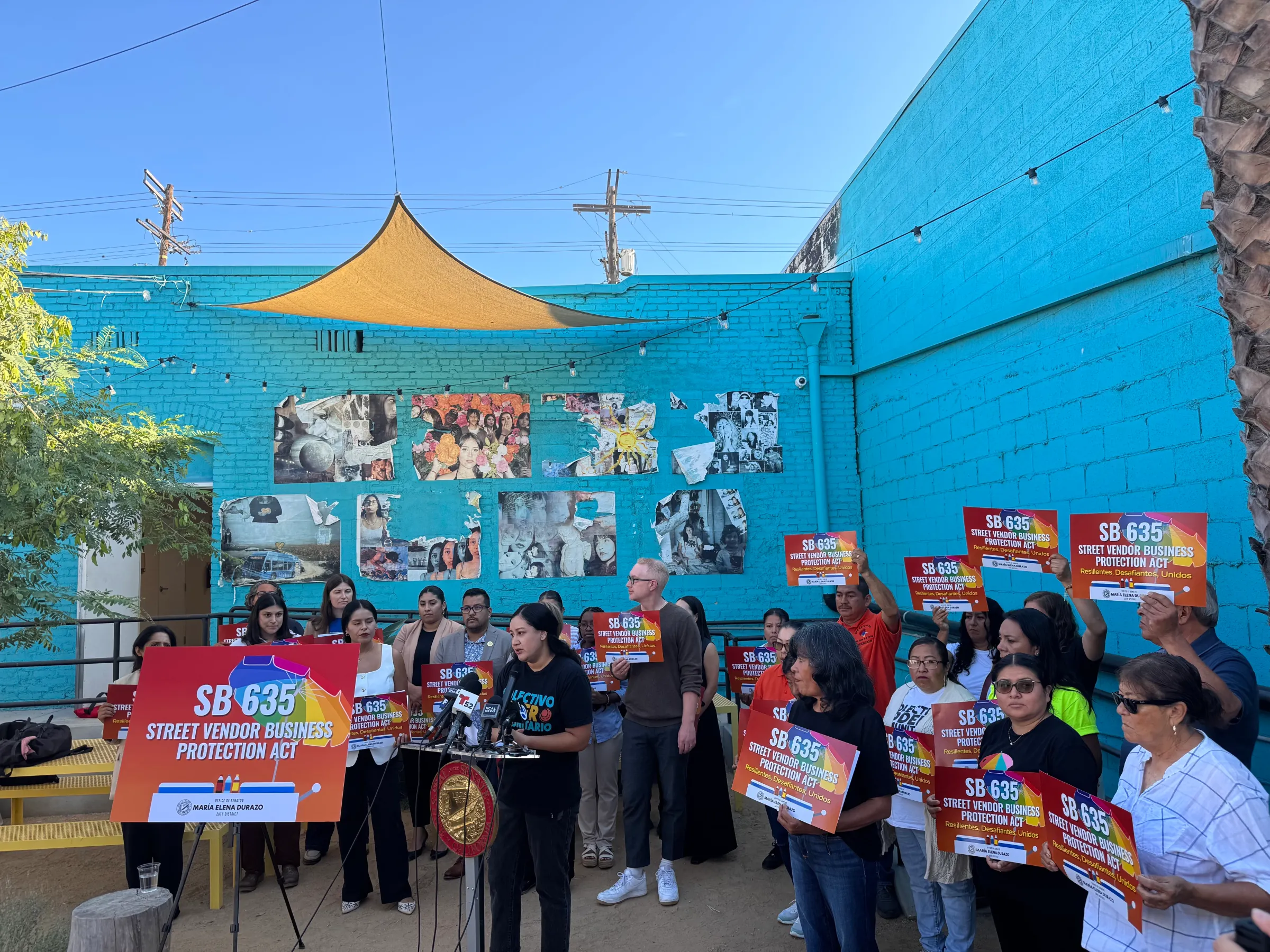
Street vendors and supporters rally in Los Angeles, United States on Sept. 17, 2025. Alesan Aboafash/Inclusive Action for the City/Handout via Thomson Reuters Foundation
Street vendors and supporters rally in Los Angeles, United States on Sept. 17, 2025. Alesan Aboafash/Inclusive Action for the City/Handout via Thomson Reuters Foundation
ICE did not respond to a request for comment.
Under Trump, “we knew that data was going to be weaponised against the immigrant community, with lots of signs the administration wanted to access new forms of personal data to tailor their targeting,” said Doug Smith, a vice president with Inclusive Action for the City, an economic justice organization.
California decriminalised street vending in 2018, during the first Trump administration “when using criminal violations or charging vendors often became pretexts for additional immigration enforcement,” he said.
Chicago 'buy outs'
Efforts to support street vendors are also coming from residents.
Since federal agents began immigration operations in Chicago in September, bicyclists have organised weekly rides to “buy out” street vendors and help make up for their lost income.
“We saw street vendors getting picked up," said Rick Rosales, a community organizer with CyclingxSolidarity, describing them as "most visible and most vulnerable.”
Online fundraising for the purchases has raised some $30,000, he said.
He and other organizers are teaching activists in other cities about helping vendors.
“The best part has been watching them pack up while we have been leaving and knowing they're no longer in danger and could go home," Rosales said.
“One vendor told us after we bought him out, he heard ICE was in his area. He said, ‘You guys saved my life.’”
(Reporting by Carey L. Biron; Editing by Anastasia Moloney and Ellen Wulfhorst.)
Context is powered by the Thomson Reuters Foundation Newsroom.
Our Standards: Thomson Reuters Trust Principles
Tags
- Migration
- Economic inclusion
- Underground economies