Context is powered by the Thomson Reuters Foundation Newsroom.
Our Standards: Thomson Reuters Trust Principles



A billboard advertising a betting company in Maputo, Mozambique. November 10, 2025. Thomson Reuters Foundation/Samuel Comé
An online betting boom in Mozambique turns dreams to debt and despair as calls mount for more regulation.
MAPUTO - Sitting on the veranda of his home on the outskirts of Mozambique's capital, João Vasco held a framed photo of his younger brother Pinto, who died by suicide this year after losing around $850 gambling.
"I helped him with school fees and everything I could," João, 37, recalled, pausing to fight back tears.
Pinto, 21, was in his second year at university, studying to become a history teacher, when João learned he was gambling and confronted him. He thought he had gotten through to Pinto.
"Two months later, I found out that he was no longer going to university. He told me, embarrassed, that he had debts because he had lost the tuition money."
One Sunday morning in May, Pinto hung himself at home.
"When I saw the boy hanging from the rafter, I nearly collapsed," João said.
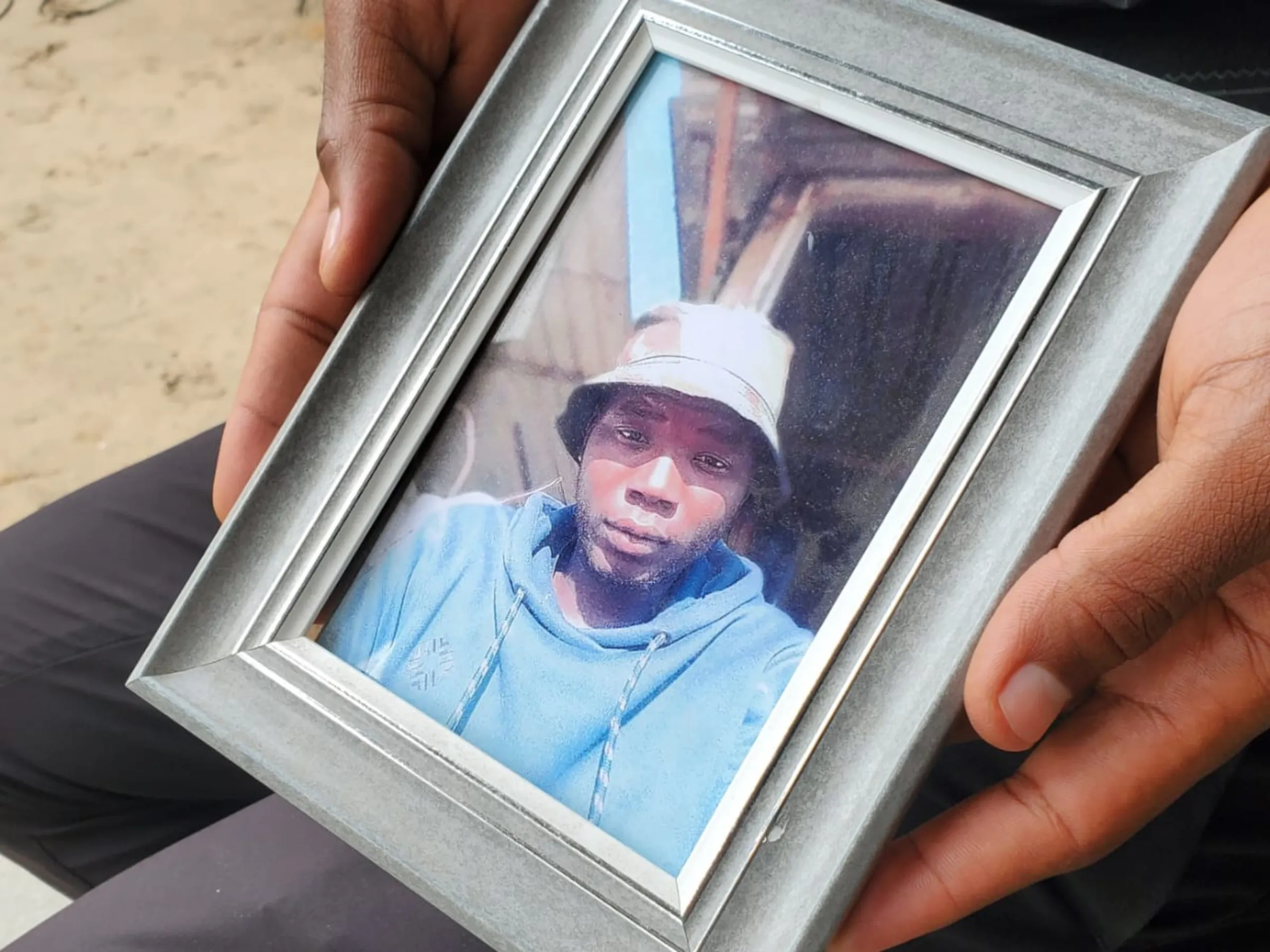
A photograph of Pinto Vasco, who died by suicide after incurring high gambling debts, held by his brother, João Vasco, Maputo, Mozambique, November 8, 2025. Thomson Reuters Foundation/Samuel Comé
A photograph of Pinto Vasco, who died by suicide after incurring high gambling debts, held by his brother, João Vasco, Maputo, Mozambique, November 8, 2025. Thomson Reuters Foundation/Samuel Comé
Police data showed at least 10 mostly young people died of suicide last year in cases linked to gambling in Mozambique.
Pinto's losses exceeded the country's average income of $650 a year.
On the outskirts of Maputo, billboards have sprouted up, promising big wins in a country where about 20 million people live in poverty, according to the World Bank.
Some 25,000 people place a bet every hour on websites and mobile apps, according to the country's General Inspectorate of Games (IGJ), which is responsible for licensing betting companies.
Minimum stakes on most online sites range from $0.15 to $0.30, and many gamblers are young in a country where 60% of the population of 35 million people is under the age of 24.
The lure of hitting it big in a country where nearly a fifth of the population is out of work drives many gamblers online.
"I've been gambling since 2021. I don't stop, because I still hope that one day I'll win a lot of money," said 26-year-old Osvaldo Assane, who works odd jobs in construction and was forced to sell his motorbike last year to cover gambling losses.
"But what can I do? I need something that gives me hope of having a lot of money."
Across Africa, online gambling, particularly sports betting, is soaring.
Six African operators rank among the world's top 20 most-visited gambling websites, according to online sports publisher Tribuna, and their rise is being fuelled almost entirely by mobile users in Nigeria, South Africa, Kenya and East Africa.
Almost a quarter of Mozambique's population, or about 8 million people, are online.
Betting platforms pay digital influencers handsome fees to promote their sites and spend big on television adverts and text message campaigns sent to thousands of people.
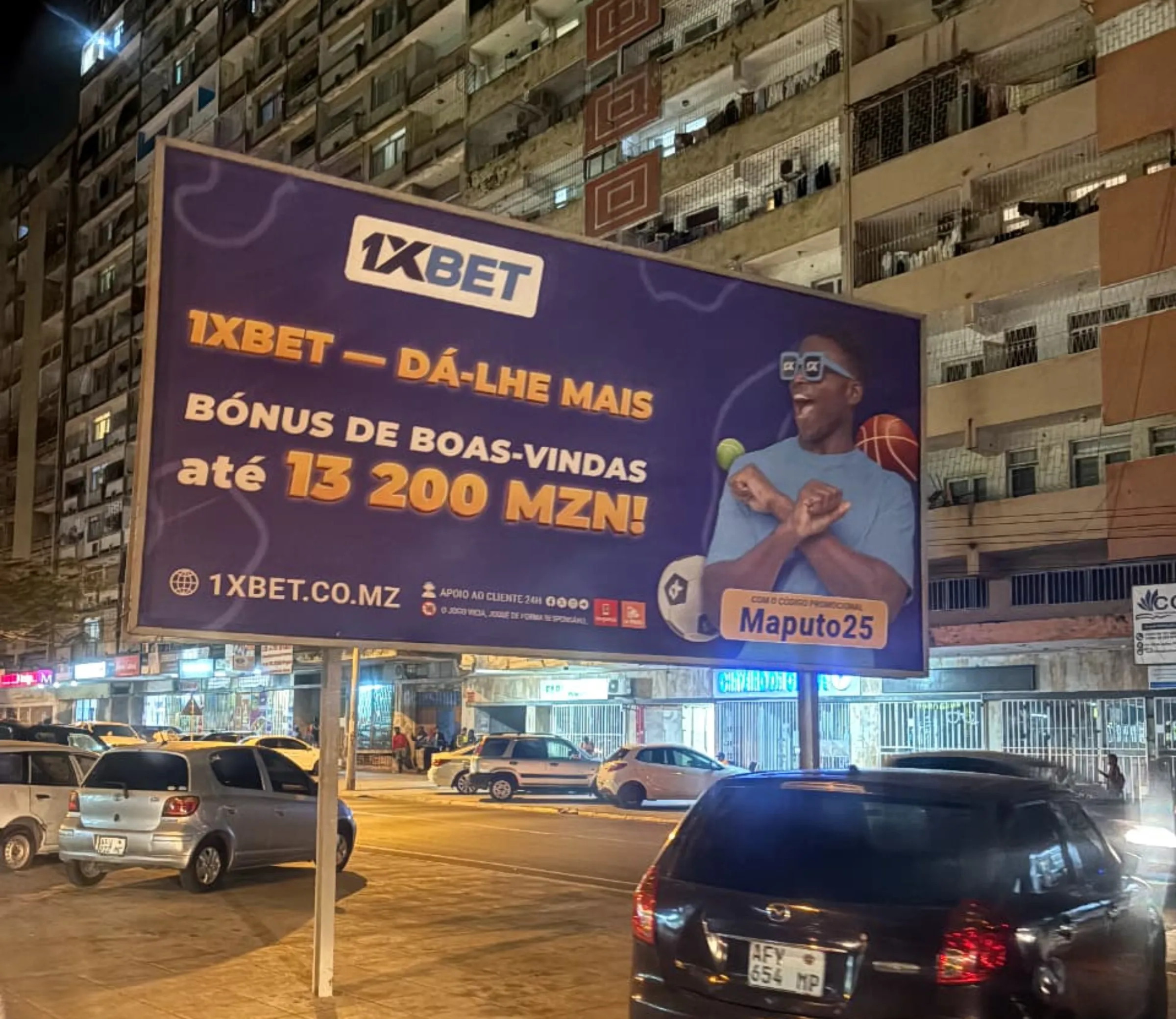
A billboard advertising a betting company in Maputo, Mozambique. November 17, 2025. Thomson Reuters Foundation/Samuel Comé
A billboard advertising a betting company in Maputo, Mozambique. November 17, 2025. Thomson Reuters Foundation/Samuel Comé
But influencer Ângelo do Rosário has bucked the trend to speak out against gambling, after previously promoting a betting company and then deciding the activity was penalising the poorest in the country.
"The money the state earns does not match the harm that gambling causes," he said, calling for regulations to limit the operations of betting companies.
The Centre for Community Development in Health and Environment (CEDSA) works with people addicted to gambling, helping about 300 people across the country.
It also gives talks at universities and other institutions to discourage young people from taking up the habit.
"One of the people we are currently supporting is a woman who worked at a bank and who, since she started gambling in 2020, has already lost more than $31,000 ... (and) lost her job," CEDSA technical director Arlindo Covane said.
Another gambler fell into a depression after losing more than $1,550 in a single day, he added.
CEDSA also offers support to those in debt, including debt restructuring plans and advice on employment.
It wants the government to implement stronger regulations, better protection for players and public awareness campaigns, particularly targeting young people.
Existing regulations require online betting companies to provide on their websites control mechanisms that allow players to set limits, contact details of organisations that offer support to people with gambling addiction and warnings against excessive gambling.
But CEDSA says these rules are not always enforced and it would like to see legislation requiring betting companies to introduce automatic exclusion mechanisms for people who show a pattern of consecutive losses.
According to the IGJ, Mozambique has 30 betting operators, of which 21 are active and nine are waiting for their licences.
IGJ deputy inspector Macário Gusse said most operators were foreign-owned but with some Mozambican participation.
Betting companies paid approximately $17 million in direct tax revenue this year, Gusse told Context, compared to around $18 million last year.
"The media says gambling causes more suicides, but for us, people take their lives because of pressure from loan sharks, where they borrowed money to gamble - this is not directly linked to betting companies," said Gusse.
But sociologist Vasco Adão said gambling is a symptom of persistent inequalities and the lack of social inclusion policies, youth employment and financial literacy.
"Many young people use family savings, informal income or even take loans to keep gambling, entering a cycle of loss and attempted recovery," he said.
And the hope of winning against the odds blinds vulnerable people to the consequences of their habit, said clinical psychologist Mario Ngulele.
That was the case for 24-year-old Zacarias Mathe, who stood outside a betting shop in Maputo where people who do not have smartphones can place bets online.
"I hope to win some money, maybe to start a business, because I have no job and no secure source of income," he said.
(Reporting by Samuel Come; Editing by Clar Ni Chonghaile and Ayla Jean Yackley.)
Context is powered by the Thomson Reuters Foundation Newsroom.
Our Standards: Thomson Reuters Trust Principles