
BRUSSELS – The number of climate lawsuits is growing – at times reaching the highest courts and scoring big wins, too – as politics and diplomacy struggle to coerce countries into climate action.
From Peru to the Philippines, plaintiffs are increasingly turning to the law to win justice where negotiations fail, a trend sent to continue in the year ahead.
“We’re going to see more cases come forward as we just saw with COP30 (climate talks), negotiations are not delivering at the scale we need,” Joie Chowdhury, senior attorney at the Centre for International Environmental Law (CIEL), told Context in a phone interview.
What’s the big picture and how did we get here?
Activists, scientists, students, farmers and Indigenous people have all filed lawsuits against governments and fossil fuel companies, aiming to hold them to account for floods, droughts or heatwaves caused or exacerbated by climate change.
Lawyers say the fact that cases are now reaching the highest courts is significant – with rulings and opinions delivering clear interpretations of how governments and companies must limit and adapt to climate change.
“What was a moral imperative 10 years ago has become a legal imperative. Now the courts are catching up,” said Sarah Mead, co-director of the Climate Litigation Network.
Where are climate cases becoming more common?
More than 200 new cases were filed in 2024, according to a United Nations report.
Since the first climate case was filed in 1986, a total of 3,000 cases had been lodged across 60 countries by June 2025.
Climate litigation is growing in the Global South, which accounts for almost 60% of cases filed since 2020.
With 135 cases, Brazil has the third largest number of any country, and has considered more compensation claims than any other nation for climate-related damages, such as illegal deforestation.
The United States remains the most litigious, with 1,986 cases filed to June 2025.
As well as targeting energy companies, plaintiffs are now filing cases against animal farming and transport, as well as the food and retail sectors.
Which types of lawsuits are succeeding?
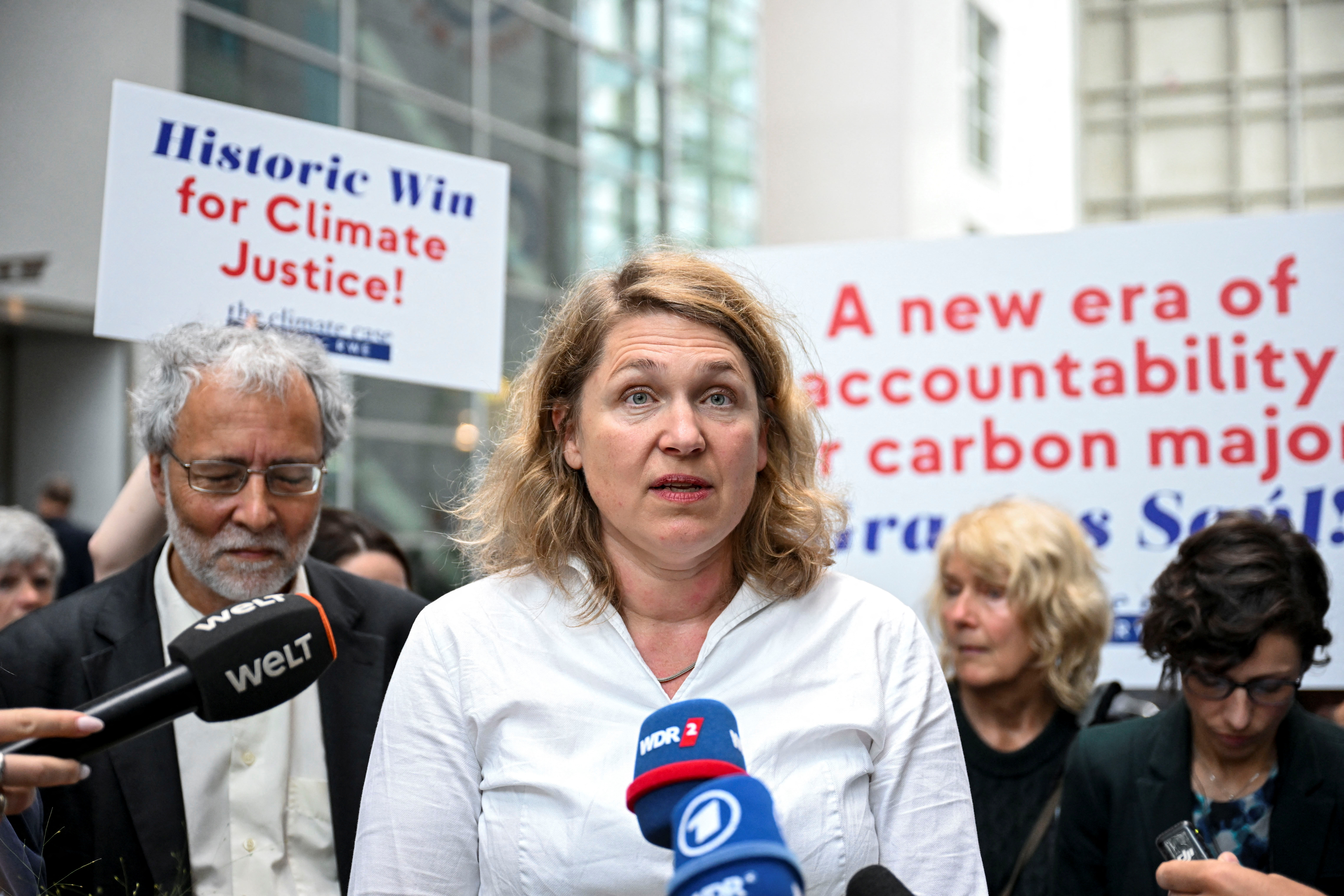
In May, a Peruvian farmer’s case against RWE – a German energy utility he accused of endangering his home with climate change – was rejected by a German court but it ruled that companies were liable for emissions: a key legal precedent.
“People often see these cases as big fights against companies, carbon or technology, but it’s also people’s immediate needs: putting food on the table, getting your kid to school, when … all the infrastructure has collapsed after a massive storm,” Chowdhury said.
In July, the United Nations’ highest court said countries must honour pledges to slash emissions or risk paying nations affected by climate change.
The court’s opinion is seen as a potential game changer – clarifying states’ responsibilities in the climate crisis.
Which cases could set back climate action?
Climate litigation also includes a growing number of disputes between investors and states, which can delay or resist climate policy.
Under the Investor-State Dispute Settlement (ISDS) mechanism, energy firms can sue governments when their emissions reduction policies affect profits.
Activists say it has a “chilling effect” on climate action.
Several countries want to quit the energy charter that facilitates ISDS, but remain bound by the treaty’s provisions 20 years after withdrawal.
In 2024, 27% of 226 new climate litigation cases aimed to resist, reshape and delay climate policy, with 88% of them filed in U.S. courts, according to the Grantham Research Institute.
Which are the cases to watch in 2026?
Next year will see decisions in cases against Shell, TotalEnergies and Swiss cement giant Holcim, while big developments are expected in cases against Austria, Belgium, France, Italy and New Zealand, said Mead.
Building on the Peruvian farmer’s case, four residents of a flood-prone Indonesian island have filed a complaint against Holcim, saying it is doing too little to cut emissions.
The case would be the first to take on a Swiss company for its role in global warming, according to non-profit Swiss Church Aid, which is supporting the residents of Pari.
In the Philippines, survivors of a 2021 typhoon are seeking damages from Shell over the oil giant’s role in global warming.
The European Court of Human Rights is also hearing the Müllner case, which argues that Austria’s rising temperatures violate the rights of a patient with multiple sclerosis.
Lawyers say the case has the potential to affirm individual victim status and boost human rights-based arguments for governments and companies to stick to climate commitments.
Another key development could come at the African Court on Human and Peoples’ Rights, which has been asked to clarify states’ obligations in the climate-change context. The request was submitted in May; a ruling could take up to 18 months.
Legal experts say an opinion could affirm the link between colonialism and the impacts of climate change.
(Reporting by Joanna Gill, Editing by Lyndsay Griffiths)