
WASHINGTON D.C. – The U.S. Supreme Court will likely overturn the nation’s decade-old ruling that legalised same-sex marriage unless significant changes are made to the court, Michigan’s attorney general said.
The top court, which has a 6-3 conservative majority, rejected a bid in November by Kim Davis, a former county official in Kentucky who was sued by a gay couple for refusing to issue marriage licences, to reconsider the Obergefell ruling, named for the lead plaintiff in the landmark 2015 decision.
At least 30 states, including Michigan, have constitutional or legislative bans on same-sex marriage that are not enforced due to Obergefell.
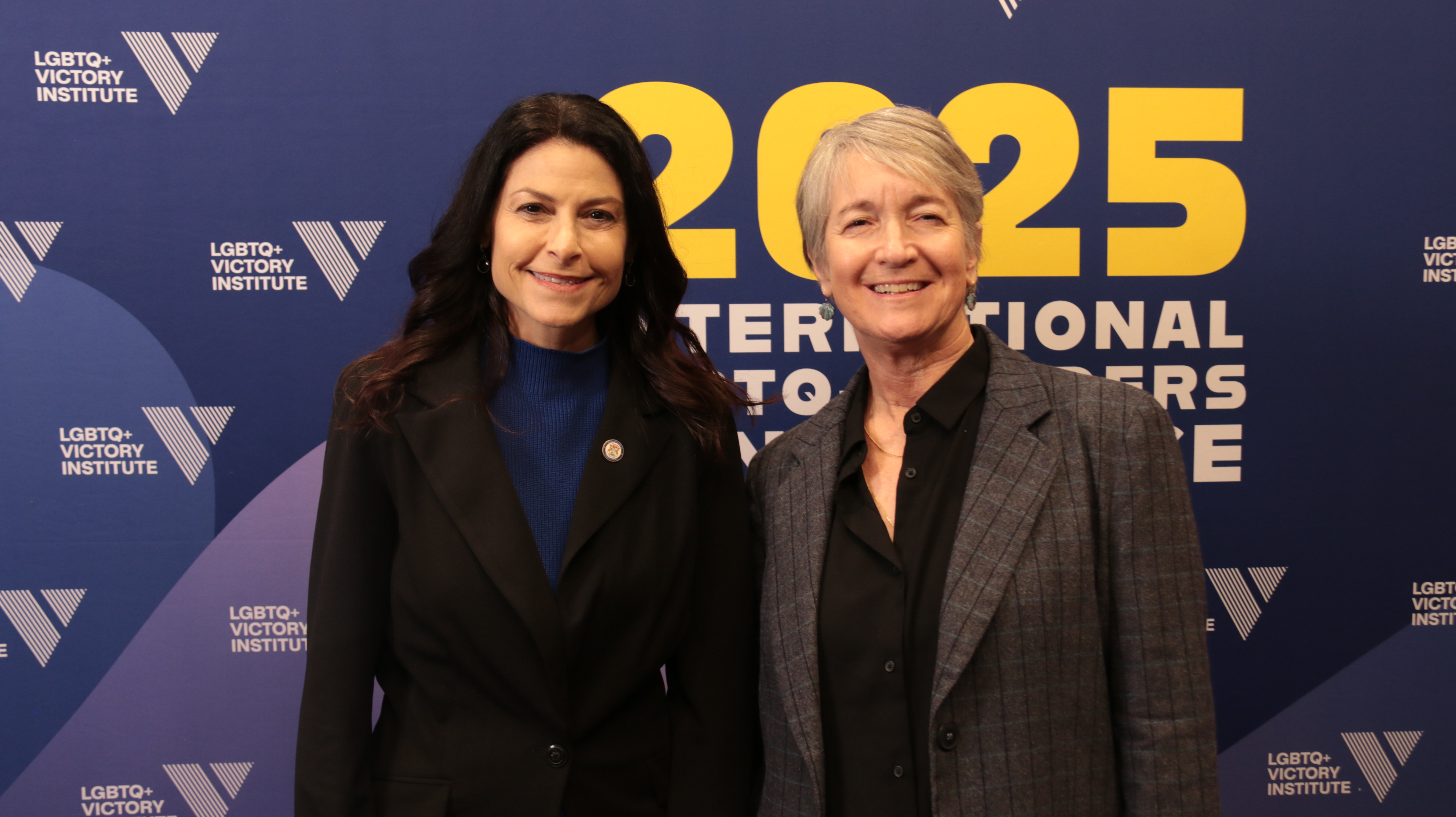
Democrat Dana Nessel, the first openly LGBTQ+ person elected to statewide office in Michigan, represented a gay couple challenging the state’s ban on same-sex adoption in 2014, which was later consolidated with the Obergefell case.
Context met with Nessel during the 2025 International LGBTQ+ Leaders Conference in Washington to hear her take on the future of same-sex marriage during a year of backpedalling on rights since Donald Trump’s inauguration.
How concerned are you about the possibility of Obergefell being overturned?
In 2018, I ran an ad where I was talking about how, now that Justice Kavanaugh was on the Supreme Court, they had enough votes to overturn Roe. And everybody was like, ‘Oh the hysteria, you’re overreacting, there’s no way.’
But I knew it was only a matter of time, and people who closely observed the court understood: that’s why they’re there.
So when people now say, ‘You’re being overdramatic, telling everybody that Obergefell is going to be overturned’ – yeah, it is.
It will happen unless there are some significant changes made to the court.
In states like mine, where we do have a constitutional amendment on the books, I keep encouraging people … to try to repeal the constitutional ban.
But we’ll see other efforts to not necessarily directly attack Obergefell, but diminish the rights of same-sex couples as opposed to opposite-sex couples: to allow employers to discriminate, to allow healthcare facilities to discriminate.
We’re already seeing those cases now in Michigan.
What safeguards does the 2022 law requiring federal, state and local governments to recognise same-sex marriages offer if Obergefell is overturned?
We can’t possibly underscore how important the Respect of Marriages Act was. It means in those states where marriage bans would spring back into effect, we still have full faith and credit.
Even if it will become illegal in Michigan, those people who are already married will have their marriages respected under the law. And people can at least go to other states, get married, come back and have their union considered legal.
Of course, it will be injurious to the dignity of those many same-sex couples that wish to get married. But we do need to let people know that it will remain legal, it just won’t be a constitutional right.
You’ve brought cases this year challenging limits to gender affirming care for minors and the defunding of sexual health programmes. What has that process been like?
I was in office for the last two years of the first Trump administration, and this is very different. State attorneys general worked together then, but nothing like what we do right now. It’s like a big law firm in many ways.
We all know what our mission is, and it is to defend the American people, to preserve our democracy, and each and every one of us is determined to do just that.
I was recently reviewing an old Department of Justice contract from the Biden administration (about) human trafficking, domestic violence, sexual assault where in the terms and conditions you have to promise that you won’t discriminate against people for being LGBTQ or their race or their ethnicity.
This (administration) is a complete-180 to basically say you have to promise to discriminate or else you can’t get the money.
What are the challenges you’re anticipating next year?
We’re waiting for whatever time period the National Guard gets called into our state. I think many of the states that have large Democratic cities are concerned about that; we’ve already seen our colleagues deal with it in Oregon, California, D.C., Illinois.
I also worry they’re going to stop even trying to go through the courts and just start behaving the way they are with immigrant communities for all communities, where they’ll decide that they are the law and that we’ll no longer be even going through the courts.
This interview has been edited for clarity and brevity.
(Reporting by Lucy Middleton; editing by Anastasia Moloney and Ayla Jean Yackley.)