

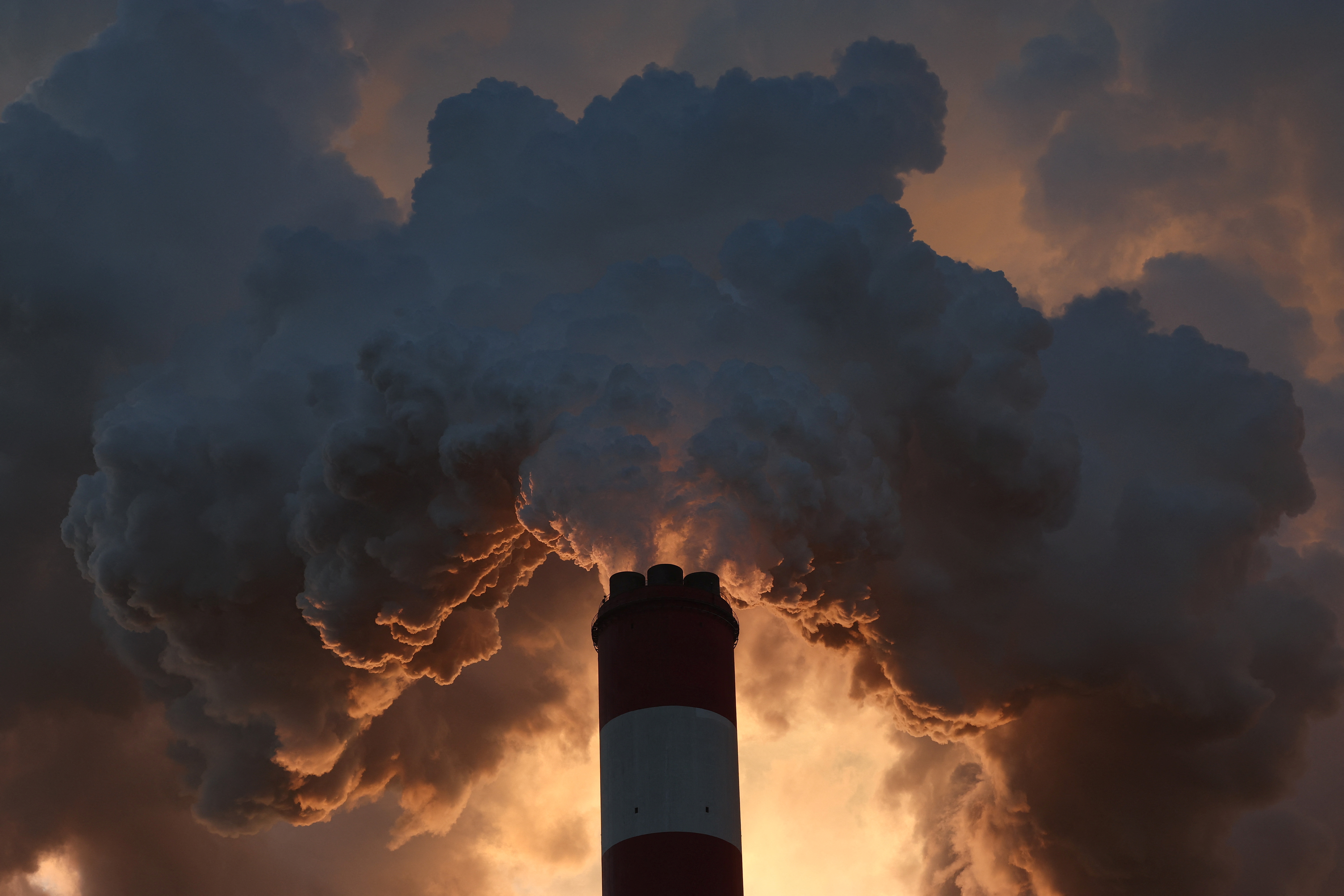
LONDON – The world’s reliance on burning planet-heating fossil fuels for energy showed few signs of relenting in 2025, but neither has the acceleration of renewable energy.
Despite countries agreeing to transition away from fossil fuels two years ago, the use of coal, oil and gas has remained stubbornly high – driving record carbon dioxide emissions, according to the Global Carbon Project compiled by scientists.
But this year also saw renewable energy expand, driven by solar power which grew by nearly a third in the first half of 2025, according to the think tank Ember Energy.
Here’s what you need to know.
Renewables overtake coal for the first time
For the first time, solar power made up a larger share of the electricity mix than coal in the first half of this year, according to the Ember report, marking a key moment in the world’s efforts to transition to clean energy.
More than half of the record growth in solar generation took place in China, followed by the United States and the European Union, the report said.
The surge helped to meet the world’s growing energy demand in 2025, according to Ember.
But solar’s share in electricity generation is still small – growing to 8.8% in the first six months of this year from 6.9% in the same period of 2024.
AI and geopolitics are transforming the energy outlook
While scientists say the world must transition to clean energy to avoid the worst impacts of climate change, 2025 has seen artificial intelligence and geopolitics make it more challenging.
The International Energy Agency (IEA) expects the energy demands of AI to more than quadruple by 2030.
Meanwhile, the global energy outlook is being shaped by geopolitical uncertainty as countries prioritise meeting surging energy needs over climate concerns, and consulting firm McKinsey predicts fossil fuels will keep a large share of the energy mix beyond 2050.
United States and Europe retreated on clean energy
After President Donald Trump took office, the U.S. government repudiated the clean energy policies of his predecessor Joe Biden, cutting subsidies for renewables projects while easing the way for new oil and gas licences.
Trump has issued executive orders to shore up his country’s coal industry, particularly to address fast-rising electricity needs for new data centres to power AI tools.
While China and India saw fossil-fuel generation decrease in the first six months of 2025, the United States and Europe bucked that trend, according to Ember’s report.
Elsewhere in the world, fossil fuel exploration continued in spite of scientific warnings, including in South America’s vulnerable Amazon rainforest region.
Fossil fuels were kept off the page at COP30
Despite these trends, multilateral efforts for a deal to accelerate the transition away from fossil fuels have faltered.
At last month’s U.N. COP30 climate summit in Brazil, negotiators from Latin America and the EU demanded an accord with language on a transition, but the final text sidestepped it.
The United States did not send a delegation, and a coalition of other fossil oil producers, led by top exporter Saudi Arabia, said any mention of fossil fuels was off the table.
Clean energy transformation needs skilled workers
The energy sector has been a good source of jobs in recent years globally, employing 76 million people in 2024, up more than 5 million since 2019, according to a new report from the IEA.
Beyond the headline figures, the IEA said the sector is struggling to meet increasing demand for applied technical workers, who are crucial for clean energy development, including the construction of solar and wind farms.
This problem is being compounded as employees retire, including in critical jobs like grid-related professions – where for every one new entrant, 1.4 people are retiring, the IEA said.
(Reporting by Jack Graham; Editing by Ayla Jean Yackley.)